Géotextile renforcé composite — Fabricant, Solutions haute résistance pour la stabilisation des sols
Conçus avec des structures en fibre de verre et en polyester tricoté en chaîne, les géotextiles renforcés offrent une résistance à la traction, une stabilité dimensionnelle et des performances de résistance aux fissures exceptionnelles pour les projets civils et routiers exigeants.
Exporter à l'échelle mondiale
Usine directement
Qualité certifiée
Principaux types de Géotextile tissé renforcé
Géotextile renforcé tricoté en chaîne
Description
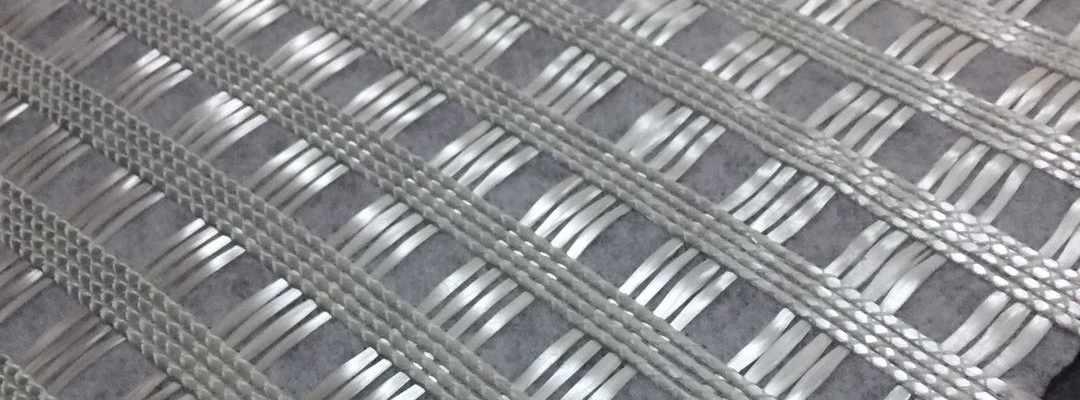
Warp-knitted reinforced geotextile is a composite material made by combining high-strength polyester yarns with nonwoven fabric through a warp-knitting binding process. During production, the binding yarn interlaces repeatedly through the warp, weft, and the fiber layer of the nonwoven geotextile, integrating them into a single composite.
This structure gives the material high tensile strength, low elongation, uniform deformation in both directions, excellent tear and abrasion resistance, high permeability, and strong filtration ability.
Principales fonctionnalités
- Straight and unbent yarn intersections distribute stress evenly.
- The binding yarn locks warp and weft firmly for stable load transfer.
- When subjected to tearing, fibers gather around the crack tip to enhance tear resistance.
- High strength, low creep, durable, and easy to install.
Specifications
- Width: 4–6 m (customizable)
- Strength: 35 kN/m – 300 kN/m (customizable)
- Function: Reinforcement · Drainage · Filtration · Separation · Protection
Applications
Used for coastal reclamation, river and dam reinforcement, slope retaining walls, soft soil improvement, and subgrade stabilization.
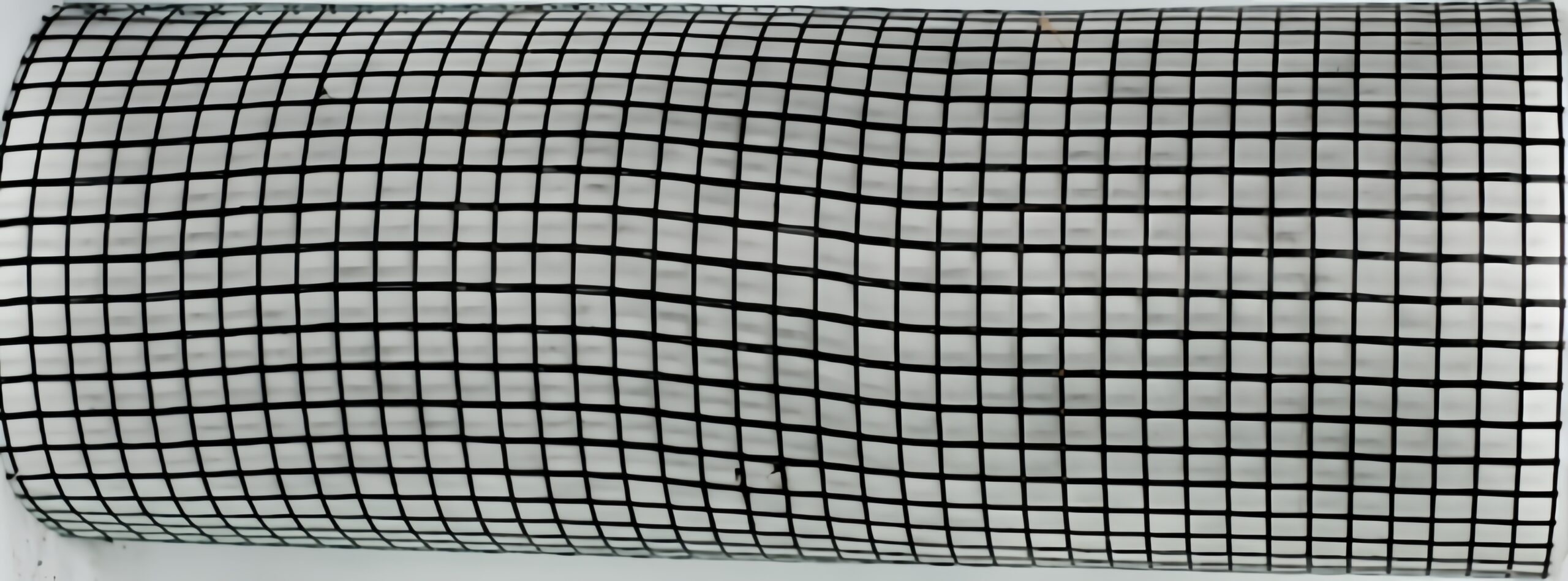
Fiberglass Reinforced Geotextile
Description
Le géotextile renforcé de fibre de verre est fabriqué à partir de fibre de verre comme matériau de renforcement, laminé ou lié avec un tissu non tissé aiguilleté à fibres courtes. La fibre de verre offre une très haute résistance à la traction et une stabilité dimensionnelle, tandis que la couche de tissu ajoute des fonctions de filtration et de séparation.
Il diffère du tissu traditionnel en ce sens que les fils de chaîne et de trame restent droits sans se plier aux intersections. Les fils de reliure les maintiennent fermement, répartissant uniformément la tension et augmentant la résistance à la déchirure.
Principales fonctionnalités
- Haute résistance à la traction avec un faible allongement
- Déformation équilibrée dans les deux sens
- Excellente résistance à la déchirure et à l'abrasion
- Haute perméabilité et forte capacité de filtration
- Durabilité à long terme sous la chaleur, l’humidité et les contraintes mécaniques
Specifications
- Width: 4–6 m (customizable)
- Poids: 400 à 1 000 g/m² (personnalisable)
- Function: Reinforcement · Drainage · Filtration · Separation · Protection
Applications
Widely used in hydraulic engineering, municipal works, building foundations, transportation, metro and tunnel projects, and environmental protection fields. Typical uses include retaining walls, road slopes, reservoirs, coastal works, tunnels, landfill protection layers, and soft ground reinforcement.
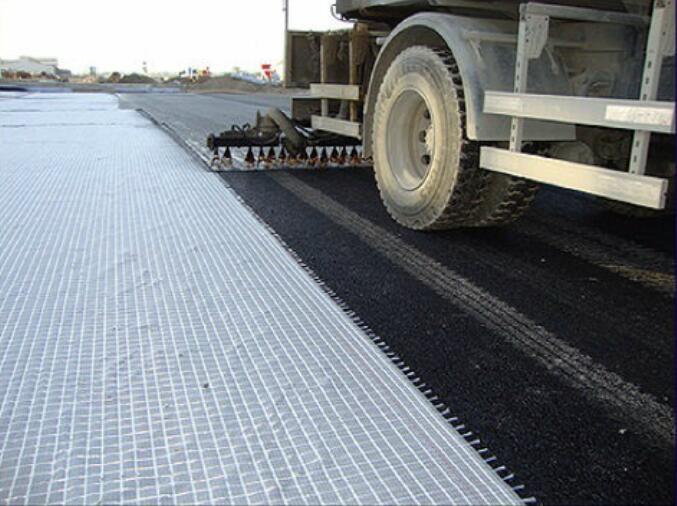
Géotextile renforcé Installation & Quality Control (CQA)
Méthodes de pose
Préparation des surfaces :
Ensure the subgrade is smooth, compacted, and free of sharp stones or debris that may damage the fabric. Remove standing water before installation.
For reinforced geotextiles used on soft subgrades, apply a thin layer of sand or fine soil (5–10 cm) to create a uniform bedding surface.Placement:
Unroll the reinforced geotextile directly on the prepared surface in the designed alignment. Avoid dragging the rolls to prevent surface abrasion.
Make sure the warp (longitudinal) direction is aligned with the main stress direction of the structure (such as the slope line or embankment axis).Tensioning:
Keep the fabric moderately tensioned but not overstretched. Wrinkles or folds should be minimized to ensure full contact with the subgrade.
Jointing & Overlaps
Largeur de chevauchement :
Typical overlaps are 30–60 cm, depending on project requirements and fabric strength. For high-stress areas (e.g., slopes or subgrade joints), overlaps may be increased up to 1.0 m.Joining Method:
For warp-knitted reinforced geotextiles, use sewing or thermal bonding if specified.
For fiberglass reinforced types, overlaps are typically bonded with bitumen or adhesive spray during asphalt paving.
Ensure joints are staggered and not concentrated in a single line across the structure.
Anchoring & Fixing
Temporary Fixing:
Use sandbags, pins, or nails to prevent wind uplift before the next layer is placed. Fixing points should not damage the geotextile.Permanent Anchoring:
At slopes, embed the top edge into an tranchée d'ancrage (minimum depth 0.3–0.5 m).
For road or pavement applications, ensure the geotextile remains firmly in place until the overlying material (soil, gravel, or asphalt) is installed.
Pourquoi choisir Spécialiste WP ?
Au fil des années, Spécialiste WP has built a strong reputation as one of China’s trusted geotextile manufacturers and global suppliers of geosynthetic materials.
Nous nous concentrons sur la livraison reliable geotextile fabrics that meet the demanding needs of civil, road, and hydraulic engineering projects worldwide.
Our geotextiles combine high tensile strength, stability, and consistent quality — backed by factory-direct service and technical expertise.
- Free Samples of Geotextile Fabric
- Assistance de projet experte
- Assurance qualité fiable
- Plus de 10 ans d'expérience en fabrication
- Approvisionnement direct d'usine
Prêt à spécifier un géotextile ?
- Plus de 15 ans d'expertise en usine
- Solutions sur mesure pour vos besoins
- Expédition mondiale & Support logistique
- Une citation transparente et sans obligation
- 100% de confentialité garantie
Vos informations par courrier électronique seront gardées strictement conformes et notre personnel d'entreprise assurera que vos informations privées sont absolument sûres!
Contact
- info@waterproofspecialist.com
Répondre dans les 12 heures!
Veuillez faire attention à l'e-mail avec le suffixe "@ Étanche-épiscial.com".