

An uncontained oil spill turns minor valve failures into multi-million-dollar environmental disasters. Selecting the wrong containment liner leads to quiet leaks beneath storage tanks, triggering massive fines, soil remediation, and forced operational shutdowns.
Selecting the right geomembrane for oil and gas containment requires evaluating the stored liquid type, operating temperatures, subgrade conditions, and UV exposure. A complete containment system integrates the primary liner with proper subgrade preparation, drainage, and geotextile protection layers to ensure total environmental compliance and risk reduction.
In industrial facilities such as massive tank farms, chemical containment zones, and complex bund areas, secondary containment is structurally mandatory. But purchasing a roll of geomembrane is not a complete solution. You must design and procure a complete, integrated barrier system. Based on years of supplying B2B materials to international projects, here is how professional buyers should approach containment system design.
Understanding Containment System Design
When overseas buyers send me an inquiry, they often just ask for "the price of an oil liner." This is a fundamental misunderstanding of how containment systems actually work. The géomembrane is the most critical barrier, but it is effectively useless if it is not supported by a properly engineered surrounding system.
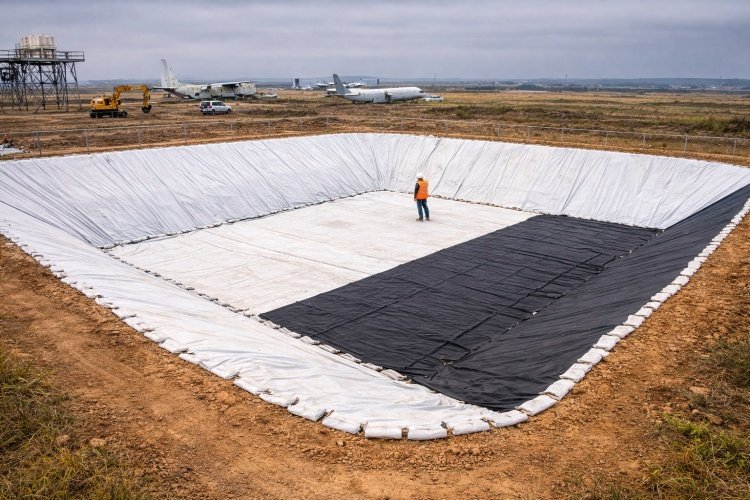
A high-performance oil containment setup usually consists of multiple interacting layers. If you skip one, the entire system is at risk of failure in the field.
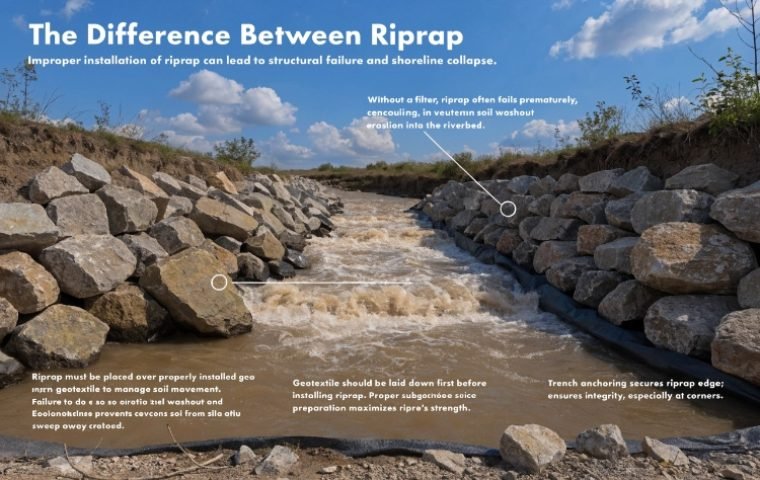
First, there is the subgrade. The ground beneath the liner must be graded, compacted, and cleared. It acts as the structural foundation. Second, a protection layer is required. In almost all stony or gravelly areas, a heavy géotextile non tissé must be installed directly under the geomembrane to act as a cushion. Without this geotextile, the weight of the liquids above will force sharp stones through the plastic from underneath.
Third is the primary geomembrane liner itself, which acts as the impermeable barrier. Fourth, in areas with high water tables or heavy rainfall, a couche drainante, such as a geonet or drainage composite, is placed to manage groundwater pressure from bubbling up and displacing the liner. Finally, some projects require a cover layer, such as poured concrete or a soil layer over the plastic, to protect it from heavy industrial traffic. You are not buying a single material; you are procuring an integrated system.When overseas buyers send me an inquiry, they often just ask for "the price of an oil liner." This is a fundamental misunderstanding of how containment systems actually work. The geomembrane is the most critical barrier, but it is effectively useless if it is not supported by a properly engineered surrounding system.
A high-performance oil containment setup usually consists of multiple interacting layers. If you skip one, the entire system is at risk of failure in the field.
First, there is the subgrade. The ground beneath the liner must be graded, compacted, and cleared. It acts as the structural foundation. Second, a protection layer is required. In almost all stony or gravelly areas, a heavy nonwoven geotextile must be installed directly under the geomembrane to act as a cushion. Without this geotextile, the weight of the liquids above will force sharp stones through the plastic from underneath.
Third is the primary geomembrane liner itself, which acts as the impermeable barrier. Fourth, in areas with high water tables or heavy rainfall, a drainage layer, such as a geonet or drainage composite, is placed to manage groundwater pressure from bubbling up and displacing the liner. Finally, some projects require a cover layer, such as poured concrete or a soil layer over the plastic, to protect it from heavy industrial traffic. You are not buying a single material; you are procuring an integrated system.
Key Design Factors Before Choosing a Geomembrane
Before selecting a specific polymer, you must evaluate the real-world conditions the material will face. Making a material decision without assessing these five environmental and operational variables leads to premature failure.
Type of Stored Liquid:
You must know exactly what liquids the liner will face. Heavy crude oil has a very different chemical profile than highly refined diesel, hydraulic fracturing fluids, or aggressive acids. The chemical aggressiveness of the stored substance dictates the required chemical resistance rating of the liner.
Temperature Conditions:
Climate heavily dictates procurement. If you are building a facility in the Middle East, the liner will bake in extreme UV radiation and high surface temperatures. If the project is in Northern Canada, the material must withstand freezing conditions without shattering or losing its flexibility during winter installation.
Subgrade Condition:
Is the site an engineered, laser-flattened sand bed? Or is it an uneven, rocky, compacted earth bund? Flat, perfect surfaces allow for rigid materials, while irregular, varied terrains require highly flexible liners that can stretch and conform without tearing.
Exposure Requirements:
Some projects bury the inner liner under two feet of dirt or concrete. Others leave the plastic fully exposed to the sun and elements for twenty years. Exposed applications heavily require specialized UV-stabilized materials blended with high-grade carbon black.
Project Lifespan:
A temporary fracking pond might only need to hold hazardous water for six months. A permanent refinery tank farm needs a reliable barrier for thirty years. The intended service life dictates how much you should invest in thickness and physical durability.
Recommended Geomembrane Solutions by Application
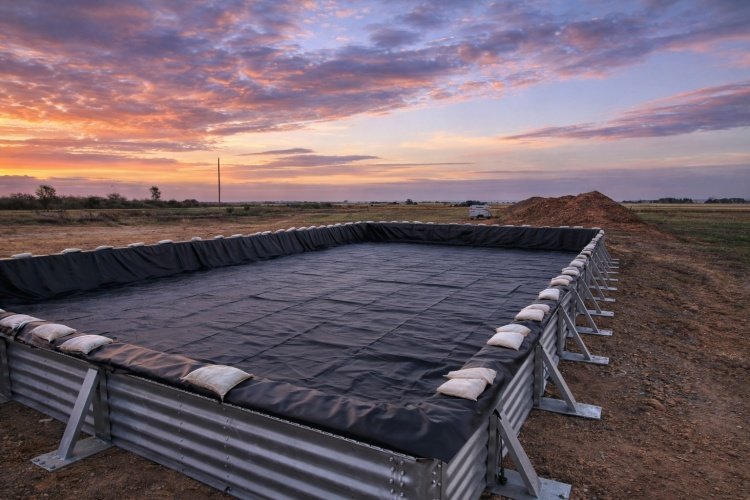
Different areas of an oil and gas facility experience entirely different mechanical and chemical stresses. You cannot simply apply one type of plastic across the entire site. Here is how we recommend approaching specific application zones based on their unique demands.
Tank Farm Containment
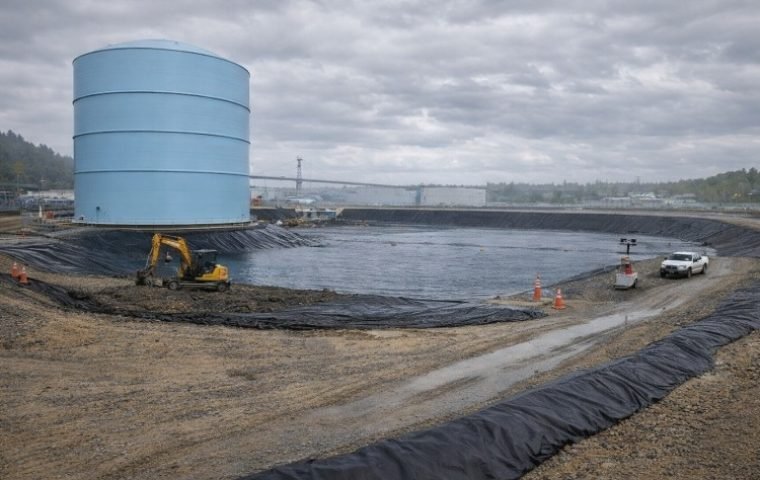
Tank farms encapsulate massive surface areas and are designed to hold millions of gallons of crude or refined oil in the event of a catastrophic primary tank failure. The primary requirement here is extreme, long-term chemical resistance and very low permeability across a broad, relatively flat subsurface.
Because these setups demand high tensile strength and top-tier chemical inertness, Polyéthylène haute densité (PEHD) is typically the standard deployment. It can cover vast areas cost-effectively and effortlessly resist prolonged exposure to standard hydrocarbons.
Bund / Secondary Containment
Bunds are the raised perimeter walls surrounding smaller tank clusters or process areas. The design requirements here are vastly different from wide-open tank farms. Bund applications feature multiple corners, vertical walls, pipeline penetrations, and uneven earth that will settle over time.
Flexibility is more important than absolute rigidity in this scenario. The geomembrane must be able to stretch over settling earth and be easily manipulated by installers to weld around awkward pipes. In these highly complex geometries, highly flexible materials like Polyéthylène linéaire basse densité (LLDPE) are naturally favored because they offer the necessary elongation to handle settlement without cracking.
Chemical Storage Areas
Refineries utilize highly concentrated processing chemicals, including caustic sodas, sulfuric acids, and complex solvents. The risk profile in a chemical storage area involves complex chemical reactions, especially if multiple leaking chemicals mix inside the containment pool.
Chemical compatibility is the absolute governing factor here. You cannot rely on general assumptions. Buyers must cross-reference their specific chemical concentrations against the manufacturer's chemical resistance chart. While standard PE handles most oils, highly corrosive organic solvents may require specialized composite materials or thicker gauge engineering to provide a safe margin of error.
The Role of Reinforced Geomembranes
While unreinforced, extruded geomembranes dominate permanent installations, certain oil and gas applications require a totally different mechanical approach. This is where reinforced geomembranes are utilized.
A reinforced geomembrane is manufactured with a heavy-duty polyester or fiberglass woven scrim embedded inside the plastic layers. This internal netting gives the material immense dimensional stability and extremely high tear resistance.
In field operations, these are highly favored for temporary or rapid-deployment projects. For example, during active drilling operations, temporary drill pads and fracking pits must be deployed in a matter of days and dismantled months later. Reinforced materials resist the heavy mechanical abuse of foot traffic, dropped tools, and dragged hoses better than standard liners. They also do not expand or contract as wildly in temperature fluctuations, making them ideal for temporary containment walls or portable spill berms where the liner hangs vertically without backing support.
| Containment Zone | Primary Design Requirement | Typical Deployment Strategy |
|---|---|---|
| Large Tank Farms | High chemical resistance, broad coverage | Unreinforced HDPE, min. 1.5mm |
| Bund Walls & Tuyaux | High elongation, flexibility for settling | Unreinforced LLDPE, highly flexible |
| Drill Pads / Temporary | Tear resistance, dimensional stability | Scrim-Reinforced Geomembranes |
| Rocky Subgrades | Puncture protection | Mandatory Nonwoven Geotextile underlayment |
Risks, Limitations, and Common Design Mistakes in Oil Containment Projects
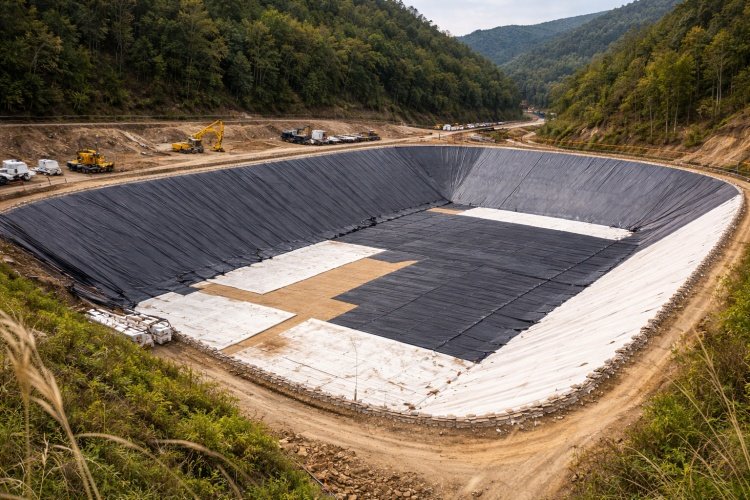
As a supplier, I have investigated enough failed containment systems to know that materials rarely fail on their own. Failures arise from terrible system design and poor execution. If you are planning a containment project, these are the risks and limitations you must actively avoid.
Ignoring Subgrade Preparation:
The most dangerous and common mistake is skipping the geotextile protection layer to save money. If you deploy a geomembrane directly over raw, ungraded gravel, you will create hundreds of microscopic punctures the moment the tank is filled, or water tests are conducted. I do not recommend installing any containment liner thinner than 2.0mm directly on soil unless the subgrade has been laser-leveled and cleared of all debris.
Selecting the Wrong Material Thickness:
Some project managers base procurement solely on price and purchase thin, 0.5mm agricultural plastics for industrial chemical containment. This is a severe liability. Thin membranes lack the puncture resistance to survive industrial work boots, falling wrenches, or the sheer weight of millions of gallons of oil. In a high-risk hydrocarbon environment, utilizing inadequate thickness is practically guaranteeing a regulatory failure.
Ignoring Thermal Expansion and Contraction:
Plastic expands in the heat and shrinks in the cold. A major design error is welding a liner completely tight across a large site during the heat of the afternoon. When the sun goes down and temperatures plummet, the material violently contracts. This "trampolining" effect places massive stress on the welded seams, often causing them to tear open at the corners. Installers must account for thermal bridging and allow proper slack in the design. We never recommend tight, tensioned installations for exposed outdoor petroleum applications.
Conclusion
Containment is not simply about buying plastic sheets; it is about building a secure, integrated barrier system. By rigorously evaluating your subgrade condition, liquid type, and climate reality, you ensure long-term environmental compliance and safeguard your project from disastrous cleanup costs. If you are deciding between HDPE and LLDPE for your next specific oil storage project, look out for our upcoming detailed material comparison guide to finalize your procurement strategy.