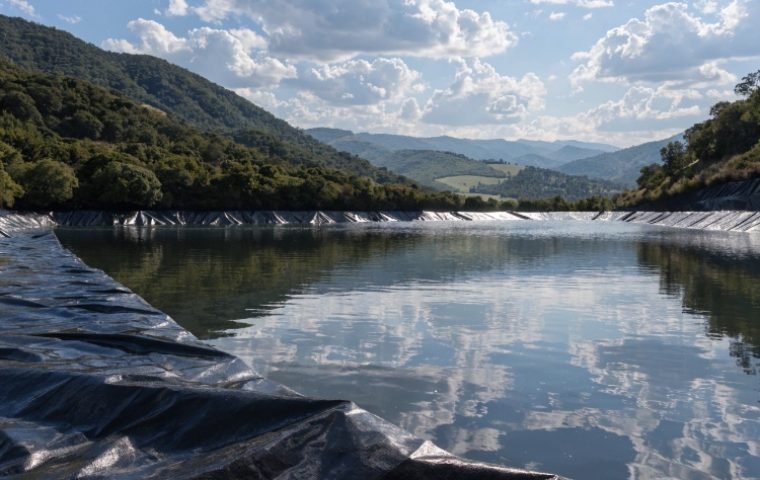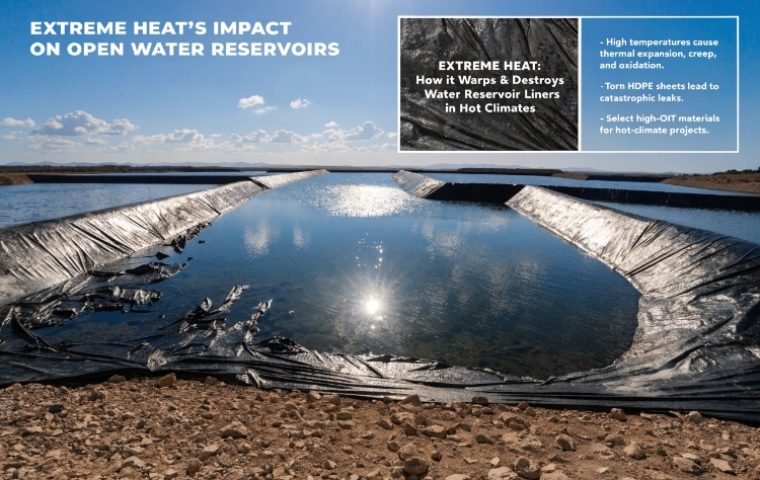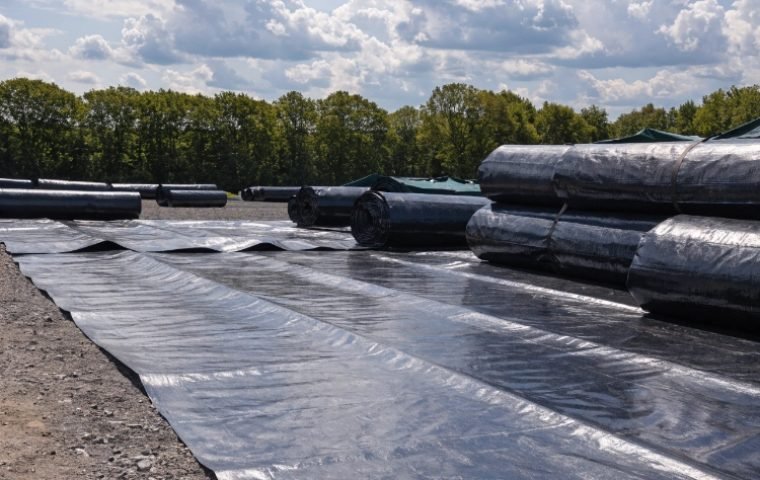


When investors and EPC contractors approach me for biogas projects, their primary focus is usually on the immediate costs: shipping rates, price per square meter, and delivery timelines. However, the most critical question—the one that determines the true return on investment (ROI)—is often asked too late: How long will this liner actually last?
In anaerobic digestion (AD) and biogas systems, the geomembrane liner is not merely a ground cover; it is a pressurized vessel, a chemical reactor, and an environmental barrier all in one. If the liner fails, gas yield drops, revenue leaks away, and environmental fines accumulate.
The expected service life of a geomembrane in a biogas application is not a fixed number printed on a warranty certificate; it is an engineering outcome resulting from material formulation, installation quality, and operational discipline.
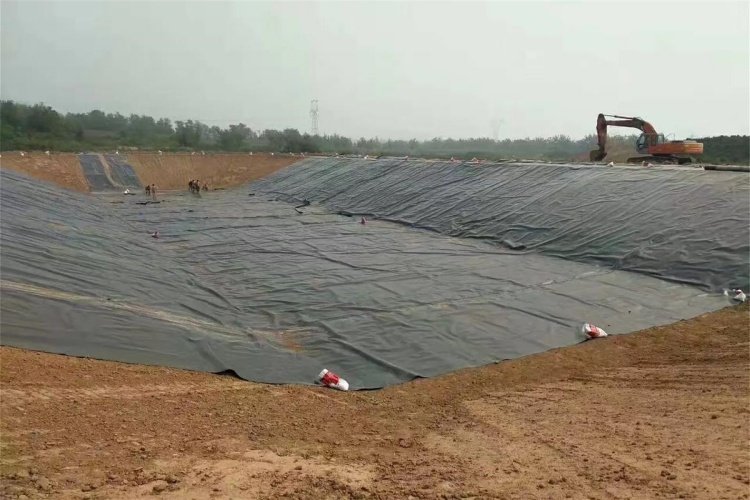
En tant que manufacturer and exporter who has supplied materials to dozens of methane capture projects worldwide, I want to break down exactly what determines the lifespan of your liner system and how to ensure it serves your project for decades.
Introduction: Why Service Life Matters in Biogas & Anaerobic Digestion Systems
Anaerobic digestion and biogas projects are long-term infrastructure investments. Unlike a temporary waste stockpile, a biogas plant is expected to generate energy and revenue for 20 to 25 years. The geomembrane liner plays three non-negotiable roles in this financial model:
- Containment: Preventing hazardous leachate from entering the groundwater.
- Gas Control: Capturing valuable methane ($CH_4$) for energy generation.
- Environmental Protection: Ensuring compliance with increasingly strict environmental regulations.
If the liner degrades in Year 7, the cost isn't just the replacement material. The cost includes emptying the reactor, cleaning the sludge, halting gas production for months, and re-permitting the site. The financial loss from downtime often exceeds the original cost of the liner itself. Therefore, "Service Life" is not just a technical spec; it is a fundamental financial risk parameter.
Typical Service Life Expectations for Geomembrane Liners
In the geosynthetics industry, there is often a disconnect between theoretical laboratory data and real-world field performance.
If you look at accelerated aging tests in a controlled lab (like the Arrhenius modeling of antioxidant depletion), a high-quality Polyéthylène haute densité (PEHD) liner can theoretically last hundreds of years. However, a biogas plant is not a laboratory. It is a dynamic, aggressive environment.
So, what should you realistically expect?
| Application Scenario | Liner Type (Recommended) | Durée de vie prévue | Conditions |
|---|---|---|---|
| Bottom Liner (Buried) | 1.5mm - 2.0mm Virgin HDPE | 30 - 50+ Years | Protected from UV and thermal cycling; service life dictated by chemical resistance. |
| Floating Cover (Exposed) | 1.5mm - 2.0mm HDPE / LLDPE | 10 - 20 Years | Fully exposed to UV, wind stress, and thermal expansion; requires higher maintenance. |
| Temporary / Low Cost | Recycled / Thin Liners (<1.0mm) | 2 - 5 Years | High risk of stress cracking and localized failure. |
The Industry Consensus:
For a professionally engineered biogas system using high-quality virgin HDPE geomembranes, properly installed and maintained, the expected service life typically ranges from 20 to 30+ years.
This aligns with the operational lifecycle of most energy infrastructure projects. However, this is an expectation, not a guarantee. The gap between a 5-year failure and a 30-year success story is not luck—it is science.
What Determines the Service Life of Geomembrane Liners?
It is simplistic to ask "how long does HDPE last?" without context. The longevity of the material is not an inherent property of the plastic alone; it is the result of a complex interaction between the polymer and its environment.
The actual service life of a geomembrane liner in anaerobic digestion and biogas applications is the result of material quality, chemical exposure, operating temperature, UV conditions, installation practices, and long-term system operation.
Let’s examine distinct factors that define this timeline.
Material Quality and Manufacturing Control
As a supplier, this is the factor I emphasize most because it is the only one we directly control. The foundation of long service life starts strictly at the manufacturing stage. If the raw material formulation is flawed, no amount of careful maintenance can extend the liner's life.
Virgin Resin vs. Mixed Materials
This is the single biggest differentiator in price and lifespan. Buyers often see a 15% price difference and assume it's just "margin." In reality, it is a chemical difference in the raw material.
| Fonctionnalité | Virgin Resin HDPE | Recycled / Mixed HDPE |
|---|---|---|
| Purity | >97% Prime Polymer | Variable; contains fillers & shorter polymer chains |
| Molecular Structure | Consistent, long chains | Inconsistent, "weak links" in the matrix |
| OIT (Antioxidants) | High, stable retention | Often low or unstable; depletes rapidly |
| Résistance aux fissures de contrainte | Excellent (>500 - 3000 hrs) | Poor; prone to brittleness under stress |
| Biogas Suitability | Recommended | High Risk (Not Recommended) |
- Virgin Resin: High-quality liners are made from prime virgin polyethylene resin. The molecular chains are long, consistent, and strong, providing maximum resistance to chemical attack and stress cracking.
- Recycled/Mixed Materials: Some suppliers reduce costs by mixing in recycled plastics. While this looks the same visually, the molecular structure is inconsistent. These contaminants act as "weak points" where stress cracks initiate. In the high-stress environment of a biogas balloon, recycled content is a ticking time bomb.
The Antioxidant Package
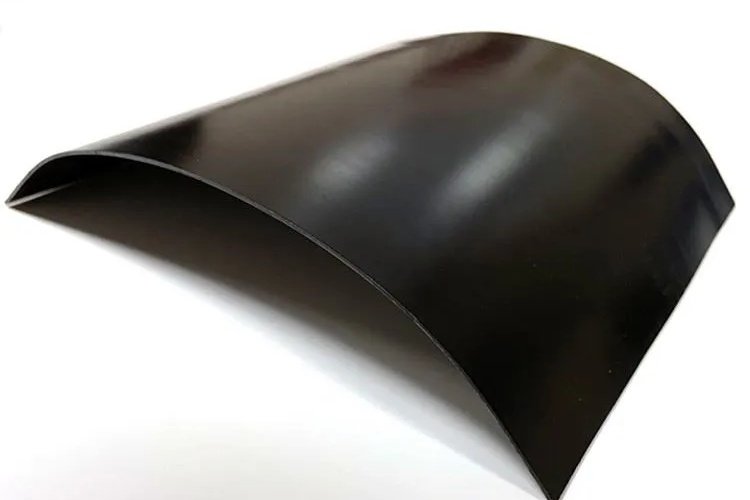
Polyethylene degrades primarily through oxidation. To prevent this, we add a specific package of antioxidants and stabilizers during manufacturing. Think of this as the "immune system" of the liner.
- OIT (Oxidative Induction Time): This measures how much antioxidant is present.
- HP-OIT (High Pressure OIT): For biogas applications, we look at HP-OIT, which indicates resistance to leaching.
A liner with a robust antioxidant package will resist the corrosive biogas environment for decades. Once the antioxidants are depleted, the plastic begins to age rapidly.
Chemical Exposure in Anaerobic Digestion and Biogas Environments
Anaerobic digesters are chemically hostile environments. The liner is in constant contact with a "soup" of active biological sludge and corrosive gases.
The primary chemical threats include:
| Chemical Component | Source | Impact on Geomembrane | HDPE Defense |
|---|---|---|---|
| Methane ($CH_4$) | Digestion Product | Permeation (gas passing through molecular gaps) | High Crystallinity blocks permeation paths |
| Hydrogen Sulfide ($H_2S$) | Souring Gas | Surface acidity; depletes antioxidants | High Chemical Inertness; requires acid-resistant stabilizers |
| Organic Acids | Fermentation | Softening of polymer surface over time | Excellent resistance to broad pH range |
| Ammonia ($NH_3$) | Livestock Waste | Can induce Fissuration sous contrainte environnementale (ESC) | High ESCR Resin formulation |
Why HDPE?
We predominantly recommend HDPE for these projects because of its exceptional chemical inertness. Unlike PVC (which contains plasticizers that can be leached out by chemicals, causing brittleness) or LLDPE (which is more permeable), HDPE has no functional groups for the chemicals to attack.
However, "Chemical Compatibility" is not binary. It is a function of time and concentration. Over 20 years, even weak acids can attempt to extract the stabilizers from the plastic. This is why using a high-crystallinity resin is vital—it creates a denser barrier that makes it physically harder for chemicals to penetrate the polymer matrix.
Operating Temperature and Thermal Aging
This is a factor that many generalist trading companies overlook. Biogas production is a thermal process. In standard civil engineering (like a landfill or reservoir), we assume an ambient temperature of 15–20°C. In a digester, the liner is "cooking" 24/7.
The Impact of Heat:
Elevated temperatures accelerate the aging process of polymer liners. According to the Arrhenius equation, the rate of chemical reaction (in this case, antioxidant depletion) roughly doubles for every 10°C increase in temperature.
| System Type | Operating Temp | Impact on Liner Service Life | Recommendation |
|---|---|---|---|
| Psychrophilic | < 20°C | Low Impact | Standard HDPE |
| Mesophilic | 35°C – 40°C | Moderate Acceleration | Virgin HDPE with High HP-OIT |
| Thermophilic | 50°C – 55°C+ | Significant Acceleration | High-Temp Stabilized HDPE Only |
A liner that lasts 100 years at 20°C might only last 25 years at 55°C. The heat makes the polymer chains more mobile, allowing chemicals to penetrate faster and depleting the protective antioxidants more rapidly.
For thermophilic projects, we explicitly recommend specific high-temperature stabilized resins. Using a standard water-grade liner in a hot digester is a recipe for premature embrittlement.
UV Exposure and Protection Measures
The lifespan of the liner depends heavily on whether it is buried or exposed.
Exposed Floating Covers
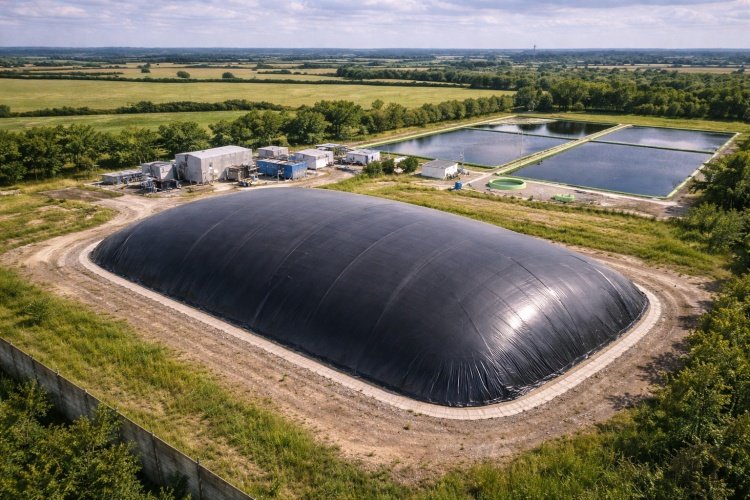
In many lagoon-style digesters, the top liner (the gas holder) is floating and fully exposed to the sun.
- Rayonnement UV: High-energy UV rays attempt to break the polymer chains (scission), leading to surface cracking ("alligatoring").
- Thermal Cycling: The black liner absorbs heat, expanding during the day and contracting at night.
For these applications, the Carbon Black content mentioned earlier is the primary defense. A properly manufactured black HDPE liner contains 2-3% carbon black. However, quantity isn't enough; dispersion is key. If the carbon black is clumped (poor mixing), microscopic areas of the resin remain unprotected and will degrade under the sun. High-end manufacturing uses automated mixing to ensure perfect dispersion.
Covered Liners
Bottom liners are typically covered by sludge or soil. In the absence of UV radiation, their service life is dictated purely by chemical and thermal factors. Consequently, the bottom liner usually outlasts the floating cover.
Installation Quality and Welding Performance
You can buy the best virgin resin HDPE in the full world, but if the installation is poor, the service life of the système might be measured in weeks, not years.
Many liner failures are related to installation rather than material defects.
Welding Integrity
The seams are the only discontinuity in the system.
- Overheating: If the welder runs too hot, the molecular structure of the seam is brittle. It may pass a pressure test on day one but will crack under stress after 2 years.
- Underheating: Creates a "cold weld" that lacks true molecular fusion, leading to slow leaks.
Stress Concentration
If a liner is installed with deep wrinkles or bridged over corners (trampolining), it creates points of permanent high stress. HDPE is sensitive to "Stress Cracking" (ESCR). If a specific point is under high tension and exposed to aggressive chemicals (H2S), it will crack rapidly. A quality installation ensures the liner lies flat and stress-free.
System Design, Operation, and Long-Term Performance
Finally, the operational environment dictates longevity. The liner is a mechanical component of a machine.
- Gas Pressure Fluctuations: The floating cover constantly inflates and deflates. This flexing causes mechanical fatigue. Materials with higher flexibility (like premium LLDPE or modified HDPE) are sometimes preferred for caps to handle this movement without fatigue cracking.
- Sludge Accumulation & Settlement: If the subgrade settles unevenly under the weight of the sludge, it puts the bottom liner under tension.
- Agitators/Mixers: Physical damage from stirrers or pumps dropping onto the liner is a common cause of "end of life" through physical accident rather than aging.
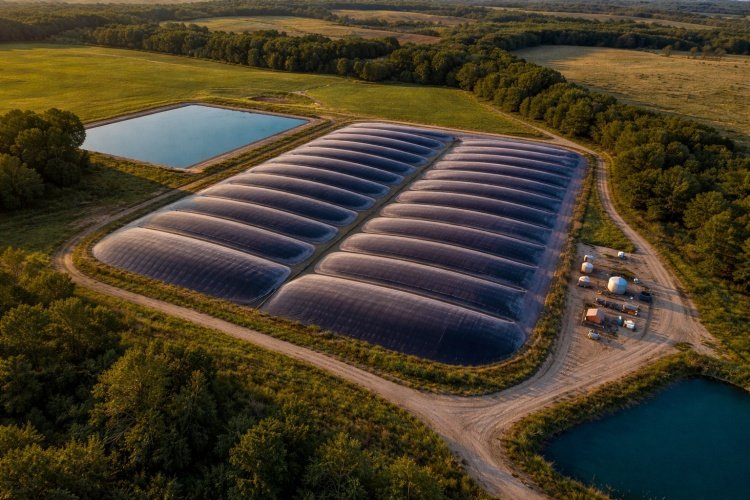
A system designed with proper gas pressure relief, sludge removal protocols, and stable subgrade preparation significantly extends the effective life of the geomembrane.
How to Maximize the Service Life of Geomembrane Liners
If you are in the procurement or design phase, here is a concise checklist to ensure you get the 30-year operational life you are paying for:
| Action Item | Why It Matters |
|---|---|
| Specify Virgin Resin | Non-negotiable for chemical resistance. |
| Demand HP-OIT Data | ASTM D5885 verifies resistance to leaching in liquids. |
| Match Temp to Resin | Don't use standard liners for >50°C thermophilic tanks. |
| QA/QC Trial Welds | Verify welding parameters on-site before main installation. |
| Protect from Stress | Ensure subgrade is smooth; avoid "trampolining" at corners. |
Conclusion: Service Life as a Long-Term Engineering Decision
Asking "how long will it last" is the right question, but the answer isn't a simple number—it's a commitment to quality.
A geomembrane liner system is a long-term infrastructure asset. When engineered correctly with virgin materials, installed by competent professionals, and operated within thermal limits, an HDPE liner in a biogas application is a robust solution that can reliably perform for decades.
As a manufacturer, we cannot control the weather at your site or the skill of your welding technician. But we peut control the inputs: the purity of the resin, the consistency of the thickness, and the stability of the antioxidant package. We provide the material foundation that makes a 30-year service life possible.
Are you planning a biogas or anaerobic digestion project?
Don't leave the longevity of your containment system to chance. Contact Spécialiste de l'étanchéité today to discuss project-specific geomembrane material selection and bulk supply specifications tailored for long-term performance.