

In the geotechnical industry, we generally face three distinct paths when dealing with weak subgrades or soft soils.
The first is the Deep Foundation approach (piling), which is structurally reassuring but financially painful. The second is Soil Replacement (excavation and backfill), which is conceptually simple but logistically messy and highly disruptive. The third is the Geocell Solution, a structural reinforcement approach that sits comfortably between the two.
The core question for project owners and engineers is not "which one is strongest," but "which one solves the problem without over-engineering?"
This guide compares these three methodologies based on real-world constraints—bearing capacity, schedule, cost, and environmental impact—to help you decide when Geocell is a legitimate, high-value alternative and when it is not.
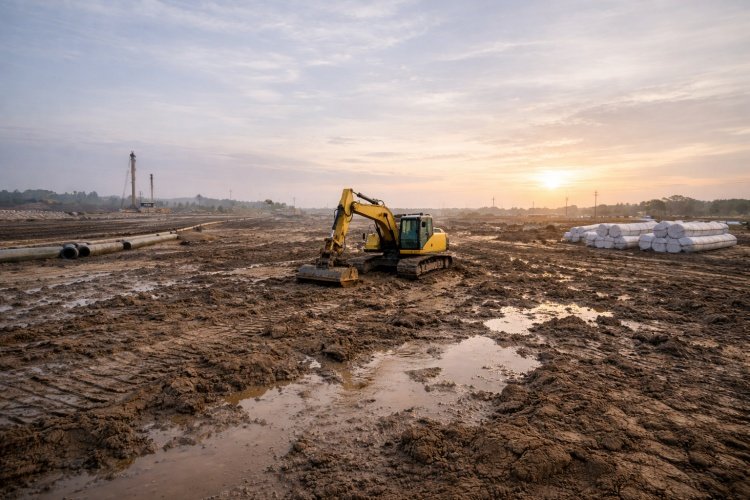
Often, we see projects default to piling because "that’s how we always do it," or default to massive excavation because they underestimate the hidden costs of moving dirt. As a materials supplier involved in global infrastructure projects, I have seen Geocells save millions in budget—but only when applied to the right ground conditions.
2. Can Geocell Provide Sufficient Bearing Capacity for Shallow Soft Soils?
To understand when to swap a pile driver for a pallet of plastic, we must first understand the mechanics of how the load is handled.
Deep foundations work by bypassing the weak soil entirely, transferring loads to deeper, competent strata via skin friction or end-bearing. Soil Replacement works by physically removing the problem.
Geocells, however, work by modifying the behavior of the existing problem.
The Mechanics of Confinement vs. Bypassing
A geocell system functions as a stiffened mattress. Through the "Beam Effect," it distributes vertical point loads (like a truck tire or a container footer) over a much wider area of the subgrade. By confining the infill material, it creates apparent cohesion, significantly increasing the modulus of the layer.
In practical terms suitable for:
- Low-rise building platforms: Warehouses or light industrial facilities where column loads are moderate.
- Industrial Yard Pavements: Container terminals and logistics parks.
- Temporary or Permanent Access Roads: Where the concern is rutting and punching shear.
The Limits of Geocell Capacity (Risk Assessment)
We must be honest about limitations. A geocell system generally improves the bearing capacity of the upper 1 to 2 meters of the profile. It does not solve deep-seated settlement implementation.
When is Geocell NOT a suitable alternative?
- High-Rise Structures: If you are building a 20-story hotel, you need piles. Geocells cannot limit total settlement to the millimeter tolerances required for tall structures.
- Deep Soft Clay (>6-8m): If you have 10 meters of liquid mud, placing a geocell mattress on top will create a stable "raft" that won't break, but the whole raft might tilt or settle significantly over years.
- Settlement-Sensitive Machinery: For precision heavy machinery bases (e.g., turbines), deep foundations are non-negotiable.
Decision Matrix: Technical Feasibility
| Condition | Deep Foundation (Piles) | Soil Replacement (Dig & Dump) | Geocell Confinement |
|---|---|---|---|
| Primary Mechanism | Bypassing weak soil | Replacing weak soil | Bridging mechanics & Load distribution |
| Soft Soil Depth | Unlimited (Deep) | Shallow (< 3m) | Shallow to Medium (< 5m*) |
| Settlement Control | Excellent (Strict) | Bien | Moderate (Flexible) |
| Load Type | Heavy Structural Point Loads | Distributed / Static | Distributed / Traffic / Moderate Point |
*Note: For medium depths, geocells are often combined with basel reinforcement geogrids.
3. How Does Construction Time Compare?
Time is money, but in construction, "time" often equals "weather risk" and "mobilization delay."
3.1 Mobilization and Setup
- Deep Foundations: Requires heavy piling rigs, cranes, and concrete supply chains. Organizing a piling contractor can take weeks. Then you have pile curing time (for cast-in-situ) or pile integrity testing (PIT).
- Geocell: Requires a light truck to deliver pallets and manual labor. We have shipped containers to remote island projects where piling rigs physically could not land. The installation starts the moment the material arrives.
3.2 The "Rainy Season" Facteur
This is a critical factor in Southeast Asia and tropical mining regions.
- Soil Replacement: This is the riskiest method in wet climates. Once you open a large excavation pit to remove soft soil, you create a swimming pool. If it rains, work stops. You spend days dewatering. The subgrade degrades further while exposed.
- Geocell: This is a "dry" construction method. You lay a geotextile over the wet ground (no massive excavation needed), expand the cell, and fill immediately. The speed of closing the ground is drastically faster.
3.3 Production Rates
In a typical road project over soft ground:
- Piling: 50–100 linear meters/day (highly dependent on rig and geology).
- Replacement: Limited by truck cycle times and traffic.
- Geocell: A 4-man crew can easily expand and fill 500–800 m² per day. Geocells turn "civil engineering" into "assembly work."

4. What Are the Cost and Risk Differences in Real Projects?
When we calculate value for our clients, we look at the Total Cost of Ownership, not just the invoice price of the material.
4.1 Cost Structure Breakdown
- Deep Foundations: High mobilization cost (fixed) + High unit cost. They act as "Structural Insurance." You pay a premium for certainty.
- Soil Replacement: The cost is deceptive. It looks cheap ($/m³ of dirt), but it explodes with:
- Tipping Fees: The cost to dump "bad soil" is rising globally.
- Haulage: Trucking fuel and driver hours.
- Import Fill: Buying high-quality rock to replace the bad soil.
- Geocell: The material cost is higher than dirt but lower than concrete. However, the savings come from Volume Reduction.
- Instead of replacing 1.5m of soil, you might only need a 200mm geocell layer + 150mm sub-base. You reduce the import stone volume by 50% or more.
4.2 A Real-World Scenario: 5,000 m² Logistics Platform
- Site Condition: 2m of soft clay, water table at -1m.
- Replacement Option: You must dig out 2m. This hits groundwater. You need sheet piles to hold the sides, massive pumps for dewatering, and 10,000 m³ of expensive rock fill. Risk: High (Weather/Water).
- Piling Option: 500 mini-piles. Expensive and slow. Overkill for parking trucks.
- Geocell Option: Place a separation geotextile directly on the surface (or after minor skin stripping). Install a 150mm Geocell filled with local aggregate.
- Résultat: The Geocell option typically costs 30-40% less than replacement in wet conditions because it eliminates dewatering and massive earthmoving.
Key Insight: Geocell is a "Controlled Improvement." It manages the risk by capping it, rather than trying to remove the ground risk entirely.
5. What Is the Environmental Impact of Each Ground Improvement Method?
In modern government tenders and multinational mining projects, the Carbon Footprint is no longer optional—it is a selection criterion.
5.1 Carbon Emissions and Transport
Soil replacement is one of the most carbon-intensive activities in construction due to the sheer number of truck trips required. Excavating 10,000 tons of soil and bringing in 10,000 tons of fill generates massive diesel emissions.
Geocells drastically reduce this. By allowing the use of thinner structural sections (e.g., reducing pavement thickness by 40%) or allowing the use of local, lower-quality sands as infill, we take hundreds of trucks off the road.
5.2 Disturbance and Hydrology
- Deep Foundations: Concrete production is CO2 heavy. Noise pollution from piling disturbs local communities and wildlife.
- Geocell: It sits typically on the surface or in a shallow accumulation. It preserves the natural hydrology of the site better than massive concrete intrusions. In sensitive ecological zones (wetlands), Geocells are often the seulement permitted solution because they do not permanently alter the deep aquifer structure.
5.3 Sustainable "Green" Applications
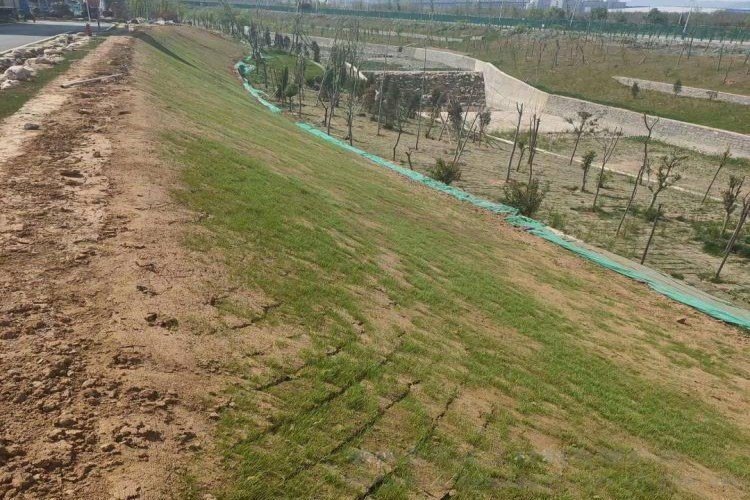
If the project requires a "Green" rating (LEED/BREEAM), Geocell facias can be vegetated. A retaining wall built of geocells becomes a living green wall. A concrete retaining wall is just a heat island.
6. Decision Logic: A Step-by-Step Guide
If you are currently holding a soil report and wondering which path to take, use this logic flow designed from our project experience in Southeast Asia, the Middle East, and South America.
Step 1: Check the Mechanics
- Is the structure load-sensitive (high-rise)? -> Stop. Use Piles.
- Is the load primarily distributed (roads, yards, mats)? -> Proceed.
Step 2: Check the Depth
- Is the soft soil > 10m deep? -> Caution. Geocell can provide a working platform, but long-term settlement will occur.
- Is the soft soil shallow (1-5m)? -> Ideal Zone for Geocell.
Step 3: Analyze the Site Conditions
- Is the site wet, marshy, or high-water table? -> Strong preference for Geocell. Soil replacement will be a nightmare of dewatering.
- Is the site dry with cheap rock nearby? -> Calculate Replacement. If rock is free and stripping is easy, replacement might be cheaper.
Step 4: Speed and Access
- Do you need access next week? -> Geocell.
- Is the site remote (difficult for heavy rigs)? -> Geocell.
Real Project Contexts
- Mining Access Road (Africa): Remote location meant mobilizing piling rigs was impossible. Geocells filled with local sandy soil provided the only viable path to get trucks moving.
- Container Yard (Vietnam): High water table made excavation risky. Geocell reinforced the upper layer, allowing the yard to operate over the soft delta soil without deep excavation.
Conclusion
Geocell is not a magic wand that replaces deep foundations in every scenario. We never recommend it for high-rise structural foundations or machinery requiring zero settlement.
However, for shallow soft soil conditions with moderate load requirements (pavements, yards, working platforms), Geocell technology offers a "Sweet Spot." It provides a technically feasible solution that is significantly faster than piling and significantly less risky (and cleaner) than soil replacement.
The choice represents a shift from "Brute Force Engineering" (digging it all out or pounding through it) to "Smart Interaction" (reinforcing what is there).
The winning formula for most infrastructure projects? Proper geotechnical evaluation first. Determine your settlement tolerance. If flexibility is allowed, the Geocell system will almost always win on schedule and budget.