

In the mining industry, we often focus intensely on chemical compatibility—will this liner survive cyanide or sulfuric acid? While this is critical, there is a "silent killer" of geomembranes that often goes ignored until cracks appear: Ultraviolet (UV) Radiation.
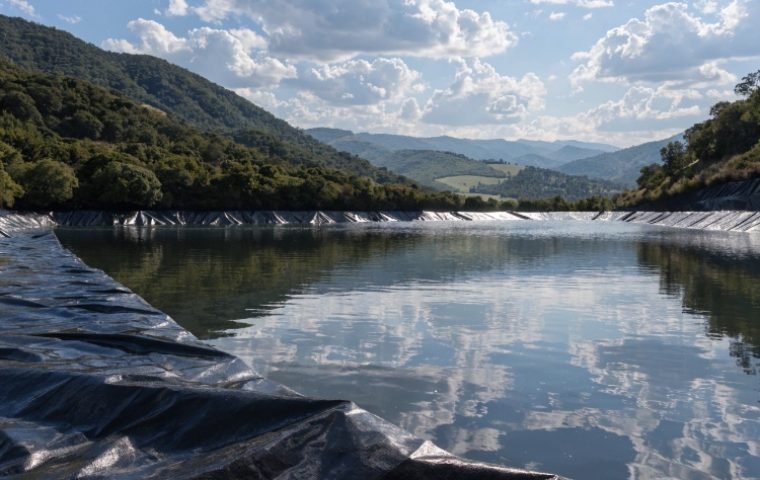
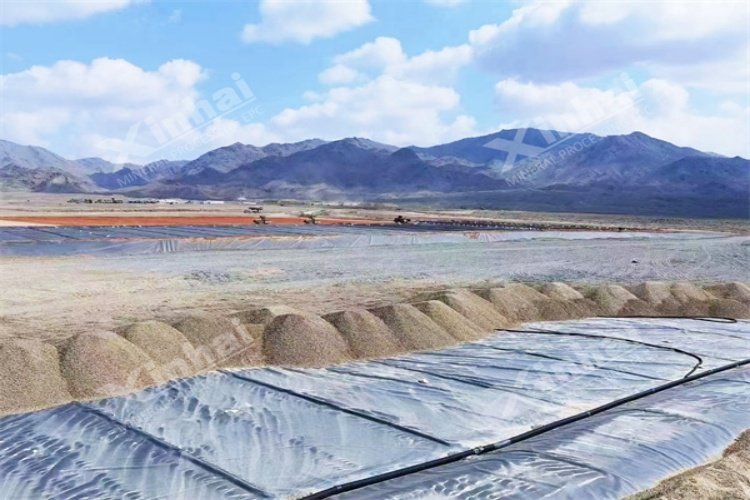
Heap leach pads are massive civil engineering structures. Between the time the liner is deployed and the time it is fully covered by ore, weeks or even months can pass. In high-altitude mining sites, the UV index is extreme, and the atmosphere provides little protection.
This article explores how UV radiation physically degrades HDPE geomembranes, the critical role of carbon black and antioxidants in preventing failure, and how to verify if your liner can survive the construction schedule of a modern mine.
For a procurement manager or project engineer, understanding UV stability is not about chemistry theory; it is about risk management. A liner that loses its flexibility due to UV exposure before the first truckload of ore is placed will crack under the weight, leading to environmental breaches and lost revenue.
2. UV Radiation in Mining Environments
To understand the risk, we must look at where mining actually happens. We are rarely building heap leach pads in cloudy, sea-level locations.
2.1 Why Mining Sites Have Higher UV Risk
Most of the world’s major copper and gold deposits—particularly in the Andes (Chile, Peru), the Southwestern USA, and parts of Australia and Africa—are located in arid, high-altitude regions.
- Altitude Factor: For every 1,000 meters of elevation, UV radiation levels increase by approximately 10–12%. A mine in the Andes at 4,000 meters receives nearly 50% more UV radiation than a site at sea level.
- Atmosphere: These regions often have thin, dry air with low cloud cover, meaning the solar efficacy is relentless.
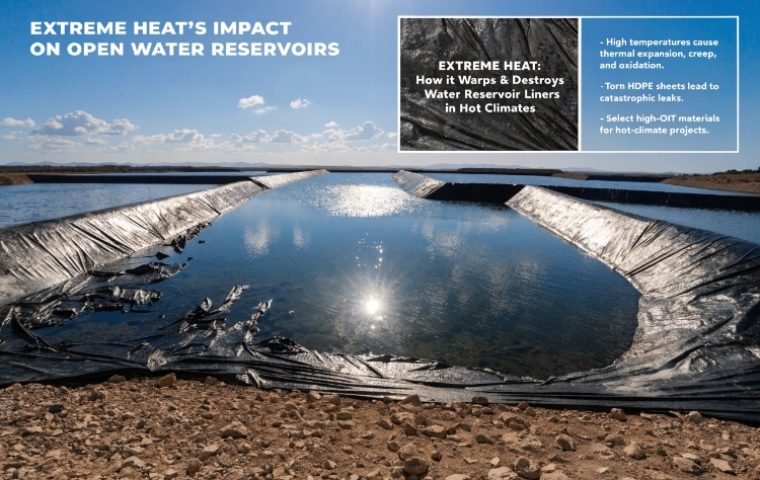
- Temperature Swings: High UV often comes with high daytime surface temperatures. Black HDPE absorbs heat, reaching surface temperatures of 70°C to 80°C. This heat accelerates the chemical degradation initiated by the UV light.
2.2 Typical Heap Leach Pad Exposure Scenario
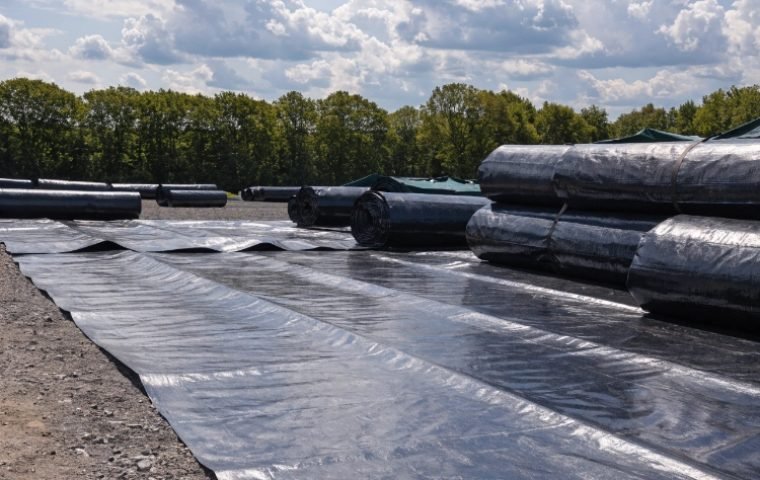
In a perfect world, we deploy the liner and cover it with overliner (protective soil) the next day. In the real world, this rarely happens.
- Mobilization Delays: We frequently see projects where the liner is installed, but the crushing plant or stacking equipment is delayed.
- Phased Construction: Large pads are built in phases. The leading edge of the liner might be exposed for 6 to 12 months as the leach pile expands.
- El riesgo: During this window, the geomembrane is "cooking." If the material formulation is weak, the oxidative induction time (OIT) depletes rapidly before the liner ever sees a drop of leaching solution.
3. How UV Exposure Affects HDPE Geomembranes
"Degradation" is a vague term. As specialists, we need to understand exactly what is happening to the polymer sheet physically and chemically.
3.1 Polymer Chain Degradation (Photo-Oxidation)
Polietileno de alta densidad (HDPE) is a hydrocarbon polymer. When UV energy (photons) strikes the polymer chains, it can excite the electrons to a point where the chemical bonds break. This creates "free radicals."
These free radicals react with oxygen in the air (oxidation), setting off a chain reaction that effectively "chops" the long polymer chains into shorter segments.
Why this matters: The physical strength of geomembrane comes from the entanglement of these long chains. As chains are cut, the material loses its tensile properties.
3.2 Loss of Oxidative Resistance (OIT Depletion)
Before the plastic breaks down, the additives break down. A quality mining liner contains a package of antioxidants (AO). These AOs are "sacrificial"—they volunteer to be oxidized by the UV radiation so the polymer doesn't have to be.
However, this is a finite resource. Once the ITO estándar o ITO de alta presión (HPOIT) values drop below a critical threshold, the protection is gone, and the polymer itself begins to degrade.
3.3 Surface Cracking & Brittleness (The Failure Mode)
The final stage of UV damage is visible stress cracking.
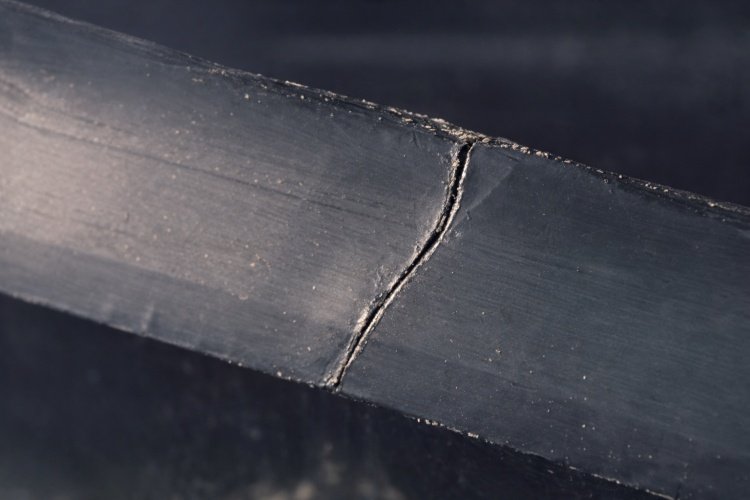
- Micro-cracking: The surface of the liner becomes "chalky" or develops a network of tiny fissures (often called "crazing").
- Loss of Elongation: This is the most dangerous effect. HDPE is specified because it is ductile (it can stretch). UV-degraded HDPE becomes brittle. When a 300-ton haul truck drives over the overliner layer, a brittle liner will snap or shatter like glass rather than yield.
- Environmental Stress Crack Resistance (ESCR): UV exposure drastically lowers the ESCR. In a heap leach pad, the liner is under constant multi-axial stress. If the ESCR is compromised by UV, the liner will fail under the pile load.
4. How Long Can a Geomembrane Withstand UV Exposure?
This is the most common question we receive during tender clarification: "How long can we leave this exposed?"
There is no single answer because it depends on two variables: the intensity of the sun (location) and the quality of the recipe (formulation).
Testing Standards (The Benchmark)
We rely on accelerated weathering tests like ASTM D7238 (Fluorescent UV Condensation) or Norma ASTM D4355 (Xenon Arc).
- GRI-GM13 Standard: This is the global bible for mining liners. It dictates that after 1,600 hours of accelerated UV exposure, the material must retain at least 50% of its High-Pressure OIT (HPOIT) value.
- What this means: 1,600 hours in a lab chamber translates roughly to several years of outdoor exposure in moderate climates, or perhaps 12–18 months in extreme desert mining conditions.
Realistic Timelines
For a high-quality, mining-grade HDPE geomembrane (properly formulated):
- Safe Zone: 6 to 12 months of exposure is generally acceptable and will not critically compromise the liner's service life.
- Danger Zone: Exposure beyond 18–24 months in high-altitude deserts requires re-testing.
- The "Cheap" Liner Reality: We have seen generic "agricultural" or "waterproofing" grade liners (non-GM13) become brittle and crack after just 4 months of exposure in the Peruvian Andes. This forces a total tear-out and replacement, costing millions.
5. Key Factors That Improve UV Resistance
When you buy a geomembrane, you aren't just buying plastic; you are buying a chemical formulation. Three ingredients determine whether the liner survives the sun.
5.1 Contenido de negro de humo (The Sunscreen)
Carbon Black is the most effective UV absorber known to man. It blocks UV radiation from penetrating deep into the polymer matrix.
- Percentage: The industry standard is 2.0% to 3.0%. Less than 2% is insufficient; more than 3% can make the material brittle.
- Dispersion: It’s not just about amount; it’s about mixing. If the carbon black is poorly dispersed (clumped), UV light will find "windows" to attack the polymer. We use microscopic analysis to ensure dispersion ratings of Category 1 or 2 (excellent).
5.2 HALS Stabilizers
Hindered Amine Light Stabilizers (HALS) are chemical additives that trap free radicals. They regenerate themselves, providing long-term protection efficiently. HALS are particularly effective at preventing surface crazing and cracking.
5.3 High OIT Values (The Tank)
For mining, we focus heavily on High-Pressure OIT (HPOIT) per ASTM D5885.
Standard OIT measures processing stability (how well the plastic handles the extruder heat). HPOIT measures long-term endurance against photo-oxidation and chemical leaching.
A geomembrane with a high initial HPOIT value essentially has a larger "fuel tank" of antioxidants. It can withstand longer UV exposure before the tank runs dry and the engine (the polymer) fails.
6. Design & Construction Strategies to Minimize UV Damage
Even with the best material, engineering controls are the best defense. We advise our EPC clients to adopt specific strategies to reduce UV risk.
- Prompt Cover Placement: The obvious solution. Schedule the placement of the overliner (cushion layer) as closely as possible behind the liner deployment crew.
- Reflective Surfaces (White/Black Geomembrane):
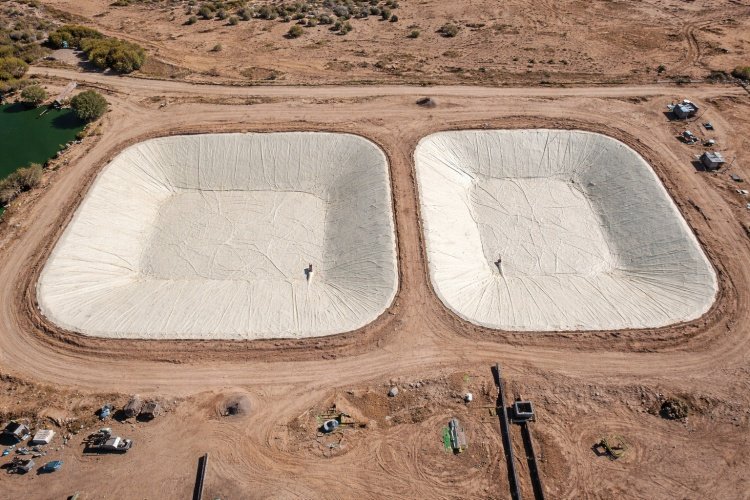
- In extreme UV/Heat environments, we often supply White-Surfaced HDPE.
- The white layer reflects UV radiation and significantly lowers the surface temperature of the liner (often by 20°C–30°C).
- Cooler liner = Slower chemical depletion = Longer life. It also reduces thermal expansion wrinkles, which helps with drainage.
- Temporary Sacrifice Layers: If a section must remain exposed for years (e.g., a planned expansion zone), calculate the cost of placing a thin "sacrificial" geotextile or a cheap 0.5mm film over it. This takes the UV hit, saving the primary barrier.
- Anchor Trench Protection: The anchor trench is often left open for months. Ensure the liner in the trench is covered with sandbags or soil, as this is a high-stress point (tension) where UV cracking is most likely to initiate.
7. Why Mining Projects Require UV-Resistant Geomembranes
In B2B procurement, we often see tenders that simply ask for "2.0mm HDPE," without specifying the grade. This is where projects go wrong.
Not all HDPE is created equal. A liner designed for a covered landfill cell or a basement foundation does not need the heavy UV stabilizer package required for an exposed leach pad.
Especialista en impermeabilización supplies geomembranes specifically engineered for the mining sector. Our approach includes:
- GRI-GM13 Compliance: We treat this as the minimum baseline, not the target.
- Custom AO Packages: For high-altitude South American projects, we can increase the antioxidant loading to extend the "exposure window."
- Traceability: We provide resin batch data proving the Carbon Black dispersion and OIT values for every roll.
When you select a mining-grade liner, you are paying for the assurance that an 8-month construction delay won't turn your liner into a brittle sheet of glass.
8. Risk, Limitations, and When This Is NOT Recommended
It is important to understand the limitations of UV stabilizers.
1. No Liner lasts forever in the sun:
Even the best UV-stabilized HDPE will eventually degrade if exposed indefinitely. If your application is a long-term exposed water reservoir (20+ years) rather than a heap leach pad (which gets covered), HDPE might still work, but you should consider thicker sheets (2.5mm) or specialized cover systems (floating covers).
2. The "Synergy" of Chemical + UV:
The most dangerous scenario is a liner that is exposed to UV while being in contact with chemicals (e.g., an exposed evaporation pond with acid water). UV radiation damages the surface, making it more porous and susceptible to chemical attack. In these cases, the service life is significantly shorter than in dry UV exposure.
3. White Liner Limitations:
While white-surfaced liners are excellent for UV control, the white layer is thin. It offers no structural advantage. If the white layer is scratched during installation, the black core is exposed. This is not a failure, but it reduces the reflective benefit.
9. Case Insight: High-Altitude Copper Project
We recently consulted on a copper project in the Andes (4,200m elevation). The project faced a funding freeze, leaving 50,000 square meters of 2.0mm HDPE liner exposed for nearly 24 months before work resumed.
The Assessment:
Before allowing ore stacking, we took samples from the exposed liner and sent them for lab analysis.
- Resultado: The Carbon Black content was stable (it doesn't evaporate), but the HPOIT values had dropped by 45% compared to the retained samples from the warehouse.
- The Decision: Because the initial specification was high-quality (starting with very high OIT), the remaining 55% was still sufficient to survive the service life under the heap (where there is no UV).
- The Lesson: If the project had used a "standard" or "economy" grade liner with lower initial OIT, that 24-month exposure would have depleted the antioxidants entirely, requiring a full $1M+ replacement. Investing in quality upfront saved the project.
Conclusión
UV exposure is a fundamental constraint in open-pit mining construction. A heap leach pad liner must survive the "construction window"—that critical period between deployment and burial—without losing its mechanical integrity.
The risk is manageable, but only if you:
- Acknowledge the Environment: High altitude means high risk.
- Especifique correctamente: Demand GRI-GM13 compliance and check Carbon Black/OIT values.
- Plan Construction: Minimize exposure time or use reflective liners.
En Especialista en impermeabilización, we don't just sell rolls of plastic; we help you calculate the lifespan of your containment system against the harsh realities of the mining environment. Protect your investment by starting with the right formulation.