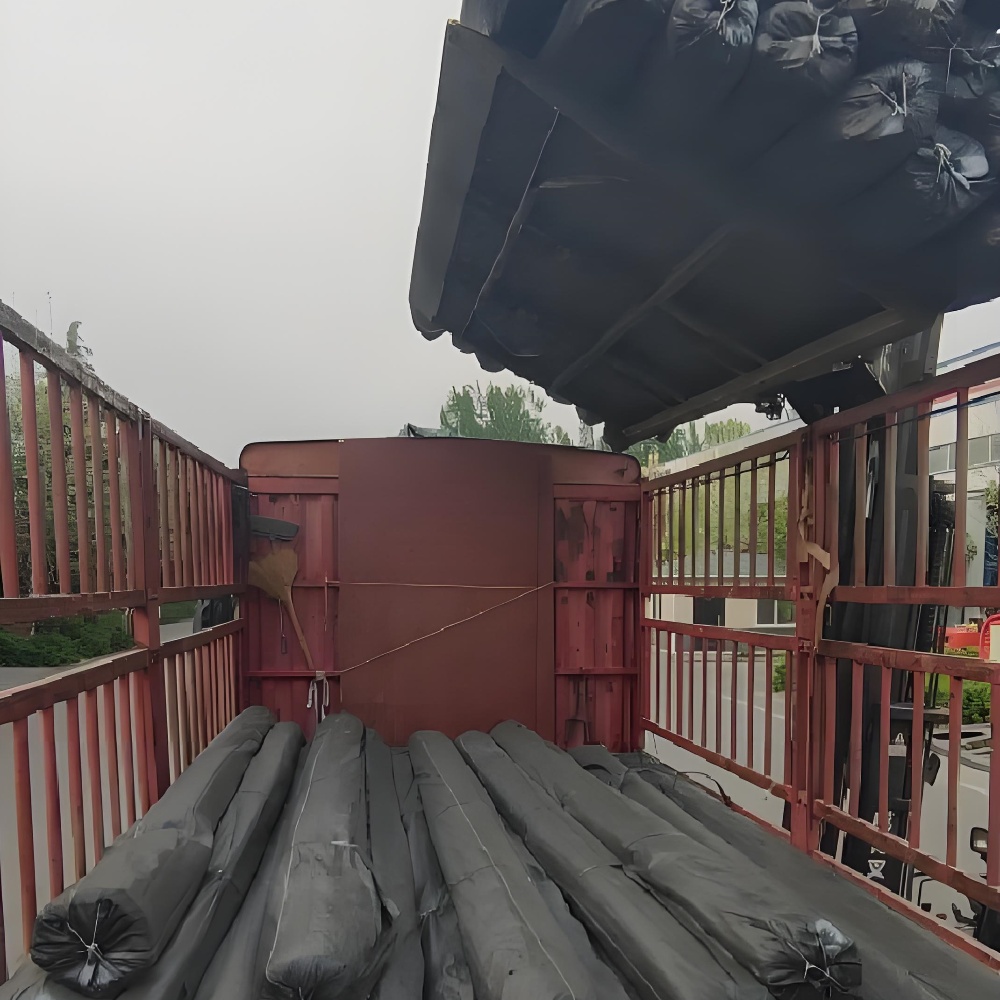


Geomalla uniaxial: fabricante, propiedades &Aplicaciones de ingeniería
Refuerce el suelo con geomalla uniaxial de HDPE/PP de alta resistencia, ideal para pendientes, muros de contención y terraplenes. Suministro directo de fábrica con garantía de calidad.
Exportar Globalmente
Directamente de fábrica
Calidad certificada
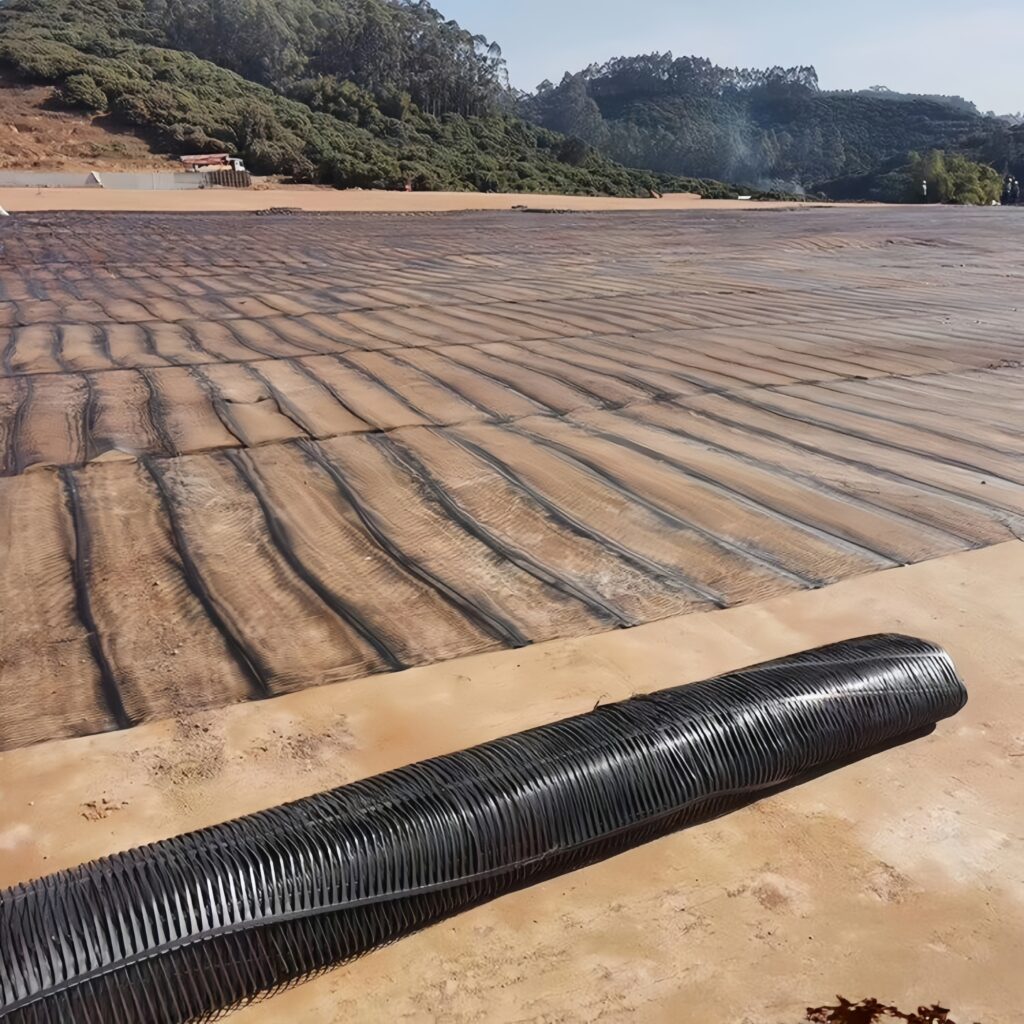
Propiedades especiales de Geomalla uniaxial
DirecciónLa geomalla uniaxial proporciona una resistencia a la tracción excepcional a lo largo de la dirección de la máquina (MD), que resiste eficientemente la deformación del suelo y mejora la capacidad de carga en muros de contención y taludes.
Fabricado con polietileno de alta densidad (HDPE) o polipropileno (PP), presenta una fluencia mínima bajo carga sostenida, lo que garantiza un refuerzo confiable a largo plazo para las estructuras del suelo.
Resistente a ácidos, álcalis y degradación microbiana, lo que permite un rendimiento estable en suelos agresivos o entornos de drenaje.
La estructura de polímero estabilizada a los rayos UV mantiene la resistencia mecánica y la estabilidad dimensional incluso después de una exposición prolongada al aire libre.
La geometría de nervaduras y aberturas de la geomalla uniaxial mejora la interconexión con las partículas del suelo circundantes, mejorando la resistencia al corte y la eficiencia del refuerzo.
Los rollos son flexibles y fáciles de manejar, lo que reduce los costos de mano de obra en el sitio y acelera la construcción sin equipo pesado.
Funciona eficazmente con suelos cohesivos y granulares, capas tratadas con cemento y compuestos geotécnicos para amplias aplicaciones de ingeniería.
Debido a su resistencia direccional y su bajo alargamiento, transfiere cargas de manera eficiente desde una subrasante débil a capas de suelo más fuertes, mejorando la integridad estructural general.
Llegar a saber Geomalla uniaxial
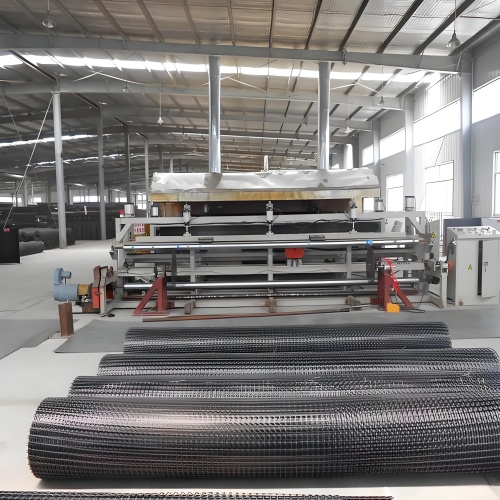
A geomalla uniaxial es un material geosintético elaborado a partir de polietileno de alta densidad (HDPE) o polipropileno (PP), diseñado para proporcionar refuerzo en una dirección primaria. Durante la fabricación, la lámina de polímero se extruye, se perfora y luego se estira longitudinalmente para alinear las cadenas moleculares.
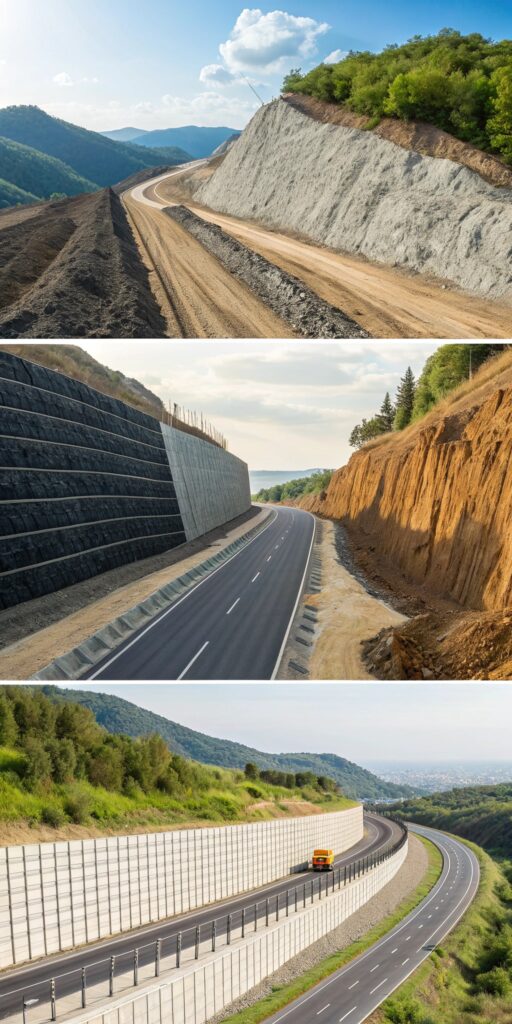
Este proceso crea alta resistencia a la tracción a lo largo de la dirección de la máquina, lo que hace que las geomallas uniaxiales sean ideales para reforzar el suelo en muros de contención, terraplenes y pendientes pronunciadas donde las cargas actúan principalmente en una dirección.
El resistencia a la tracción de geomallas uniaxiales normalmente oscila entre 30 kN/m a 200 kN/m, según el grado y la materia prima (HDPE, PP o PET).
ellos ofrecen alto límite elástico con un alargamiento de rotura muy bajo, generalmente inferior al 13%.
Este fuerte rendimiento direccional les permite transferir cargas de manera eficiente al suelo circundante, evitar la dispersión lateral y mejorar la estabilidad de las estructuras de ingeniería.
El término “mineral uniaxial” proviene de la cristalografía y se refiere a minerales que tienen un solo eje óptico, como el cuarzo o la calcita.
Es no relacionado con geomallas uniaxiales.
En ingeniería geotécnica, la palabra uniaxial simplemente significa "tener una dirección principal de fuerza o estrés".
Por lo tanto, al referirse a un geomalla uniaxial, describe un material que resiste la tensión en una dirección, no un mineral geológico.
El Propósito principal de una geomalla uniaxial. es reforzar el suelo y mejorar su comportamiento mecánico bajo carga.
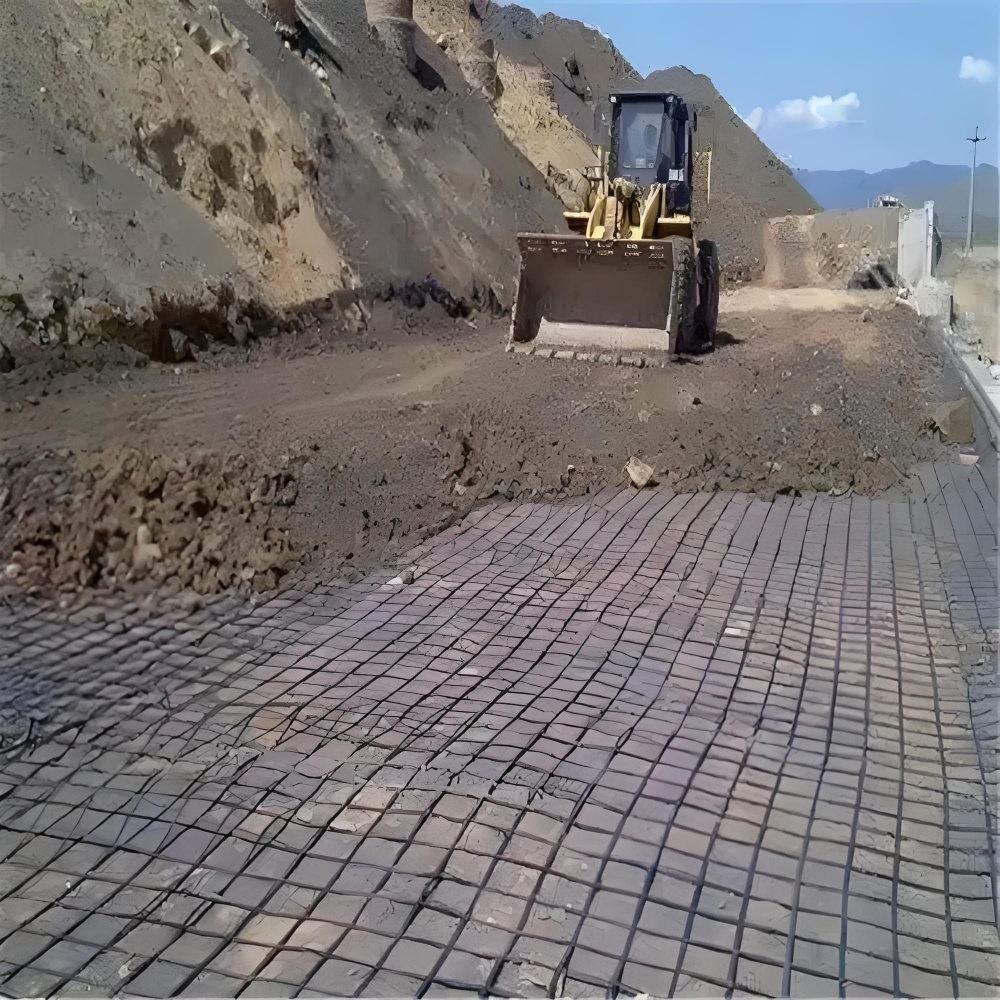
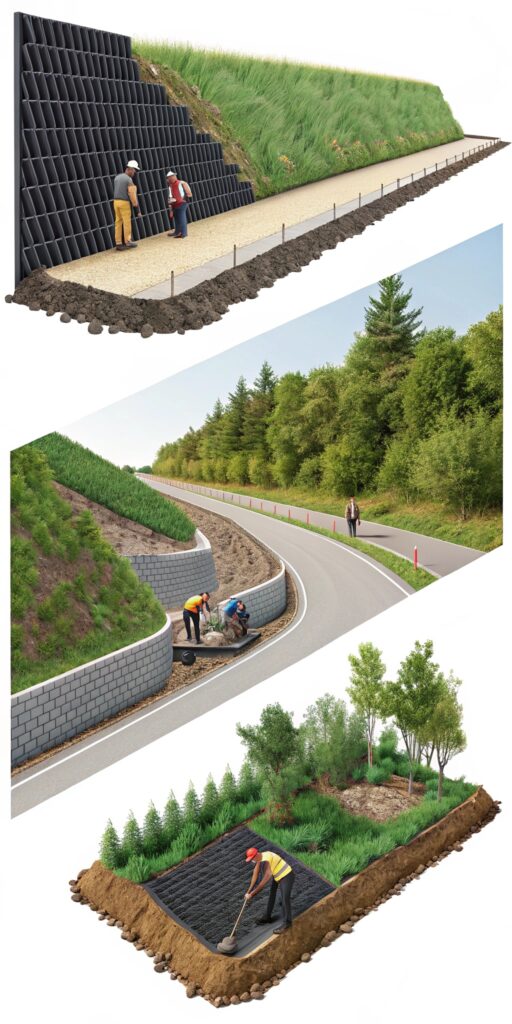
Al entrelazarse con las partículas del suelo circundantes, aumenta la resistencia al corte, limita la deformación y proporciona estabilidad estructural para muros de contención, terraplenes, pendientes pronunciadas y paredes laterales de vertederos.
En proyectos de ingeniería civil, sirve como capa de refuerzo rentable que mejora la distribución de la carga y prolonga la vida útil de las infraestructuras construidas sobre suelos débiles o inestables.
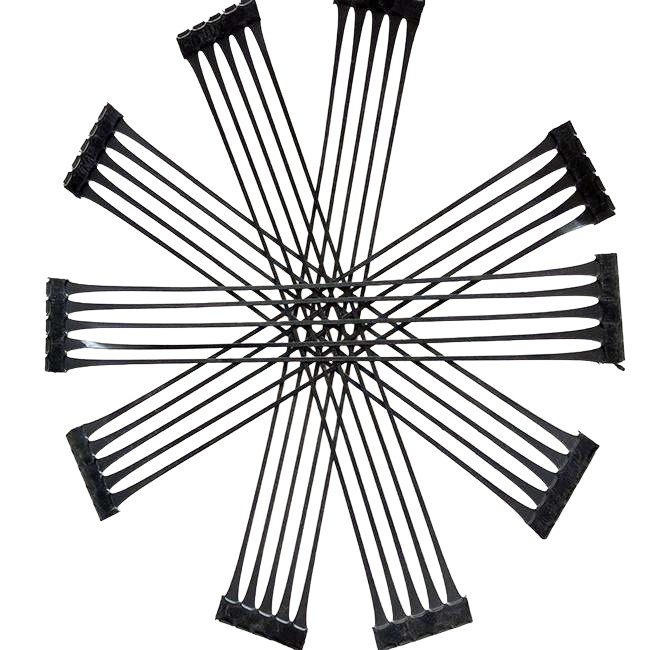
Tipos de materiales de Geomalla uniaxial
Geomalla uniaxial de PP
La geomalla uniaxial de PP está hecha de alta calidad. polipropileno (PP) mediante extrusión, perforación y estiramiento unidireccional. El proceso alinea las cadenas de polímeros en una estructura lineal, proporcionando alta resistencia a la tracción y estabilidad en una dirección. Ligera, flexible y resistente a la corrosión química, la geomalla uniaxial de PP es una solución rentable para refuerzo general de suelos, muros de contención y pendientes de drenaje. Resistencia a la tracción típica: 30-120 kN/m.
Geomalla uniaxial de HDPE
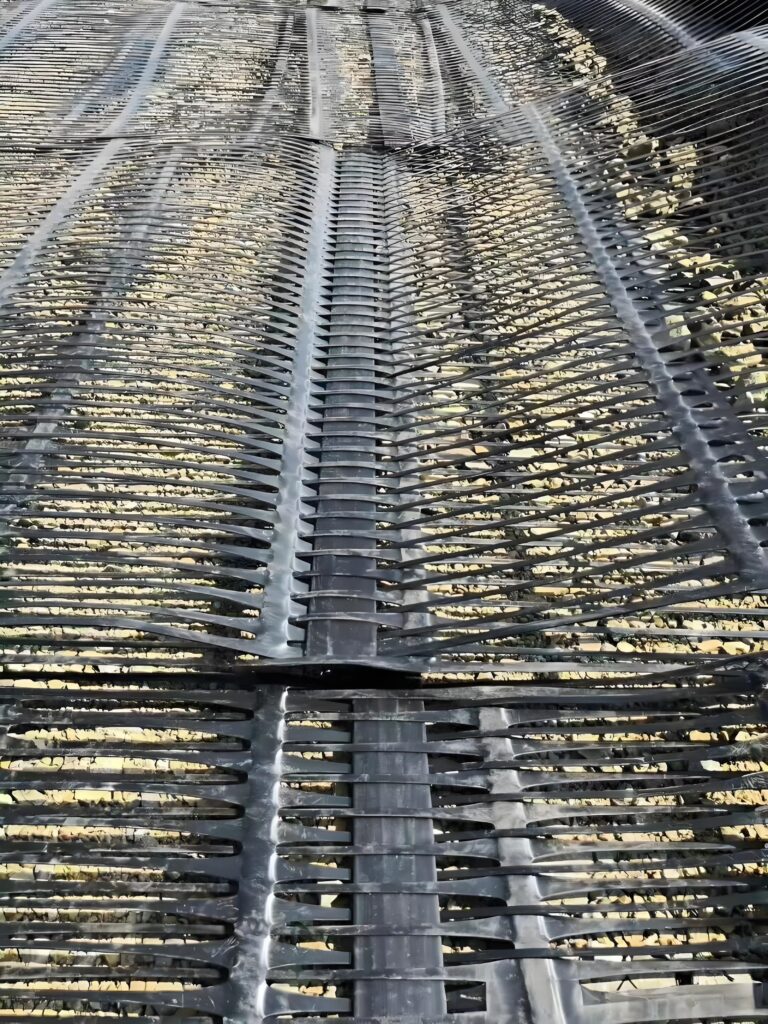
La geomalla uniaxial de HDPE se produce a partir de HDPE de alto peso molecular láminas que se extruyen, perforan y estiran para lograr una fuerte orientación molecular. ofrece excelente resistencia a la tracción y a la fluencia, durabilidad excepcional y alta estabilidad química y a los rayos UV. Ideal para largo plazo refuerzo del suelo, pendientes pronunciadas, terraplenes y muros de contención en condiciones de carga pesada. Resistencia a la tracción típica: 60-200 kN/m.
Especificaciones técnicas de Geomalla uniaxial (PP y HDPE)
| Especificación (modelo TGDG) | Resistencia a la tracción ≥ (kN/m) | Elongación de rotura ≤ (%) | Resistencia al 2% Deformación ≥ (kN/m) | Resistencia al 5% Deformación ≥ (kN/m) |
|---|---|---|---|---|
| TGDG35 | 35 | 10 | 10 | 22 |
| TGDG50 | 50 | 10 | 12 | 28 |
| TGDG80 | 80 | 10 | 26 | 48 |
| TGDG110 | 110 | 10 | 32 | 64 |
| TGDG120 | 120 | 10 | 36 | 72 |
| TGDG150 | 150 | 10 | 42 | 84 |
| TGDG160 | 160 | 10 | 45 | 90 |
| TGDG200 | 200 | 10 | 56 | 112 |
| TGDG220 | 220 | 10 | 80 | 156 |
| TGDG260 | 260 | 10 | 94 | 185 |
| TGDG300 | 300 | 10 | 108 | 213 |
| Especificación (modelo TGDG) | Resistencia a la tracción ≥ (kN/m) | Elongación de rotura ≤ (%) | Resistencia al 2% Deformación ≥ (kN/m) | Resistencia al 5% Deformación ≥ (kN/m) |
|---|---|---|---|---|
| TGDG50 | 50 | 11.5 | 12 | 23 |
| TGDG65 | 65 | 11.5 | 16 | 31 |
| TGDG80 | 80 | 11.5 | 21 | 40 |
| TGDG90 | 90 | 11.5 | 24 | 45 |
| TGDG100 | 100 | 11.5 | 26 | 50 |
| TGDG110 | 110 | 11.5 | 29 | 55 |
| TGDG120 | 120 | 11.5 | 38 | 75,5 |
| TGDG150 | 150 | 11.5 | 41 | 81 |
| TGDG170 | 170 | 11.5 | 52,5 | 103 |
| TGDG200 | 200 | 11.5 | 60 | 110 |
| TGDG220 | 220 | 11.5 | 64 | 127 |
Geomalla uniaxial PP vs HDPE: Diferencias clave y aplicaciones de ingeniería
Tanto las geomallas uniaxiales de PP (polipropileno) como las de HDPE (polietileno de alta densidad) están diseñadas para reforzar el suelo, pero difieren en su rendimiento a largo plazo, resistencia a la fluencia y su idoneidad para diversas condiciones de ingeniería. La siguiente comparación le ayudará a seleccionar el material adecuado para su proyecto.
| Aspecto de comparación | Geomalla Uniaxial PP (Polipropileno) | Geomalla Uniaxial HDPE (Polietileno de Alta Densidad) |
|---|---|---|
| Material y estructura | Fabricado a partir de láminas de polipropileno de alta calidad mediante extrusión y estiramiento unidireccional. Ligero, flexible y fácil de instalar. | Fabricado a partir de láminas de polietileno de alta densidad con alineación molecular en una dirección. Estructura densa, fuerte y más rígida. |
| Resistencia a la tracción | Normalmente entre 30 y 160 kN/m. Adecuado para refuerzo de suelos de resistencia media y estabilización de taludes. | Varía entre 60 y 220 kN/m. Diseñado para proyectos de muros de contención de carga pesada y a largo plazo. |
| Resistencia a la fluencia | Resistencia moderada a la fluencia. Recomendado para proyectos de vida útil corta a media. | Excelente resistencia a la fluencia a largo plazo: 2 a 3 veces mayor que el PP. Ideal para estructuras de ingeniería "cien años". |
| Resistencia química y ambiental | Resiste ácidos y álcalis, adecuado para ambientes generales de suelo y drenaje. | Resistencia superior a los rayos UV y a la intemperie. Funciona bien en condiciones costeras, de vertederos y de alta temperatura. |
| Instalación y costo | Ligero y fácil de manejar, ofreciendo una solución más económica. | Material más pesado y mayor costo, pero con mayor vida útil y estabilidad. |
| Aplicaciones típicas de ingeniería |
• Refuerzo de firmes y taludes • Estructuras de contención temporales • Proyectos generales de estabilización de suelos. |
• Muros de contención permanentes y terraplenes • Revestimientos de vertederos y puertos • Proyectos mineros, de alta carga y costeros. |
| Uso recomendado | Cuando el proyecto requiere instalación rápida y rentabilidad con capacidad de carga moderada. | Cuando las prioridades son el rendimiento a largo plazo, la deformación mínima y la durabilidad ambiental. |
En resumen: Elegir Geomalla uniaxial de PP for standard road or slope reinforcement where cost efficiency matters, and select Geomalla uniaxial de HDPE for high-strength, long-life retaining or foundation structures where durability and creep resistance are critical.
Geomalla uniaxial Instalación y control de calidad (CQA)
Métodos de colocación
Preparación de la superficie:
Asegúrese de que la superficie de la base esté lisa, compactada y libre de escombros afilados o agua estancada que puedan dañar la geomalla. Verifique el nivel de diseño y la alineación antes de la instalación para mantener la uniformidad de la superficie.
Desenrollar & Orientación:
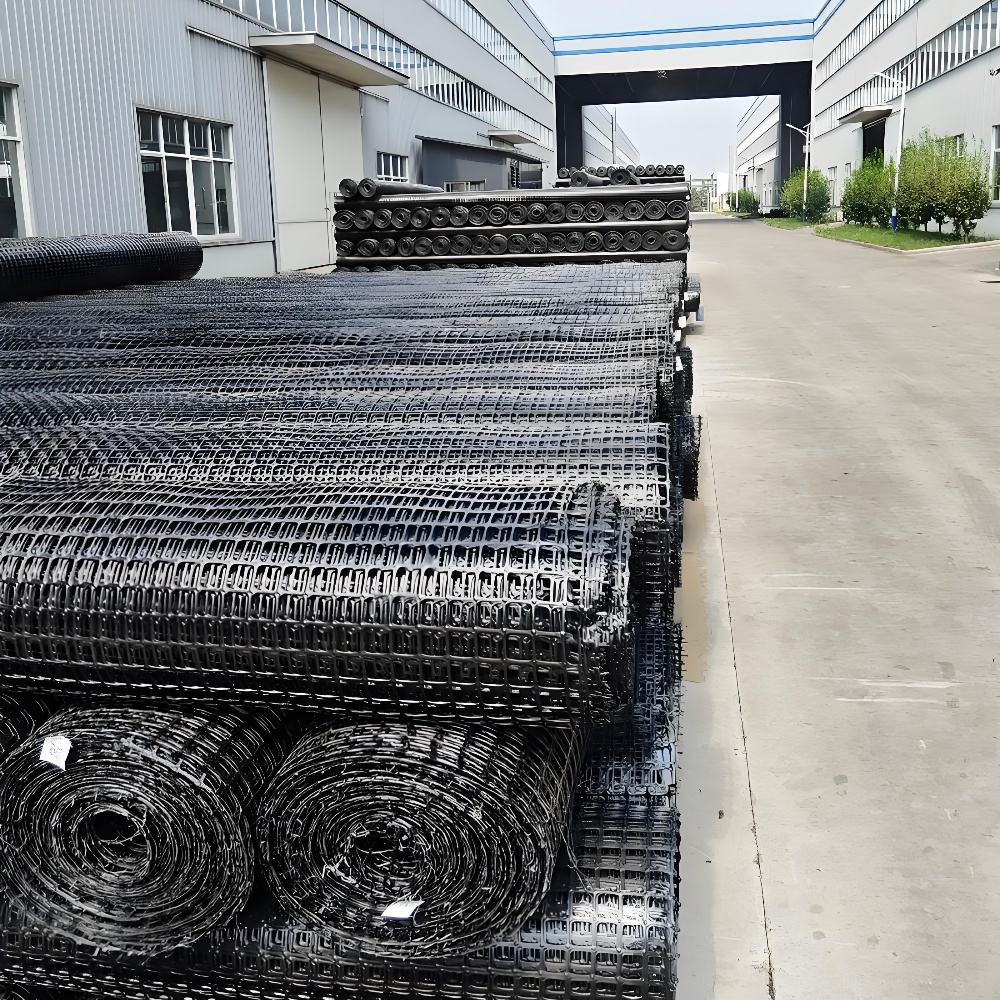
Las geomallas uniaxiales se suministran en rollos y deben desenrollarse manualmente o utilizando maquinaria ligera a lo largo de la subrasante preparada.
El La dirección principal de tracción debe estar alineada con la dirección principal de tensión del suelo. o trayectoria de carga para lograr un rendimiento completo del refuerzo. Una desalineación mayor a 5° puede reducir significativamente la eficiencia de tracción.
Ancho de superposición:
Para una transferencia de carga efectiva, la superposición longitudinal debe ser 300–500 milímetros, y la superposición transversal debe ser al menos 500 mm.
Fijar los solapes con clavos en forma de U, alfileres o bridas de plástico a intervalos no superiores a 1,5 m para evitar deslizamientos durante el relleno.
Anclaje & Fijación:
En pendientes o interfaces de muros de contención, ancle los extremos de la geomalla debajo de una mínimo 2 m de cobertura del suelo o dentro de una zanja.
Aplique una ligera tensión previa para eliminar las arrugas y garantizar una distribución uniforme de la tensión en toda la rejilla.
Relleno & Protección:
Extienda y compacte el material de relleno uniformemente en capas. Mantener un espesor mínimo de la cubierta de 15 a 20 cm antes de la compactación.
Evite operar maquinaria pesada directamente sobre geomallas expuestas; garantice la protección adecuada antes de la carga de tráfico.
Ajuste para áreas curvas o irregulares:
Para alineamientos curvos, esquinas o bordes de alcantarillas, coloque la geomalla en segmentos más cortos manteniendo la eje de tracción principal consistente con la dirección de máxima tensión del suelo.
Mantener un radio de curvatura mínimo de 3 m para evitar daños estructurales a las nervaduras o uniones.
Recomendaciones del CQA
Realice una inspección visual antes y después de la instalación para detectar cortes, pliegues o desalineaciones.
Verifique que el dirección principal de tracción Corresponde a los planos de diseño y plano de disposición de campo.
Asegúrese de que las prácticas de superposición y anclaje cumplan con las especificaciones del proyecto y los estándares de prueba internacionales, como Norma ASTM D6637 o ISO 10319.
Durante el relleno y la compactación, controle de cerca el desplazamiento o las arrugas para mantener un contacto total entre la geomalla y el material de relleno.
Mantenga registros de instalación y fotografías del sitio para documentación de calidad y referencia de mantenimiento futuro.
¿Por qué elegir? ¿Especialista en WP?
A lo largo de los años, Especialista en WordPress se ha establecido como uno de los confiables de China fabricantes de geomallas uniaxiales y proveedores confiables de materiales de refuerzo geosintéticos para proyectos de infraestructura global.
Nos especializamos en producir Geomallas uniaxiales de PP y HDPE de alto rendimiento diseñado para mejorar la estabilidad del suelo, la capacidad de carga y el rendimiento a largo plazo en Muros de contención, taludes, terraplenes y cimientos de carreteras..
Nuestras geomallas ofrecen excepcional resistencia a la tracción, resistencia a la fluencia y durabilidad — respaldado por suministro directo de fábrica, orientación técnica profesional y estricto control de calidad.
- Muestras gratuitas de geomalla uniaxial
- Soporte experto en proyectos
- Garantía de calidad confiable
- Más de 10 años de experiencia en fabricación
- Suministro directo de fábrica
¿Listo para especificar una geomalla?
- Más de 15 años de experiencia directa de fábrica
- Soluciones de ingeniería personalizada para sus necesidades
- Envío global & Soporte logístico
- Una cita transparente y sin compromiso
- 100% Confdencialidad garantizada
Su información de correo electrónico se mantendrá estrictamente confidencial y nuestro personal comercial se asegurará de que su información privada esté absolutamente segura.
Contacto
- info@waterprowpecialist.com
Responder dentro de las 12 horas!
Preste atención al correo electrónico con el sufijo "@Waterproofpecialist.com".