Composite Reinforced Geotextile — Manufacturer, High-Strength Solutions for Ground Stabilization

Engineered with fiberglass and warp-knitted polyester structures, reinforced geotextiles deliver exceptional tensile strength, dimensional stability, and crack-resistant performance for demanding civil and road projects.

Exportar Globalmente

Directamente de fábrica

Calidad certificada

Main Types of Reinforced Woven Geotextile

Warp-Knitted Reinforced Geotextile composite of polyester yarns and nonwoven fabric

Warp-Knitted Reinforced Geotextile

Description

Warp-knitted reinforced geotextile is a composite material made by combining high-strength polyester yarns with nonwoven fabric through a warp-knitting binding process. During production, the binding yarn interlaces repeatedly through the warp, weft, and the fiber layer of the nonwoven geotextile, integrating them into a single composite.

This structure gives the material high tensile strength, low elongation, uniform deformation in both directions, excellent tear and abrasion resistance, high permeability, and strong filtration ability.

Características clave

  • Straight and unbent yarn intersections distribute stress evenly.
  • The binding yarn locks warp and weft firmly for stable load transfer.
  • When subjected to tearing, fibers gather around the crack tip to enhance tear resistance.
  • High strength, low creep, durable, and easy to install.

Specifications

  • Width: 4–6 m (customizable)
  • Strength: 35 kN/m – 300 kN/m (customizable)
  • Function: Reinforcement · Drainage · Filtration · Separation · Protection

Applications

Used for coastal reclamation, river and dam reinforcement, slope retaining walls, soft soil improvement, and subgrade stabilization.

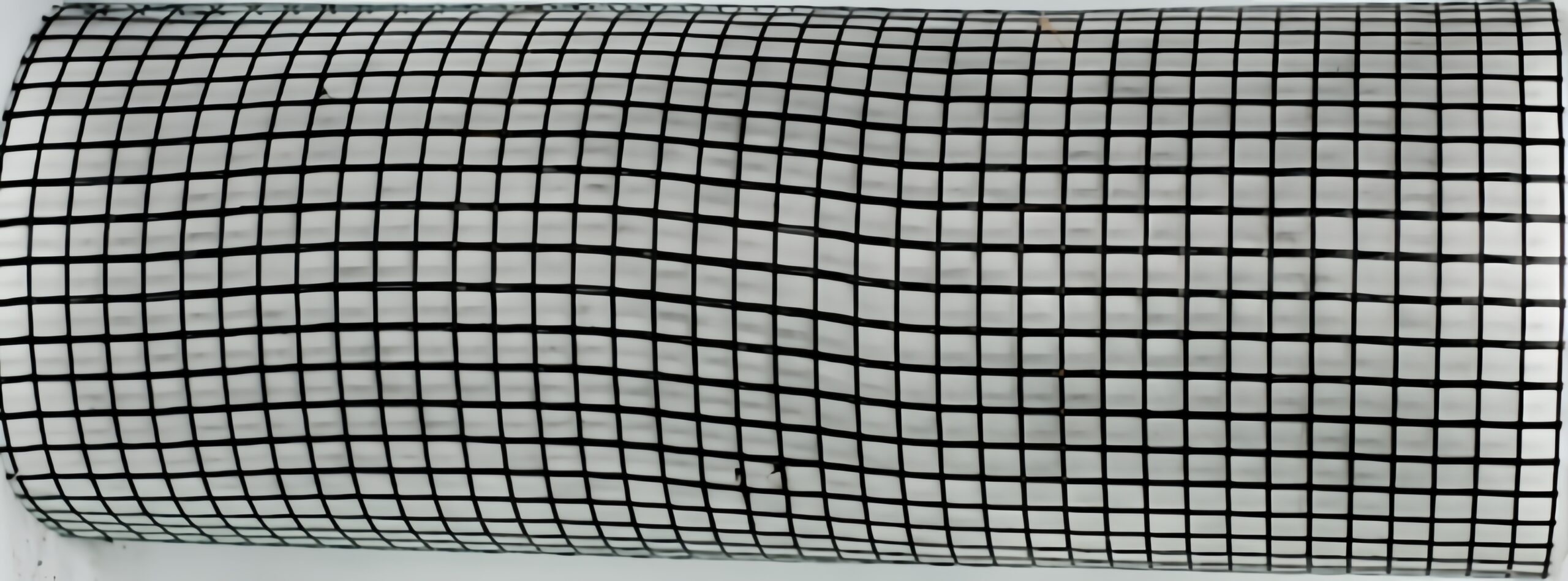
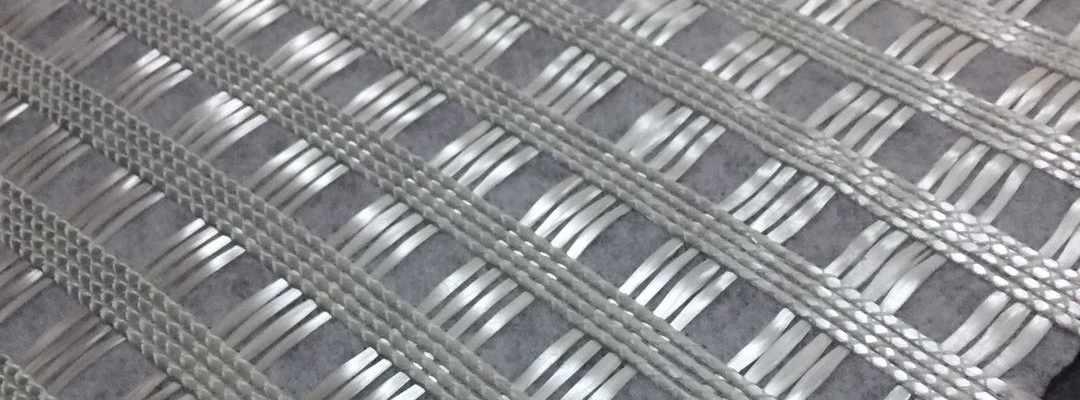
Fiberglass Reinforced Geotextile close-up for asphalt and geotechnical reinforcement

Fiberglass Reinforced Geotextile

Description

Fiberglass reinforced geotextile is made from glass fiber as the reinforcement material, laminated or bonded with short-fiber needle-punched nonwoven fabric. The fiberglass provides very high tensile strength and dimensional stability, while the fabric layer adds filtration and separation functions.

It differs from traditional woven fabric in that warp and weft yarns remain straight without bending at intersections. Binding yarns secure them firmly, distributing stress uniformly and increasing tear resistance.

Características clave

  • High tensile strength with low elongation
  • Balanced deformation in both directions
  • Excellent tear and abrasion resistance
  • High permeability and strong filtration capacity
  • Long-term durability under heat, moisture, and mechanical stress

Specifications

  • Width: 4–6 m (customizable)
  • Weight: 400–1000 g/m² (customizable)
  • Function: Reinforcement · Drainage · Filtration · Separation · Protection

Applications

Widely used in hydraulic engineering, municipal works, building foundations, transportation, metro and tunnel projects, and environmental protection fields. Typical uses include retaining walls, road slopes, reservoirs, coastal works, tunnels, landfill protection layers, and soft ground reinforcement.

Rinforced geotextile installation

Geotextil reforzado Installation & Quality Control (CQA)

Métodos de colocación
  • Preparación de la superficie:
    Ensure the subgrade is smooth, compacted, and free of sharp stones or debris that may damage the fabric. Remove standing water before installation.
    For reinforced geotextiles used on soft subgrades, apply a thin layer of sand or fine soil (5–10 cm) to create a uniform bedding surface.

  • Colocación:
    Unroll the reinforced geotextile directly on the prepared surface in the designed alignment. Avoid dragging the rolls to prevent surface abrasion.
    Make sure the warp (longitudinal) direction is aligned with the main stress direction of the structure (such as the slope line or embankment axis).

  • Tensioning:
    Keep the fabric moderately tensioned but not overstretched. Wrinkles or folds should be minimized to ensure full contact with the subgrade.

Jointing & Overlaps
  • Overlap Width:
    Typical overlaps are 30–60 cm, depending on project requirements and fabric strength. For high-stress areas (e.g., slopes or subgrade joints), overlaps may be increased up to 1.0 m.

  • Joining Method:

    • For warp-knitted reinforced geotextiles, use sewing or thermal bonding if specified.

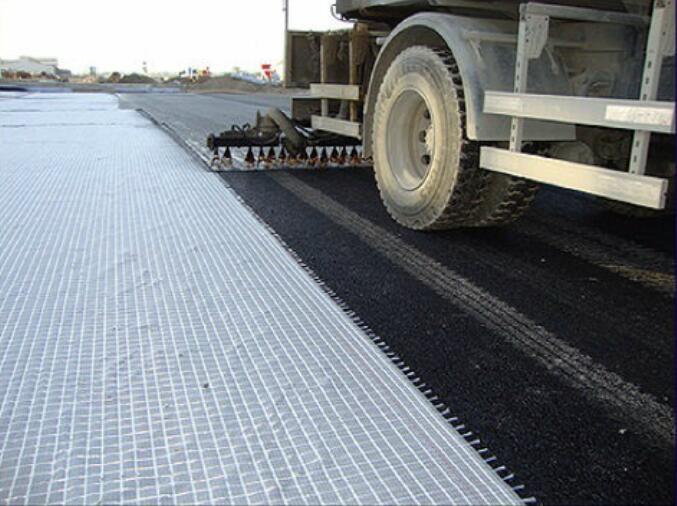
    • For fiberglass reinforced types, overlaps are typically bonded with bitumen or adhesive spray during asphalt paving.

    • Ensure joints are staggered and not concentrated in a single line across the structure.

Anchoring & Fixing
  • Temporary Fixing:
    Use sandbags, pins, or nails to prevent wind uplift before the next layer is placed. Fixing points should not damage the geotextile.

  • Permanent Anchoring:
    At slopes, embed the top edge into an zanja de anclaje (minimum depth 0.3–0.5 m).
    For road or pavement applications, ensure the geotextile remains firmly in place until the overlying material (soil, gravel, or asphalt) is installed.

¿Por qué elegir? ¿Especialista en WP?

A lo largo de los años, Especialista en WordPress se ha ganado una sólida reputación como uno de los proveedores de confianza de China. geotextile manufacturers y proveedores globales de materiales geosintéticos.
Nos enfocamos en entregar reliable geotextile fabrics que satisfacen las exigentes necesidades de Proyectos de ingeniería civil, vial e hidráulica. mundial.

Our geotextiles combine high tensile strength, stability, and consistent quality — backed by factory-direct service and technical expertise.

Ready to Specify a Geotextile?

¡Su información de correo electrónico se mantendrá estrictamente confidencial y nuestro personal comercial se centrará en que su información privada sea absolutamente segura!

Contacto

Responder dentro de las 12 horas!

Preste atención al correo electrónico con el sufijo "@Waterproofpecialist.com".

Acceder al catálogo →

Para ingeniería, proyectos y compradores mayoristas.

Obtener una muestra & Cita dentro de las 12 horas

Preste atención al correo electrónico con el sufijo "@Waterproofpecialist.com".