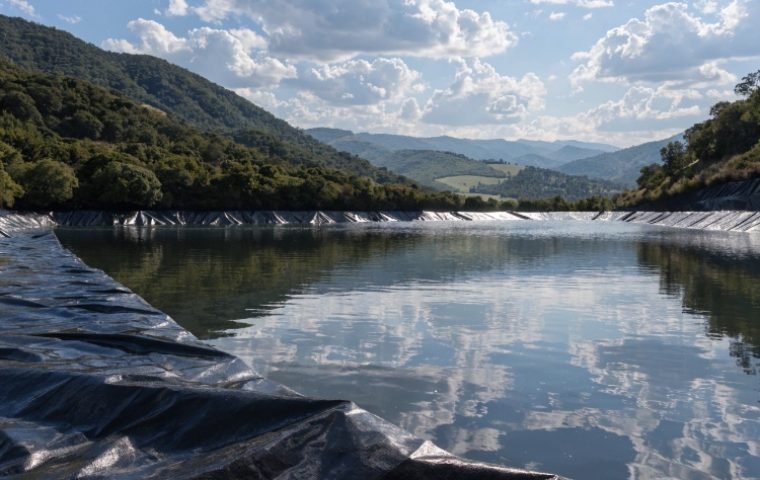


Ignoring wrinkles on your new HDPE liner is a huge mistake. These folds are stress points that will eventually crack, causing catastrophic leaks and project failure.
HDPE liners wrinkle primarily due to thermal expansion—the material expands in the heat and contracts in the cold. Prevention involves installing during cooler temperatures, allowing for calculated slack, and ensuring the liner lays flat on a well-prepared subgrade without trapped air.

I've visited too many sites where this basic principle was ignored, leading to expensive repairs. The truth is, preventing wrinkles is about understanding the physics of the material and applying disciplined installation techniques. Many mistakenly believe that covering the liner with soil will simply press the wrinkles flat. This is dangerously wrong. In reality, the weight of the cover soil transforms a soft wrinkle into a sharp, high-stress crease, accelerating the failure of the liner.
What environmental and material factors cause HDPE liners to wrinkle during installation?
You see wrinkles forming and immediately blame the installation team. But the real culprits might be hidden—poor material quality, trapped air, or an unstable subgrade, creating a persistent problem.
The main environmental factor is temperature change causing thermal expansion. Material factors include poor "layflat" quality or manufacturing defects like camber. Additionally, trapped air or moisture beneath the liner can heat up and expand, pushing the liner up into wrinkles or "whales."
The cause of wrinkles is often a combination of factors. First, the material itself can be the problem. A low-quality liner might have poor "layflat" performance, meaning it simply won't lay flat after being unrolled due to stresses locked in during manufacturing. Second, trapped air is a major issue. If the geomembrane is laid over a damp or uneven surface, pockets of air or moisture get trapped underneath. As the sun heats the black liner, this trapped gas expands, pushing the liner up into large bubbles or elongated wrinkles. Pushing down on these bubbles only makes the problem worse by creating sharp creases at the edges. Finally, an uneven subgrade can cause "bridging," where the liner spans over a low spot instead of conforming to it. This suspended section of liner will quickly deform into a wrinkle under the weight of the cover material, concentrating stress along the bridge points.
How does thermal expansion influence wrinkle formation in HDPE geomembranes?
Your liner looks perfectly flat in the cool morning air. But by noon, it’s covered in large wrinkles, and your crew is struggling to manage the expanding material.
HDPE has a high coefficient of thermal expansion. As the sun heats a black liner, it can expand significantly—a 100-meter panel can grow over 60 cm. Without room to expand, this extra material is forced upwards and sideways, creating prominent wrinkles.
This isn't a minor effect; it's a powerful physical force that must be managed. The linear thermal expansion coefficient for HDPE is about 15 times greater than that of concrete. Let me show you the math: for a 100-meter long panel, a temperature increase of 45°C (from a cool 5°C morning to a hot 50°C afternoon) will cause the liner to grow by 67.5 cm (over two feet). If that liner was installed taut in the morning, that extra 67.5 cm of material has nowhere to go but up, forming large wrinkles. This creates a daily cycle of stress. The liner expands in the day and contracts at night, constantly fatiguing the material. This is also critical during welding. If you weld a cool morning panel to a hot afternoon panel, you lock in massive internal stress at the seam, which will almost certainly result in wrinkles.
What installation practices can minimize or control wrinkling on liner surfaces?
You know wrinkles are a problem, but your team is fighting a losing battle to keep the liner flat. Simply pulling it tight isn't working; you need a smarter strategy.
The key practice is providing calculated "slack" during installation to accommodate thermal expansion. This means not pulling the liner taut. Additionally, using temporary ballast like sandbags and employing progressive backfilling helps manage wrinkles as they form.
The most important technique is to plan for expansion. Instead of fighting it, you accommodate it by leaving intentional slack in the liner during placement. Based on the expected temperature swings at your site, you can calculate the necessary slack—often around 50 to 80 cm per 100 meters. This gives the material room to expand without being forced into wrinkles. During installation, use sandbags to hold the panels in place without putting them under tension. This temporary ballast prevents wind from getting underneath while still allowing the material to settle naturally. For projects where some wrinkling is unavoidable during backfilling, we use a technique called "Push, Accumulate, Cut, Seam." As cover soil is slowly pushed over the liner, the slack material is gathered into a single large, controlled wrinkle. This wrinkle is then cut at its peak, overlapped, and re-welded with an extrusion welder, safely removing the excess material.
How can site conditions and temperature management help prevent excessive wrinkling in HDPE liners?
You're fighting a losing battle against the sun in a hot climate. The liner is expanding faster than your crew can work, making a flat, wrinkle-free installation feel impossible.
The most effective strategy is to schedule installation during the coolest, most stable part of the day—typically at night or in the very early morning. This allows the liner to be placed in its most contracted state. A smooth, dry subgrade is also essential.
Working smart with temperature is critical. By installing the liner when it's cool, you are laying it out in its shortest, most contracted state. You can then add the calculated slack, knowing that as the day heats up, the liner will expand into this slack instead of forming random wrinkles. A well-prepared subgrade is equally important. The surface must be smooth, well-compacted, and dry to prevent trapped air and bridging. I always recommend placing a nonwoven geotextile cushion layer first, which not only protects the liner from punctures but also helps vent any minor trapped gas to the edges. For projects in extremely hot and sunny climates, I advise clients to consider using a geomembrane with a white or light-colored surface. This can reduce the liner's surface temperature by 15-20°C, cutting thermal expansion by as much as 50% and making wrinkle management far easier.
Conclusión
Preventing HDPE liner wrinkles is not about fighting the material, but respecting its physical properties. Proper planning, timing, and installation techniques are key to a durable, leak-free containment system.