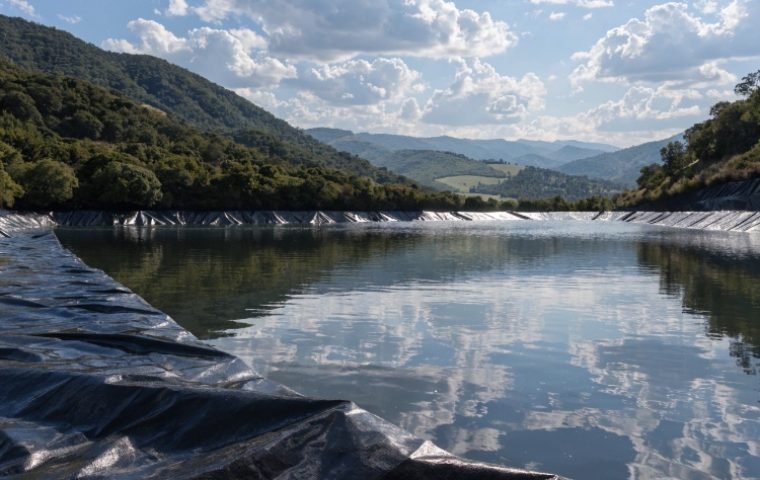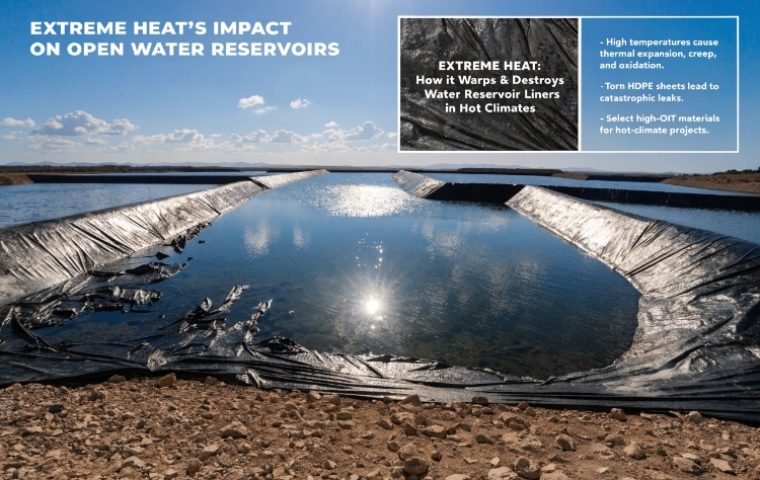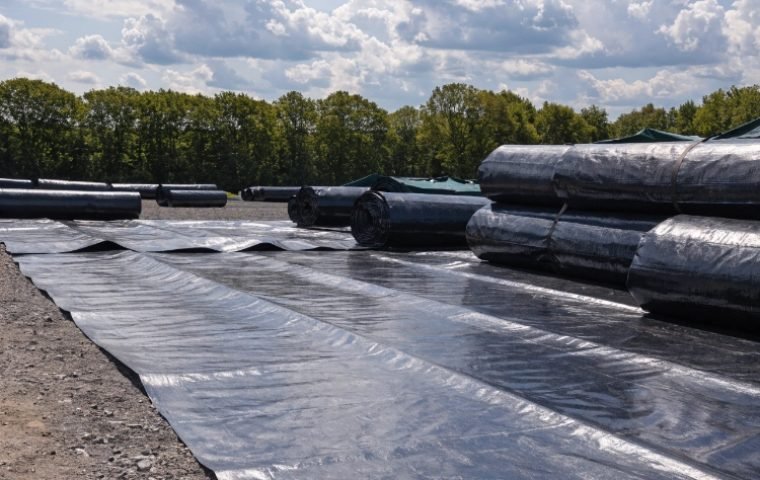


In my two decades of supplying geosynthetics to infrastructure projects worldwide, I have seen a recurring issue: Geotextile fabric is often treated as a "black accessory" rather than a critical engineered component. I have witnessed road bases fail because a contractor used a cheap packaging-grade fabric instead of a separation geotextile. I have seen drainage systems clog in months because the filtration opening size (AOS) was mismatched with the soil particle size.
Geotextile fabric is the hidden workhorse of civil engineering. When selected correctly, it extends the lifespan of roads, dams, and landfills by decades. When selected poorly—usually by guessing the weight (GSM) without understanding the hydraulic properties—it becomes a liability buried underground.
This guide is written for engineers, procurement officers, and project managers who need to move beyond "price per square meter" and understand exactly how to select the right geotextile type, weight, and specification for the job.
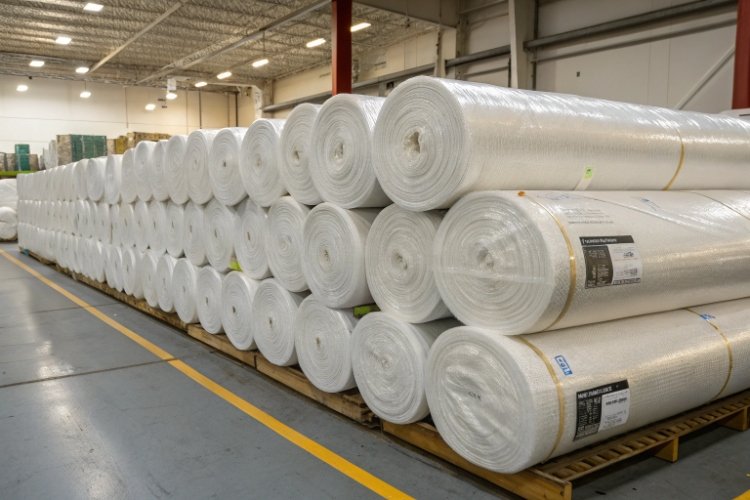
1. What Is Geotextile Fabric and Why It Matters in Engineering
1.1 Definition and Primary Functions of Geotextile Fabric
Geotextile fabric is a permeable textile material used in conjunction with soil, rock, or other geotechnical engineering-related material as an integral part of a man-made project, structure, or system. Unlike geomembranes, which are impermeable barriers, geotextiles are designed to interact with water and soil.
According to international standards (ASTM, ISO), geotextile fabrics perform four primary functions. In many projects, a single fabric must perform two or three of these simultaneously:
- Separación: Preventing two distinct soil layers (e.g., a soft clay subgrade and a crushed stone aggregate base) from mixing. If they mix, the stone sinks into the clay, losing its structural strength.
- Filtración: Retaining soil particles while allowing water to flow through. This is structurally different from "blocking" water; it is about building a stable filter cake to prevent soil erosion while relieving hydrostatic pressure.
- Drenaje: The ability to transmit fluid within the plane of the fabric. This acts as a microscopic drainpipe, wicking water away from structures.
- Reforzamiento: Utilizing the tensile strength of the fabric to improve the load-bearing capacity of the soil, much like steel rebar reinforces concrete.
1.2 Role of Geotextiles in Civil and Environmental Engineering
In modern engineering, we use geotextiles to manipulate the behavior of the earth. In road construction, they allow us to build over swamps by preventing the road from sinking. In environmental engineering, they protect impermeable liners from being punctured by sharp rocks.
Without geotextiles, many projects would require massive amounts of expensive fill material or concrete to achieve the same stability. They are efficiency multipliers. For example, using a separation geotextile can often reduce the required thickness of an aggregate road base by 30%, resulting in massive material cost savings and reduced carbon footprint from transport.
1.3 Why Proper Geotextile Selection Is Critical for Project Performance
I often tell clients: "The cost of the geotextile is 1% of the project, but it protects the other 99%."
If you select a 150 GSM fabric when a 400 GSM fabric was needed for puncture resistance under a landfill liner, the liner will leak. The cost to repair a leak under 2 million tons of waste is astronomical compared to the few cents saved per square meter during procurement. Conversely, using a heavy, thick fabric for a drainage application might be a mistake if that fabric has low permeability—it essentially becomes a dam, trapping water and causing slope failure.
2. Main Types of Geotextile Fabric
Understanding the manufacturing process is the first step to selection. The method of production dictates the mechanical behavior.
2.1 Tejido geotextil tejido: Structure and Characteristics
Woven geotextiles look and feel like a plastic tarp or a rice sack. They are made by weaving horizontal and vertical yarns (slit film or monofilament) together.
- Fortaleza: They have very high tensile strength and low elongation (stretching). They are rigid.
- Permeabilidad: Generally poor. Because the weave is tight, they don't allow water to flow easily, and their flat surface offers little filtration capacity.
- Primary Use: Reinforcement and Stabilization. If you need to build a road over soft mud and need the fabric to act as a tension membrane, you use woven.
2.2 Nonwoven Geotextile Fabric: Structure and Characteristics
Nonwoven geotextiles look like felt. They consist of randomly oriented fibers that are entangled together.
- Fortaleza: generally lower tensile strength than woven for the same weight, but much higher elongation (they stretch before breaking).
- Permeabilidad: Excellent. The random fiber structure creates millions of voids, allowing high water flow.
- Filtración: Superior. The complex path (tortuosity) through the fabric traps soil particles effectively without clogging.
- Primary Use: Separation, Filtration, Drainage, and Protection (Cushioning).
2.3 Needle-Punched vs Heat-Bonded Nonwoven Geotextiles
This is a detail many buyers miss. Nonwovens are bonded in two main ways:
- Needle-Punched: Thousands of barbed needles mechanically entangle the fibers. This creates a lofty, thick, "fluffy" fabric. This is the industry standard for drainage and protection because the thickness provides cushioning and high water flow.
- Heat-Bonded: The fibers are melted together under heat and pressure. The resulting fabric is thin, hard, and smooth. While cheaper, it has lower permeability and lower tear strength. It is usually reserved for light landscape separation, not heavy civil engineering.
2.4 Woven vs Nonwoven Geotextiles: Key Selection Differences
The rule of thumb I use for quick assessment:
- Do you need water to pass through freely (drainage)? -> Nonwoven.
- Do you need to prevent water pressure buildup? -> Nonwoven.
- Do you need to protect a membrane from rocks? -> Nonwoven (Needle-punched).
- Do you need to reinforce a retaining wall? -> Woven.
- Do you need to build a road over a swamp? -> High-strength Woven.

3. Key Technical Parameters of Geotextile Fabric
3.1 Fabric Weight (GSM): The Most Commonly Referenced Parameter
GSM stands for "Grams per Square Meter." In the US, this is often measured in ounces per square yard (oz/sy).
While GSM is the easiest number to verify (you just weigh a sample), it is not a performance specification. It is an "index property."
- Example: A 200 GSM Woven fabric behaves completely differently from a 200 GSM Nonwoven fabric. One is a reinforcement sheet; the other is a filter cloth.
- In procurement, we use GSM as a proxy for mass, which correlates to cost and generally to durability, but engineers should specify properties, not just weight.
3.2 Thickness, Resistencia a la tracción, and Elongation
- Espesor: Critical for protection. If you are placing a geomembrane on a rocky slope, you need thickness (typically >1.5mm to 3.0mm) to cushion the rocks. Only needle-punched nonwovens offer significant thickness.
- Tensile Strength (Grab vs. Wide Width): Measured in kilo-Newtons (kN). "Grab Tensile" simulates installation stress (a worker pulling it). "Wide Width Tensile" simulates the engineered load of a road embankment.
- Elongation: This is how much the fabric stretches before snapping. Nonwovens stretch 50%+, allowing them to conform to uneven ground (like a landfill settling). Wovens stretch <15%, providing rigidity.
3.3 Permeability and Apparent Opening Size (AOS / O90)
- Permittivity (sec⁻¹): How fast water passes through the fabric vertically. For drainage projects, higher is better.
- AOS (Apparent Opening Size): The size of the "holes" in the fabric. This must be sized according to the soil. If the holes are bigger than the soil particles, the soil pipes through. If the holes are too small, water cannot pass. It is a balancing act.
3.4 Resistencia a la punción, Durability, and Environmental Resistance
- CBR Puncture: This simulates a plunger pushing through the fabric (like a rock under the weight of a truck). For landfill liners and road bases, CBR puncture is often the defining spec.
- UV Resistance: Geotextiles are polymers (Polypropylene PP or Polyester PET). Sunlight destroys them. Unless exposed geotextiles are specifically treated with carbon black and stabilizers, they will degrade in weeks. Standard white geotextiles must be buried.
3.5 Why No Single Parameter Should Be Considered in Isolation
I recently reviewed a project specification that called for "300 GSM fabric with high strength." The contractor bought a Heat-Bonded Nonwoven because it was high strength. However, the application was a French drain. The heat-bonded surface clogged immediately with clay, causing the parking lot to flood. The GSM was right, the strength was right, but the type y hydraulic property were wrong.
4. Understanding Geotextile Fabric Weight (GSM) in Practice
4.1 Typical GSM Ranges Used in Engineering Projects
From my export data, here is how GSM roughly maps to reality:
- 80 – 120 GSM: "Landscape Grade." Used for weed barriers, light garden separation, or behind pavers. Not for heavy civil works.
- 150 – 250 GSM: "Civil Standard." The workhorse range. Used for road separation, trench drains, and general silt fences. 200 GSM is the global favorite for road base separation.
- 300 – 400 GSM: "Heavy Duty." Used for landfill protection layers, rip-rap underlay (under large rocks), and shoreline protection.
- 500 – 800+ GSM: "Extreme Duty." Used for protecting geomembranes from very large sharp rocks, critical Environmental containment, or in deep sea applications.
4.2 Relationship Between GSM, Thickness, and Mechanical Strength
In needle-punched nonwovens, the relationship is linear.
- Double the GSM $\approx$ Double the Thickness $\approx$ Double the CBR Puncture resistance.
- This is why engineers often just say "use 400 GSM." They are mentally calculating that 400 GSM provides roughly 3500N of puncture resistance, which is a safe number for heavy rocks.
4.3 Is Higher GSM Always Better?
No. Higher GSM means thicker, denser fabric.
- The Cost: Obviously, it costs more.
- The Hydraulic Risk: Extremely heavy fabrics (1000 GSM+) can eventually have reduced flow rates compared to lighter fabrics if not manufactured carefully.
- Handling: A roll of 800 GSM fabric is incredibly heavy and difficult to install. If manual labor is used, 200-300 GSM is the limit. Heavier requires machinery.
4.4 Common Misunderstandings About Geotextile Fabric Weight
Designers sometimes specify "woven 400 GSM" for filtration. This is a waste. A woven fabric achieves its strength through the yarn, not the mass. A 200 GSM woven might be stronger than a 400 GSM nonwoven. You don't buy woven fabric by weight; you buy it by tensile strength (e.g., "50kN/m woven"). You buy nonwoven fabric by weight/puncture.
5. Geotextile Fabric Selection by Application
5.1 Road Construction and Pavement Stabilization
- Problema: The "pumping" effect. Heavy trucks pass over a road, pushing the stones down and pumping wet clay up. The road base turns into mud.
- Solución: Separation.
- Selection: typically 150-250 GSM Nonwoven (Continuous Filament or Staple Fiber) o Woven. The key is separation.
- Why: The fabric prevents the mixing. We usually recommend Continuous Filament Nonwoven (spunbond) because it has high tensile strength y good elongation, surviving the rough dumping of stones.
5.2 Railway and Airport Infrastructure
- Problema: Dynamic loads. Trains create massive vibration that fluids the subgrade.
- Solución: Separation + Filtration.
- Selection: Heavyweight 300-500 GSM Nonwoven.
- Why: The vibration accelerates fine particle migration. You need a thicker filter to prevent clogging under dynamic conditions. A thin fabric will clog or tear under the ballast vibration.
5.3 Drainage Systems and Subsurface Applications
- Problema: Wrapping perforated pipes or lining French drains.
- Solución: Filtration.
- Selection: 120-200 GSM Nonwoven.
- Why: You need high Permittivity (water flow). The fabric acts as a filter cake. Never use woven here; it has poor flow. Never use heat-bonded; it clogs. Standard needle-punched is ideal.
5.4 Erosion Control and Slope Protection
- Problema: Placing "Rip-Rap" (large boulders) on a riverbank. The water washes the soil out from under the rocks, and the rocks sink.
- Solución: Protection + Filtration.
- Selection: 300-600 GSM Nonwoven.
- Why: The fabric must be thick enough to cushion the soil from the heavy rocks (Protection) and allow tide water to move in and out without taking soil with it (Filtration).
5.5 Landfill and Environmental Engineering
- Problema: Protecting the geomembrane (HDPE liner) from puncture by the leachate collection gravel.
- Solución: Cushioning/Protection.
- Selection: 400-800 GSM Nonwoven (Staple fiber is common here).
- Why: The primary goal is CBR Puncture resistance. We need a thick, fluffy barrier. In landfills, we certify the fabric specifically for puncture resistance (e.g., >2500N).
5.6 Temporary vs Permanent Engineering Applications
For a temporary haul road (used for 6 months), a 150 GSM woven might suffice. For a permanent highway, a 250 GSM continuous filament nonwoven is an investment in 50 years of stability. Do not over-specify for temporary works, but never under-specify for permanent infrastructure.
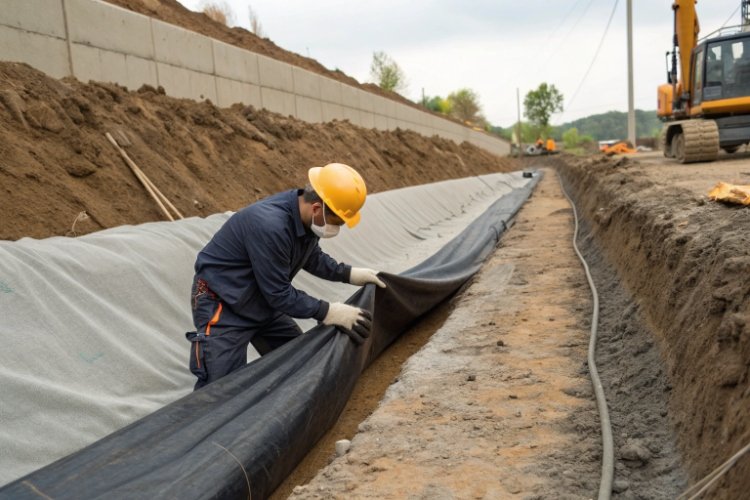
6. How to Select the Right Geotextile Fabric for Project Conditions
6.1 Soil Conditions and Subgrade Characteristics
- Clay/Silt: Requires strict filtration sizing (AOS). Use nonwoven.
- Rocky/Sharp Ground: Requires puncture resistance. Use Heavy Nonwoven (300g+).
- Soft Swamp (CBR < 3%): Requires reinforcement. Use High Strength Woven.
6.2 Load Requirements and Traffic Conditions
If the road will see heavy mining trucks, the subgrade stress is enormous. A standard separation fabric isn't enough; you need a high-modulus Woven Geotextile or Geogrid composite to distribute that load. For a pedestrian path, a light 120 GSM nonwoven is perfectly adequate.
6.3 Hydraulic Performance and Filtration Needs
Always check the flow rate. If you are wrapping a high-flow drainage pipe in a high-rainfall area (like the tropics), ensure the geotextile permittivity is >1.0 sec⁻¹. Using a low-flow fabric here will cause hydrostatic pressure to build up behind the wall, potentially causing a landslide.
6.4 Design Life and Long-Term Durability
Polyester (PET) vs. Polypropylene (PP):
- PP: Excellent chemical resistance (acids/bases). Used in most environmental and civil applications.
- PET: Higher strength, less creep (stretching over time). Better for long-term reinforcement, but degrades in very high pH (alkaline) soils.
- Expert Note: For 90% of standard civil separation jobs, PP is the material of choice due to chemical inertness and cost.
6.5 Balancing Performance Requirements and Project Cost
Over-engineering is common. I have seen 600 GSM specified for simple driveway separation. This is a waste of money. A 200 GSM provides the same separation function. The extra 400g provides puncture resistance that isn't needed (since the subgrade is soft). We help clients "Right-Size" their spec—meeting the safety factor without burning the budget.
7. Recommended Geotextile Solutions by Application (Reference Only)
Below is a general guideline based on international best practices. Always confirm with a local geotechnical engineer.
7.1 Typical Geotextile Types and GSM Ranges for Common Uses
| Solicitud | Recommended Type | Typical Weight (GSM) | Key Property |
|---|---|---|---|
| Road Separation | Nonwoven (Filament/Staple) | 150 – 250 | Separation / Elongation |
| French Drain Wrap | Nonwoven (Needle-punched) | 120 – 180 | Permittivity (Flow) |
| Rip-Rap Underlay | Nonwoven (Heavy) | 300 – 600 | Puncture / Thickness |
| Landfill Cushion | Nonwoven (Staple) | 400 – 800 | CBR Puncture |
| Retaining Wall Reinforcement | Woven (High Strength) | N/A (Specify Strength) | Tensile Modulus |
| Paving Overlay | Nonwoven (Asphalt) | 130 – 150 | Bitumen Retention |
| Silt Fence | Woven (Slit Film) | 80 – 100 | UV Stability |
7.2 Why Recommended Values Should Be Treated as Guidelines
Soil is variable. A "typical" road might assume a CBR of 5%. If your soil is a peat bog with CBR 1%, a standard 200 GSM nonwoven will fail; the stones will punch right through. It would help if you had a high-strength woven reinforcement. These tables are starting points, not laws.
7.3 When Customized Geotextile Specifications Are Necessary
In specialized projects—like capping a sludge lagoon or reinforcing a 20-meter high seawall—off-the-shelf products won't work. We often manufacture custom runs, such as a 1200 GSM nonwoven for extreme cushion protection, or a high-flow woven for specialized sludge dewatering.
8. Geotextile Fabric Standards and Testing Methods
8.1 Overview of Common International Standards (ASTM, EN, ISO)
- ASTM (American): Uses "Minimum Average Roll Value" (MARV). This is a statistical guarantee. If you buy a 200 GSM roll, 97.5% of the fabric is guaranteed to be equal to or heavier than that.
- ISO/EN (European/International): Uses "Typical Values" with a tolerance (e.g., 200g ± 10%).
- Why this matters: An ASTM 200g spec is generally stricter and heavier than an ISO 200g spec. When exporting, we must clarify which standard the project follows to avoid rejection.
8.2 Testing Methods for Weight, Strength, and Hydraulic Properties
- ASTM D5261 (Mass per unit area): Measuring the GSM.
- ASTM D4632 (Grab Tensile): Pulling a sample to see break strength.
- ASTM D4833 / D6241 (Puncture): Pushing a probe through the fabric.
- ASTM D4491 (Permeability): Flow rate testing.
8.3 Importance of Compliance in Engineering Projects
Using non-compliant fabric is a legal risk. If a retaining wall collapses and the forensic investigation shows the geotextile had only 50% of the specified tensile strength, the contractor is liable. We provide Mill Test Certificates (MTC) for every roll to ensure traceable compliance.
9. Common Mistakes in Geotextile Fabric Selection
9.1 Selecting Based on Price or Weight Alone
The biggest mistake is buying "cheap 200g fabric." There are low-quality fabrics made from recycled carpet fibers (multicolored, weak fibers) that technically weigh 200g but have 50% of the strength of virgin fiber fabric. They degrade quickly and offer inconsistent filtration. Always specify Virgin Resin.
9.2 Ignoring Soil, Load, or Hydraulic Conditions
Using a fabric with a small opening size (AOS) on a clay soil is a recipe for clogging. The fines will plaster against the fabric, creating an impermeable layer. We call this "blinding." The drainage stops, water pressure builds, and the structure fails.
9.3 Over-Designing and Unnecessary Cost Increase
Specifying a high-strength woven fabric for a simple separation job is like buying a Ferrari to deliver pizza. It works, but it's expensive. If you are just separating stone from soil, mechanical strength is secondary to coverage and separation. A lighter nonwoven is often superior and cheaper.
9.4 How Professional Technical Support Reduces Project Risk
We recently saved a client $50,000 on a road project. They planned to use a heavy geogrid + geotextile. We analyzed the soil and suggested a high-modulus woven geotextile that performed both reinforcement and separation functions in a single layer. Less labor, less material, same performance.
How We Support Your Geotextile Fabric Selection
En Especialista en impermeabilización, we are not just a factory; we are a solution provider for complex geotechnical challenges.
Project-Based Technical Consultation
We don't expect you to be a geotextile expert. Send us your site parameters—soil type, water conditions, expected load—and we will recommend the optimal type and weight.
Customized Geotextile Fabric Specifications
Need a specific roll width to reduce waste? Need a specific AOS to match a unique sand grain size? We can adjust our production lines to meet specific hydraulic or mechanical targets, ensuring you get exactly what the design requires.
Quality Control and International Compliance
We maintain a fully equipped in-house laboratory to test every batch for Tensile, Puncture, and Weight. We guarantee our materials meet ASTM D or ISO standards as required, providing you with the documentation needed for site approval.
Long-Term Supply and Engineering Support
From the first sample to the final installation guidance, we support the project lifecycle. Whether it's a 500-container export order or a specialized LCL shipment, we manage the logistics to keep your project on schedule.
Conclusion: From Specifications to Practical Application
Key Takeaways for Effective Geotextile Selection
- Function First: Decide if you need Separation, Filtration, Drainage, or Reinforcement.
- Type Matters: Don't confuse Woven (Strength) with Nonwoven (Flow/Protection).
- Don't Obsess over GSM: Look at Puncture (CBR) and Permeability. GSM is just a proxy.
- Consider the Soil: Match the fabric's pore size to the soil's particle size.
- Buy Quality: Virgin resin ensures durability; recycled fillers risk premature failure.
Why Geotextile Fabric Is an Engineering Solution, Not a Commodity
Geotextile fabric is the interface between the unpredictable ground and your engineered structure. It handles stress, water, and chemical attack. Treating it as a generic commodity invites risk. Treating it as an engineered component adds value.
Working with the Right Supplier for Project Success
The difference between a successful project and a failed one often lies in the invisible details underground. By partnering with a supplier who understands the mechanics of soil and synthetic materials, you ensure that the foundation of your project is as solid as the engineering on top of it.
If you are currently planning a road, landfill, or drainage project and are unsure which geotextile specification is safe, contact our technical team. Let’s optimize your design for safety, longevity, and cost-efficiency.