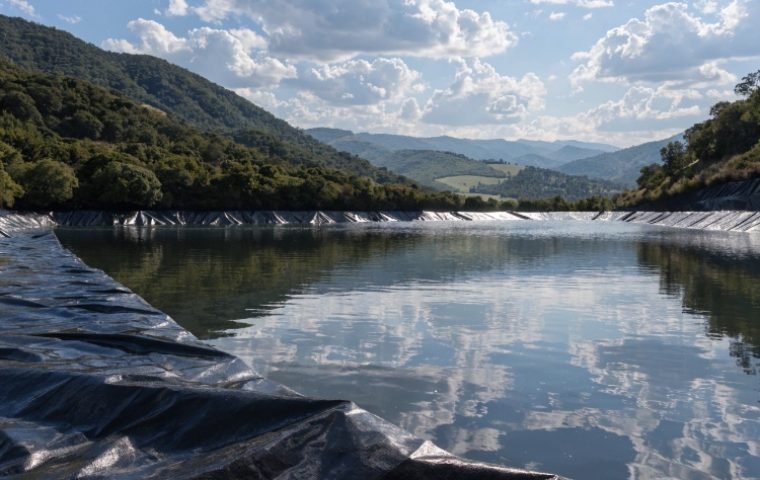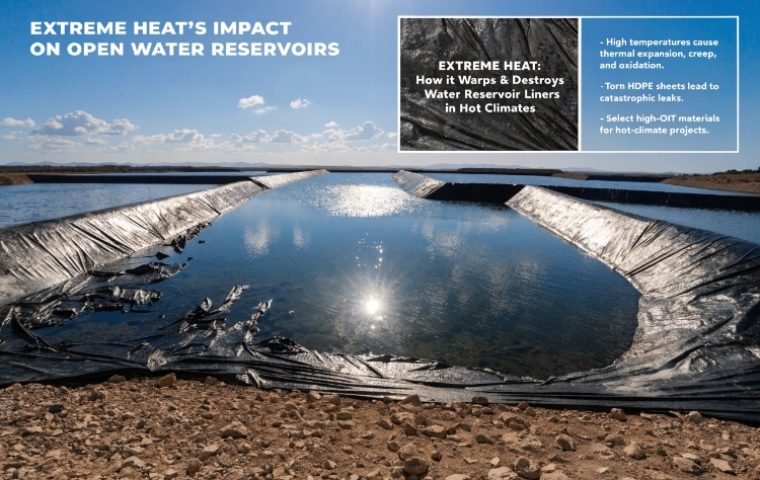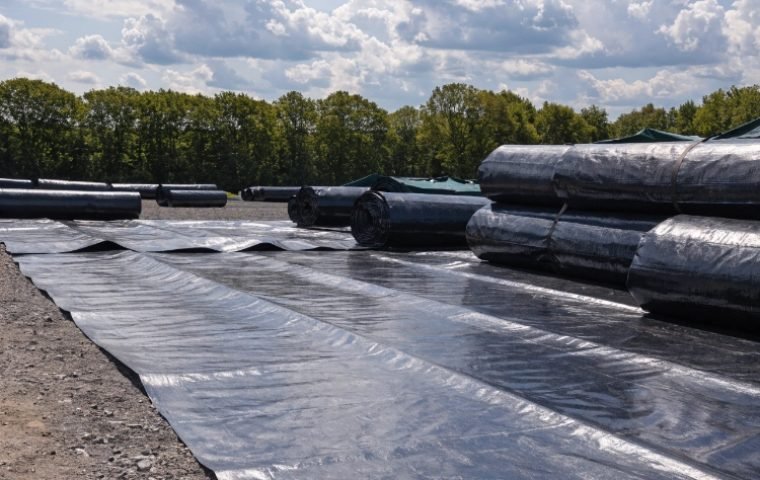


As the world moves toward a circular economy, managing organic waste and generating renewable energy through biogas is more critical than ever. But these facilities present unique containment challenges: aggressive chemicals, gas production, and strict environmental regulations. Failures are not an option, as they can lead to soil contamination, greenhouse gas emissions, and significant financial loss.
This is where geosynthetics come in. These engineered polymer materials provide a robust, cost-effective, and reliable solution for containment and environmental protection in biogas and organic waste treatment projects. This guide covers the key geosynthetic materials used, their typical applications, and the critical design considerations to ensure your project’s long-term success.
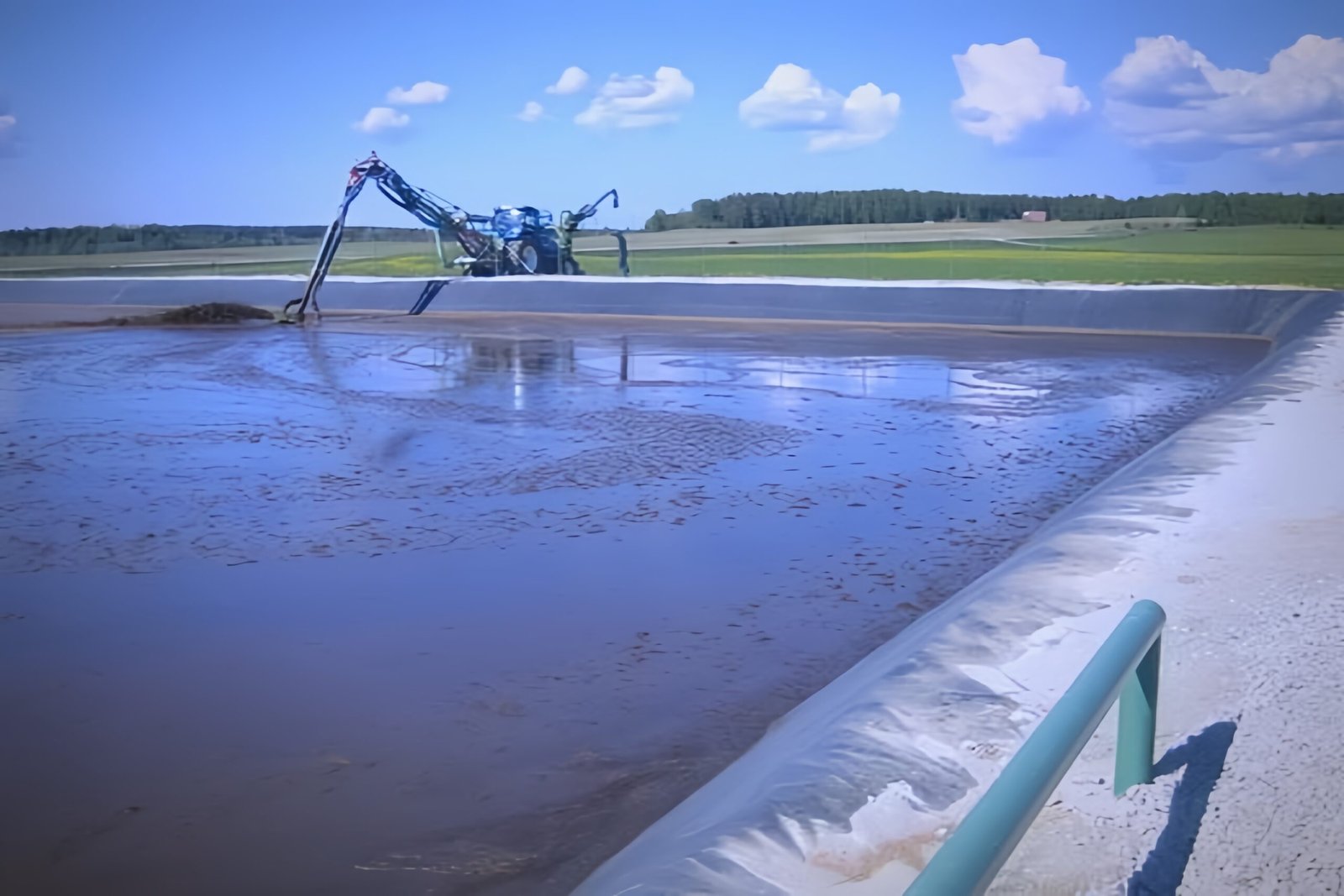
From our experience, the needs of a biogas project differ significantly from a standard municipal landfill. The active biological processes create a more aggressive chemical environment and the need for absolute gas tightness, which demands a specialized approach to material selection and system design.
2. Typical Biogas and Organic Waste Treatment Facilities
Geosynthetics are versatile and can be integrated into nearly every stage of the biogas production and waste treatment process. Here are the most common facilities where we apply these solutions:
- Anaerobic Digesters: These are the heart of the operation—large, sealed tanks or lagoons where microorganisms break down organic matter in the absence of oxygen to produce biogas. Containment is critical to maintain the anaerobic environment and prevent leakage.
- Biogas Fermentation Tanks: Similar to digesters, these tanks require complete sealing to capture the methane-rich biogas efficiently. They can be made of concrete, steel, or, increasingly, formed entirely with geosynthetic systems.
- Digestate and Slurry Storage Lagoons: After digestion, the remaining nutrient-rich liquid (digestate) and solid sludge need to be stored safely before being used as fertilizer. These storage lagoons must be lined to prevent nutrient leaching into groundwater.
- Organic Waste Pre-treatment Areas: Before entering the digester, incoming organic waste (from farms, food processing, etc.) is often stored and mixed in reception pits or bunkers. Lining these areas prevents contamination from raw, untreated leachate.
3. Types of Geosynthetic Materials Used
A successful project relies on selecting the right combination of materials. Each geosynthetic has a specific role, and they work together as a system to provide comprehensive protection.
3.1 Geomembranes (HDPE / LLDPE)
Geomembranes are the primary barrier material, providing an impermeable layer for liquid and gas containment.
- Polietileno de alta densidad (HDPE): This is the workhorse for biogas applications. Its highly crystalline molecular structure gives it exceptional chemical resistance against the organic acids, ammonia, and other corrosive compounds found in digestate. It is also very durable and UV resistant when formulated with carbon black.
- Linear Low-Density Polyethylene (LLDPE): LLDPE is more flexible and has higher elongation properties than HDPE. This makes it an excellent choice for applications with potential for differential settlement or where a more pliable liner is needed, such as for floating covers or lining oddly shaped tanks.
| Material | Key Strengths | Primary Applications in Biogas Projects | Considerations |
|---|---|---|---|
| PEAD | Excellent chemical resistance, high durability, UV stable. | Bottom liners for digesters and storage lagoons, tank linings. | Less flexible, requires a larger turning radius at corners. |
| LLDPE | High flexibility, excellent puncture resistance, good stress crack resistance. | Floating covers, lining irregularly shaped tanks, areas prone to settlement. | Slightly lower broad-spectrum chemical resistance than HDPE. |
3.2 Geotextiles
Geotextiles are fabric-like materials, typically made from polypropylene or polyester, that serve critical protection and filtration functions. In biogas systems, we use heavy-duty, needle-punched nonwoven geotextiles as a "cushion" layer placed directly above and/or below the geomembrane. This protects the liner from being punctured by sharp stones in the subgrade or overlying drainage aggregate. The robust fabric absorbs impact energy and distributes point loads, significantly extending the service life of the primary geomembrane barrier.
3.3 Revestimientos de arcilla geosintética (GCL)
A GCL is a composite material made of a thin layer of sodium bentonite clay sandwiched between two geotextiles. When hydrated, the bentonite swells to form a low-permeability clay liner. We often use GCLs as a secondary containment layer beneath an HDPE geomembrane. This creates a highly secure composite liner system, where the GCL provides a self-healing barrier against minor punctures or installation imperfections in the primary geomembrane, offering an added layer of environmental security that regulators often favor.
3.4 Geocomposites and Drainage Materials
These are engineered materials that combine the functions of different geosynthetics. A common example is a geonet (a plastic drainage core) heat-bonded with a geotextile on one or both sides. These geocomposites are used for:
- Leachate Collection and Leak Detection: Placed between two geomembrane liners to create a high-flow space for any potential leaks to be quickly collected and channeled to a sump for detection and removal.
- Gas Venting: Installed beneath the entire liner system to safely vent any gases that might build up in the subgrade, preventing pressure bubbles from forming under the geomembrane which could lift and damage the liner.
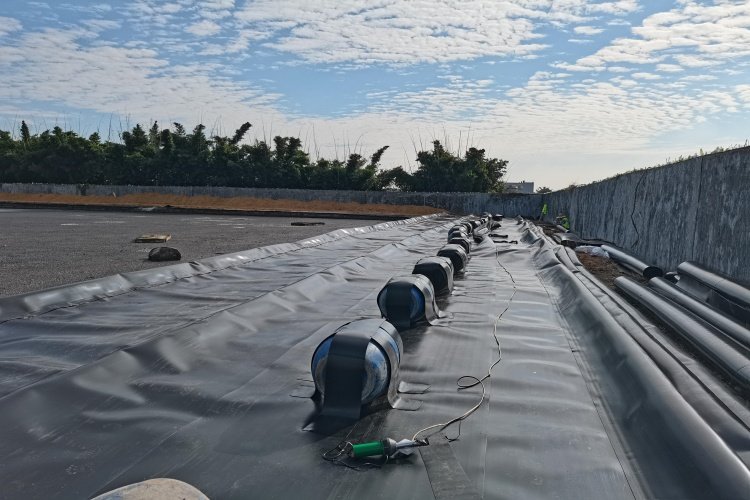
4. Typical Application Areas
Now, let's look at how these materials are assembled into functional systems in specific parts of a biogas facility.
4.1 Anaerobic Digestion Tanks
For large-scale, in-ground digesters (often called "black membrane" CSTR ponds) or for retrofitting existing tanks, the lining system is paramount.
- New Construction: The system is built directly on the excavated soil. This usually consists of a prepared subgrade, a GCL secondary liner, a leak detection geocomposite, and a primary HDPE geomembrane (typically 1.5mm to 2.0mm thick). A protective geotextile is placed on top to guard against damage from internal equipment.
- Retrofitting: Many older facilities have aging concrete or steel tanks that are cracking and leaking. Instead of undertaking a costly and disruptive demolition, we can use geosynthetics[^1] to retrofit them. A custom-fabricated LLDPE or HDPE liner is installed inside the existing tank, creating a new, seamless, and chemically resistant containment barrier. This is a highly cost-effective method for extending the life of existing assets.
4.2 Digestate and Leachate Storage Facilities
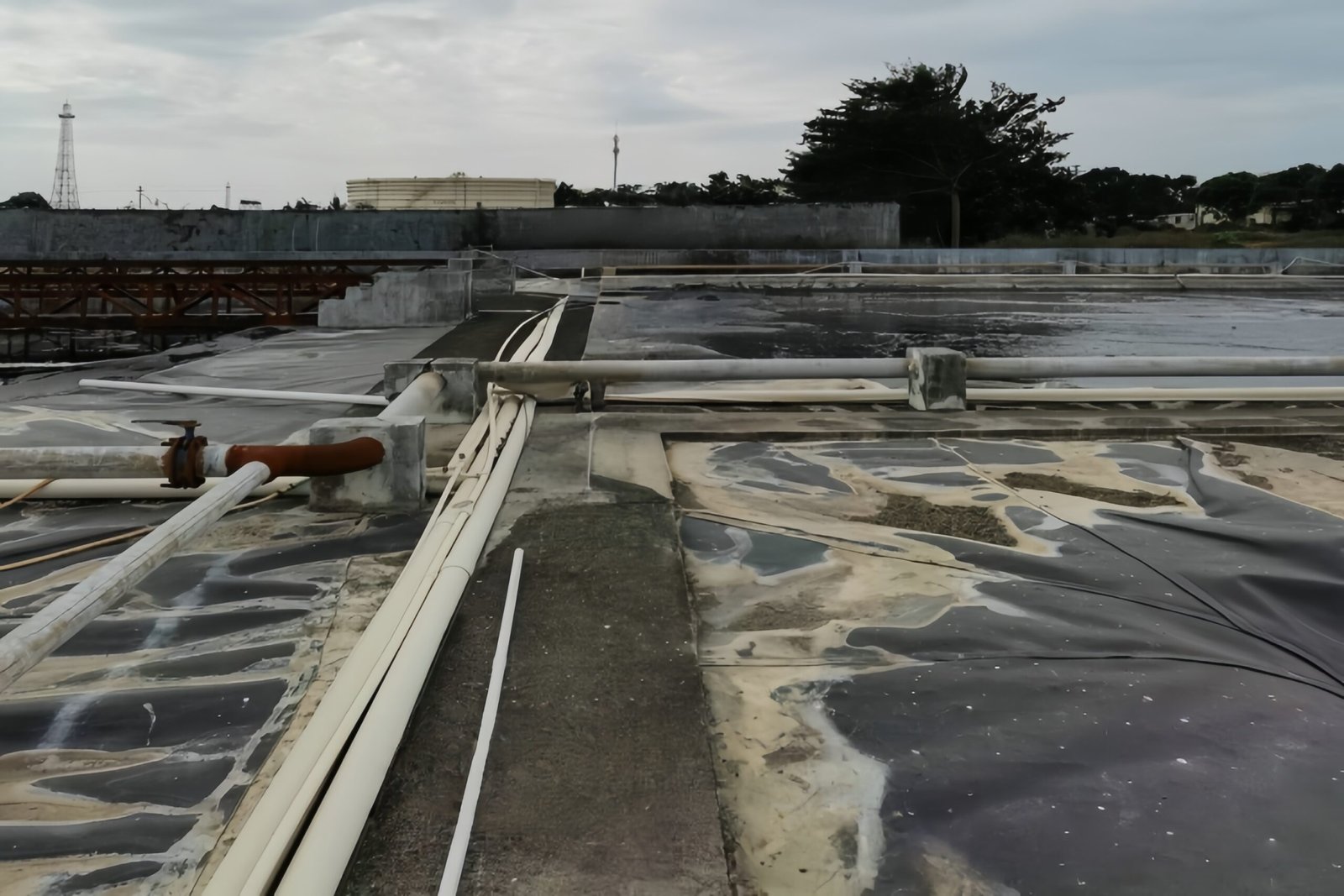
These are essentially industrial-grade ponds designed to hold chemically aggressive liquids. The lining system is crucial for preventing nutrient pollution of groundwater. A typical design involves excavating the lagoon, preparing a smooth subgrade free of sharp objects, and installing a durable 1.5mm HDPE geomembrane liner. The edges of the liner are securely buried in an anchor trench around the lagoon's perimeter to prevent slippage. A protective geotextile is essential if any rock or riprap is used on the slopes for wave action or erosion control. This ensures the long-term integrity of the primary liner against mechanical damage.
[^1]: Discover how geosynthetics can effectively extend the life of aging biogas tanks without costly demolitions.
4.3 Biogas Lagoons and Covers
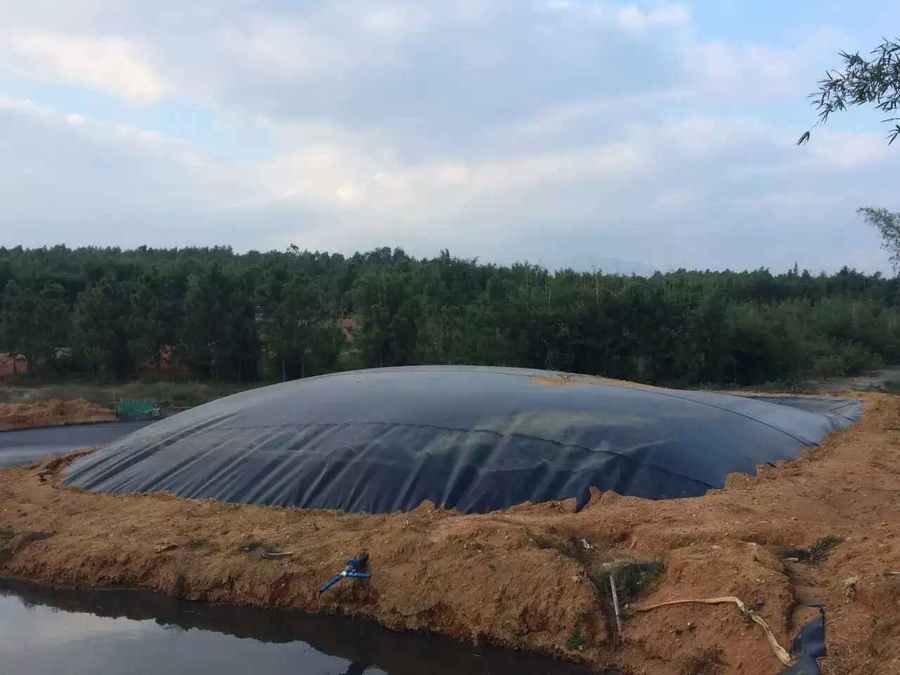
A key function of a sealed digester or biogas lagoon is эффективно to collect the produced biogas for energy generation. This is achieved with a floating cover system.
- Material: Floating covers are typically made from flexible and durable LLDPE or a specialized HDPE geomembrane. The material must be gas-tight and highly resistant to UV degradation.
- Design: The cover floats on the surface of the liquid, rising and falling with the volume of gas stored underneath. The cover is fitted with weights, floats, and robust anchorage systems to manage gas pressure, prevent wind uplift, and handle rainwater. In China, an innovative dual-layer cover system, where air is pumped between two membranes for added structural stability against snow and rain, is gaining popularity.
5. Key Design and Material Selection Considerations
Designing a geosynthetic system for a biogas project requires careful consideration of the unique service environment. Simply using a standard landfill specification is not enough.
| Parameter | Key Requirement | Why It Matters for Biogas Projects |
|---|---|---|
| Resistencia química | Must resist organic acids, ammonia, H₂S, and a wide pH range. | Digestate is chemically aggressive and can degrade inferior polymers over time, leading to premature failure. HDPE is the preferred choice. |
| Gas Tightness | Extremely low permeability to methane (CH₄) and other gases. | Prevents loss of valuable biogas and controls odors from compounds like hydrogen sulfide (H₂S). Ensures maximum energy yield. |
| Temperature Tolerance | Ability to perform in elevated temperatures (often 35-55°C in mesophilic digesters). | High temperatures can accelerate chemical aging and creep in some polymers. Material selection must account for operational heat. |
| Resistencia a los rayos UV | Must contain carbon black and antioxidant packages for long-term sun exposure. | Floating covers and exposed liner sections are subject to constant UV radiation, which can degrade unprotected polymers. |
| Resistencia a la punción | High resistance to puncture from internal equipment or subgrade imperfections. | Mixers, pumps, and other equipment inside a digester can create point loads. A robust liner protected by a geotextile is essential. |
| Welding Quality | Seams must be 100% tested and as strong as the parent material. | Seams are the most likely point of failure. High-quality welding and rigorous QA/QC are non-negotiable for gas and liquid tightness. |
6. Benefits of Using Geosynthetics in Biogas Projects
Choosing geosynthetic systems over traditional construction methods like reinforced concrete offers several compelling advantages for project developers and operators.
| Benefit | Geosynthetic System | Traditional Concrete Tank |
|---|---|---|
| Construction Cost | Significantly lower initial investment. | High material and labor costs. |
| Construction Speed | Rapid deployment, often weeks. | Time-consuming, requiring forming, pouring, and curing. |
| Scalability & Flexibilidad | Easily adaptable to any size or shape. | Rigid design, difficult and expensive to expand. |
| Resistencia química | Inherently resistant (HDPE). | Susceptible to chemical attack; requires special coatings. |
| Leak Performance | Seamless, with tested welds. | Prone to cracking and joint leakage over time. |
Beyond the direct cost savings, geosynthetics provide superior environmental protection. A properly designed and installed liner system offers a higher degree of security against leaks by eliminating cracks and unreliable joints found in concrete structures. This ensures long-term regulatory compliance and safeguards local water resources, contributing to a truly sustainable operation.
7. Conclusion
Geosynthetics have evolved from a simple alternative to a core enabling technology for the modern biogas and organic waste treatment industry. They provide the secure containment, gas management, and environmental protection necessary for these facilities to operate safely and efficiently. By combining impermeable geomembranes with protective geotextiles, GCLs, and drainage composites, we can engineer a complete system solution tailored to the specific challenges of your project. The key is to move beyond thinking of just a single material and to focus on designing an integrated system where each component works together to deliver long-term performance and peace of mind.