


In gold mining, a liner failure is not just an operational potential inconvenience; it is an existential threat to the mine. The use of cyanide solutions creates a "zero tolerance" environment where even minor leakages can lead to mine closures, massive fines, and revoked licenses.
Strict adherence to high-specification liner requirements is the only way to safeguard both environmental compliance and project profitability. As an exporter who works with gold mines from Central Asia to South America, I see that the most successful projects view their liner system not as a plastic sheet, but as their primary risk management asset.
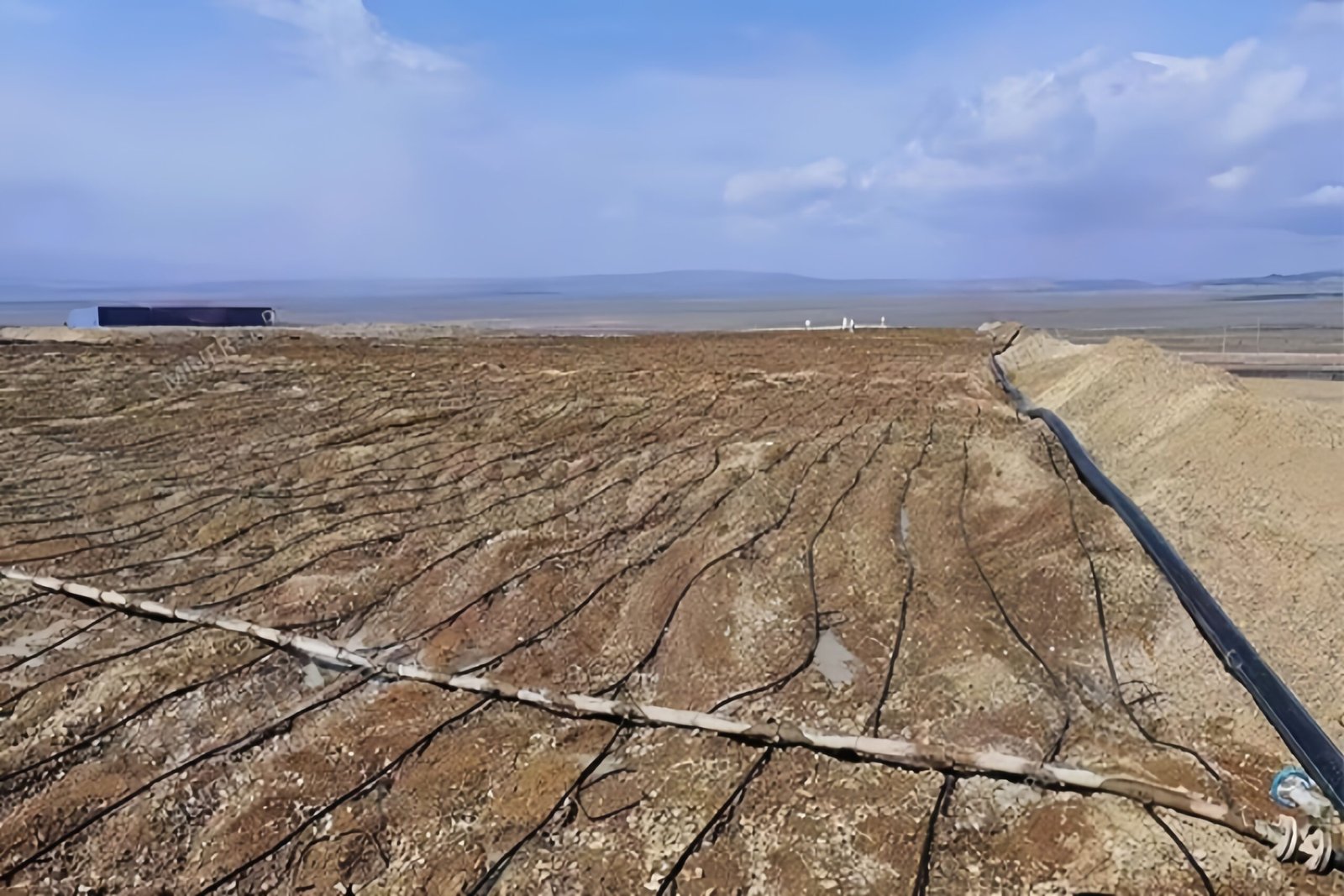
For gold mine owners and engineers, the question is no longer "what is the cheapest liner?" but "what system configuration creates the most robust barrier against cyanide escape?"
Why are environmental and regulatory drivers so strict for gold liners?
Gold mining faces scrutiny unlike any other extraction industry due to one specific chemical: Sodium Cyanide. Global financial institutions and environmental agencies enforce rigid standards because the toxicity of cyanide requires absolute containment certainty.
A compliant liner system is the baseline requirement for securing funding and operating permits.
The Pressure of the International Cyanide Management Code (ICMC)
The gold industry is governed largely by the principles of the International Cyanide Management Code (ICMC). Even if a country’s local regulations are lax, international investors and downstream buyers usually require adherence to the "Code."
The Code mandates that operations must implement management systems to protect human health and the environment. In the context of heap leaching, this translates to:
- Impermeability: The liner must prevent the migration of cyanide solutions into the subsurface.
- Detection: The system must be able to identify leakage immediately (hence the need for leak detection layers).
- Redundancy: Reliance on a single barrier is increasingly seen as insufficient for high-risk zones.
ESG and Investor Confidence
Modern mining projects run on financing that is tied to ESG (Environmental, Social, and Governance) criteria. I have seen projects in developing nations delayed not because they lacked gold, but because their environmental impact assessment (EIA) for the leach pad was deemed "too risky" by European or North American lenders.
A robust liner specification (e.g., a double composite liner system) is often the engineering proof required to satisfy these ESG auditors. It demonstrates that the mine owner is proactive about risk, rather than doing the bare minimum. When we supply liners to these projects, we aren't just sending plastic; we are providing the documentation and quality assurance that proves the "containment integrity" of the asset.
What is the typical liner system configuration for gold heap leach pads?
Many junior miners make the mistake of thinking a single layer of HDPE is enough. While this might work for a small water pond, a gold heap leach pad requires a multi-layered system designed for redundancy and drainage.
The industry standard for gold leaching has shifted decisively toward Dubbel saamgestelde voeringstelsels. This configuration provides the highest factor of safety against the inevitable risks of installation damage or subgrade settlement.
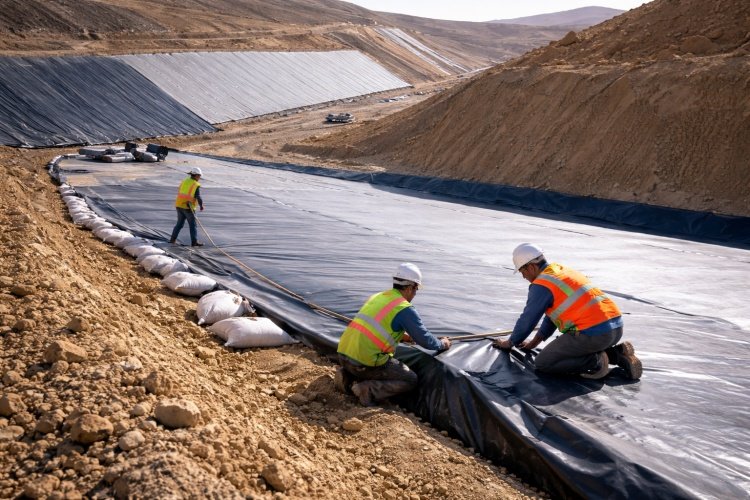
The Architecture of Safety
A robust gold heap leach pad is built like a sandwich. Here is the typical configuration we see in top-tier projects, from bottom to top:
- Prepared Subgrade: The foundation. It must be compacted to 95% standard proctor density to prevent settlement that could stretch the liner.
- Secondary Liner (The Backup): Usually a 1.5mm (60 mil) HDPE geomembrane or a bentonite-based GCL (Geosintetiese klei voering). This layer catches anything that gets past the primary liner.
- Leak Detection and Recovery System (LDRS): This is typically a Geonet or Geocomposite drainage layer. It creates a void space between the two liners. If the primary liner leaks, the fluid flows through this layer to a monitoring sump, alerting operators immediately.
- Primary Liner (The Workhorse): Typically a 2.0mm (80 mil) HDPE geomembrane. This is the main barrier holding the cyanide solution.
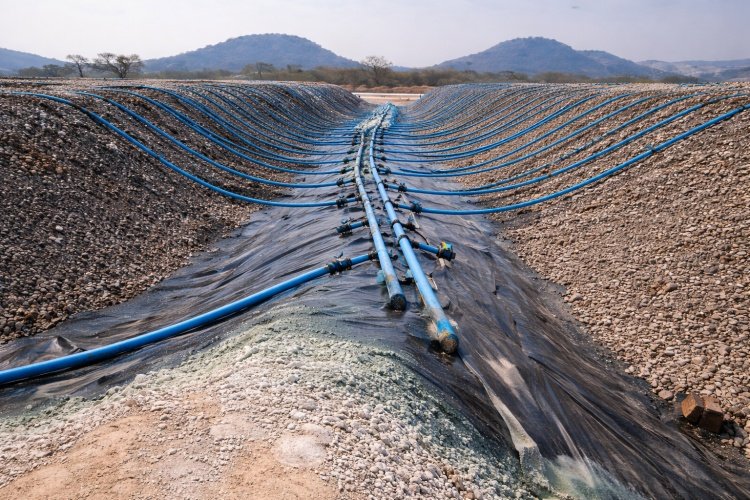
- Dreineringslaag: A layer of crushed gravel or piping on top of the primary liner to collect the pregnant solution.
The Role of GCL (Geosintetiese klei voerings)
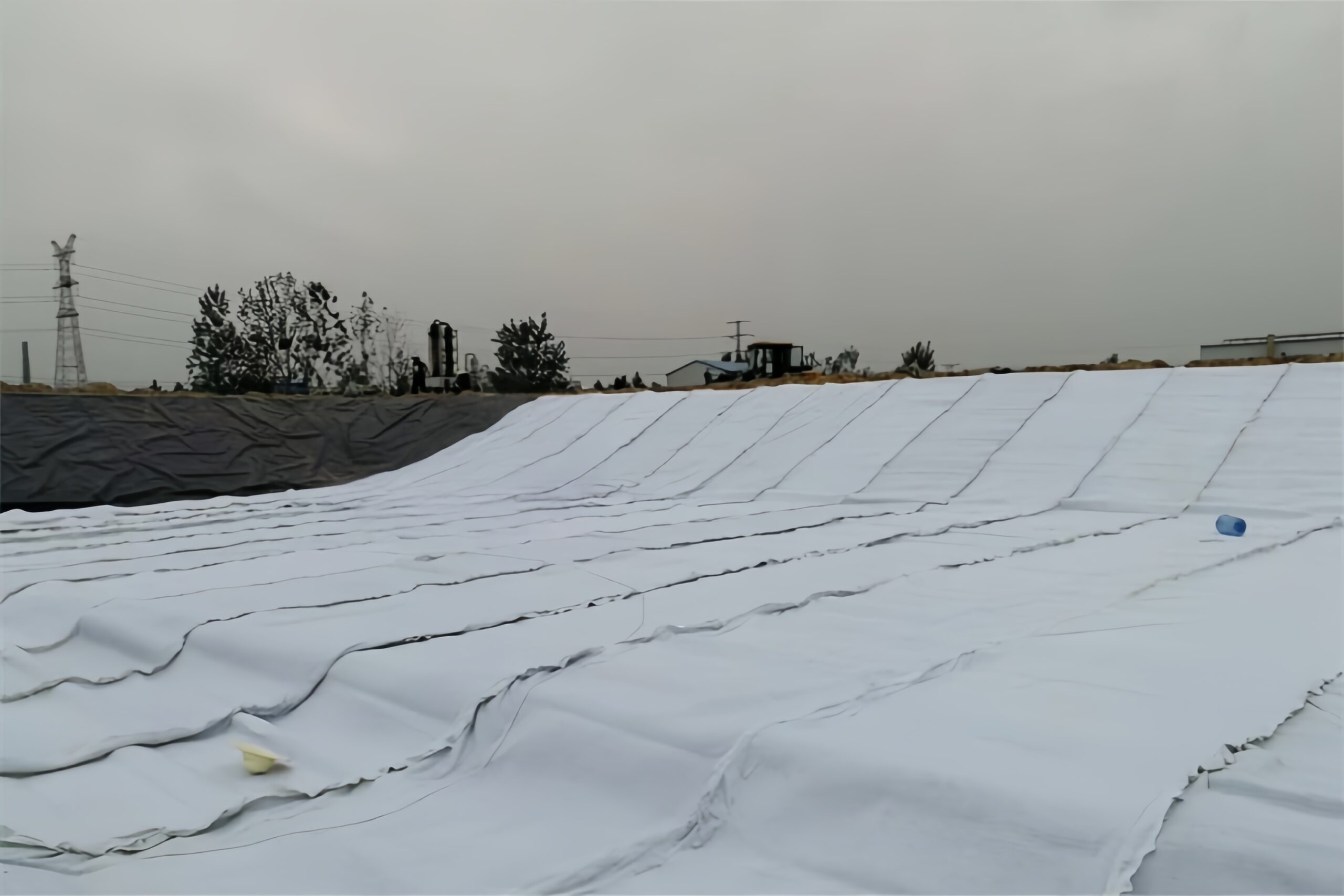
In many "Composite" designs, a GCL is placed directly under the primary HDPE liner. This is a powerful combination.
- The logic: If the HDPE creates a barrier to liquid, the GCL creates a barrier to leak propagation.
- The mechanism: If the HDPE is punctured, the bentonite clay in the GCL hydrates and swells, sealing the puncture from below.
- My experience: We strongly recommend GCLs in gold projects because they reduce leakage rates from "gallons per minute" to "negligible" levels, effectively buying the operator time to fix issues.
What are the key performance requirements for gold heap leach liners?
A gold mine liner faces a completely different chemical and physical environment compared to a copper mine liner. It deals with high pH (alkalinity) rather than acid, and it often operates on a shorter, more intense timeline.
Buyers must specify materials that excel in chemical resistance to alkaline solutions, puncture resistance, and long-term seam strength.

Chemical Resistance: The Cyanide Factor
Gold leaching uses a dilute cyanide solution with a pH typically kept between 10 and 11 (using lime) to prevent the cyanide from turning into strict gas.
- Material Choice: HDPE is chemically inert to both cyanide and the high alkalinity caused by lime.
- Die risiko: While the sheet is resistant, the additives (antioxidants) must be stable. We ensure our mining-grade HDPE uses a stabilizer package designed to resist extraction in high-pH environments.
Puncture and Tear Resistance
Unlike water reservoirs, heap leach pads are loaded with millions of tons of crushed ore. This ore is sharp.
- Requirement: The liner must resist puncture during the placement of the "overliner" (the drainage gravel).
- Spec Check: We look closely at the GRI-GM13 puncture resistance values. For a 2.0mm liner, the minimum puncture resistance is 640N. However, for crushed rock piles, we often recommend higher-performance resins or the use of a heavy non-woven geotextile (500gsm+) cushioning layer on top of the liner to prevent "point load" damage.
Seam Strength and Weld Integrity
The liner is only as strong as its weakest weld. In a gold project covering 500,000 square meters, there are tens of kilometers of welds.
- Shear and Peel: The material must facilitate thermal fusion welding. A good weld should be stronger than the sheet itself. When tested (destructive testing), the sheet should tear before the weld separates (Film Tear Bond - FTB).
- Field Reality: We advise clients to require strict QC protocols: trial welds every morning and afternoon, and non-destructive air pressure testing on 100% of the seams.
Exposure and UV Resistance
While the pad base is covered by ore, the side slopes and solution channels remain exposed to the sun for the life of the mine (5-10 years).
- Requirement: The Geomembrane must contain at least 2-3% carbon black. This blocks UV radiation from degrading the polymer chain.
- Observation: I have seen inferior "recycled" liners turn brittle and crack on the exposed slopes after just two years of high-altitude sun. Virgin resin with proper carbon black dispersion is non-negotiable for gold mines.
What are the common liner risks and failures in gold heap leach projects?
The most expensive liner is the one you have to repair after the heap is stacked. Once ore is loaded 10, 20, or 50 meters high, repairing a basal liner leak is chemically dangerous and financially disastrous.
Understanding where failures commonly occur allows mine owners to engineer them out of the design phase.
1. Inadequate Subgrade Preparation
This is the number one cause of failure I see in the field. If the soil beneath the liner is not properly compacted or contains sharp stones:
- Differensiële nedersetting: As the heavy ore pile compresses the ground, soft spots sink. This stretches the liner. If the strain exceeds the liner's yield point (approx 12-13% for HDPE), it will rupture.
- Stone Puncture: A single sharp stone left in the subgrade acts like a knife when 50 meters of ore overhead presses down on it.
2. The "Dozer Trap" (Installation Damage)
The most critical moment in a liner's life is when the drainage gravel (overliner) is spread.
- The Mistake: Bulldozers pushing gravel often slip or turn too sharply, grinding the gravel into the liner or tearing it with tracks.
- Die Regstelling: We always advocate for a strict 600mm minimum cover thickness before any equipment drives over the liner, and the use of low-ground-pressure equipment.
3. Lack of Leak Detection (Flying Blind)
In the past, some mines skipped the LDRS (Leak Detection) layer to save money.
- The Consequence: Without LDRS, you don't know you have a leak until cyanide is detected in monitoring wells outside the pad. By then, the contamination plume is large, and regulatory fines are imminent.
- Die werklikheid: An LDRS allows you to distinguish between "process leakage" and "construction water," giving operators control over the situation.
What are the material selection considerations for gold heap leach liners?
Gold heap leach projects typically have a shorter lifespan (5-10 years) and lower heap heights compared to massive copper projects, but the toxicity risk demands a conservative material choice.
We guide our clients to balance over-engineering with safety, focusing on the "Composite" logic.
Why HDPE is the Standard
Hoë-digtheid poliëtileen (HDPE) remains the undisputed king of gold leaching.
- Chemical Immunity: It is virtually unaffected by cyanide solutions.
- Weldability: It offers the most reliable field welding characteristics.
- Cost-Effectiveness: It provides the best barrier-per-dollar ratio.
Thickness Selection Logic
- The Myth: "Since gold heaps are lower (often 30-60m), we can use thinner liners like 1.0mm."
- The Professional View: We discourage this. While 1.0mm might theoretically hold the hydraulic head, it lacks the physical robustness to survive installation.
- Our Recommendation:
- Primary Liner: 2.0mm (80 mil) HDPE. This provides necessary scratch resistance and stress crack resistance.
- Secondary Liner: 1.5mm (60 mil) HDPE. Since it is protected by the primary layer and geonet, 1.5mm provides an adequate safety margin.
- Process Ponds: Always 2.0mm purely for UV resistance and durability during cleaning operations.
The Role of Resin Quality
In the gold sector, using liners made from recycled resin is a gamble you cannot afford to take. Recycled resins have unpredictable Melt Flow Indices (MFI) and unknown contamination, which leads to:
- Inconsistent welds in the field.
- Low Stress Crack Resistance (SCR), causing brittle failures under load.
- My Advice: Always demand Virgin Prime Grade Resin and ask for the resin supplier's certificate (e.g., from reputable petrochemical companies like Sabic, Chevron, or similar).
How do liner suppliers support gold heap leach projects?
A supplier's job ends when the material is delivered, but a partner's job continues through installation. In high-stakes gold projects, the gap between "buying a product" and "buying a solution" is huge.
We support gold mining clients by bridging the gap between factory manufacturing and site reality.
Manufacturing Consistency vs. Speed
Gold mines often require distinct "phases" of construction (e.g., Phase 1 in Year 1, Phase 2 in Year 3).
- Our Support: We ensure that the resin formulation remains consistent across phases. This ensures that when you weld new liner to the old liner three years later, the melt properties are identical, ensuring a secure bond.
Optimized Logistics for Remote Sites
Most gold mines are in difficult locations—high Andes requiring 4000m altitude logistics, or remote African bush.
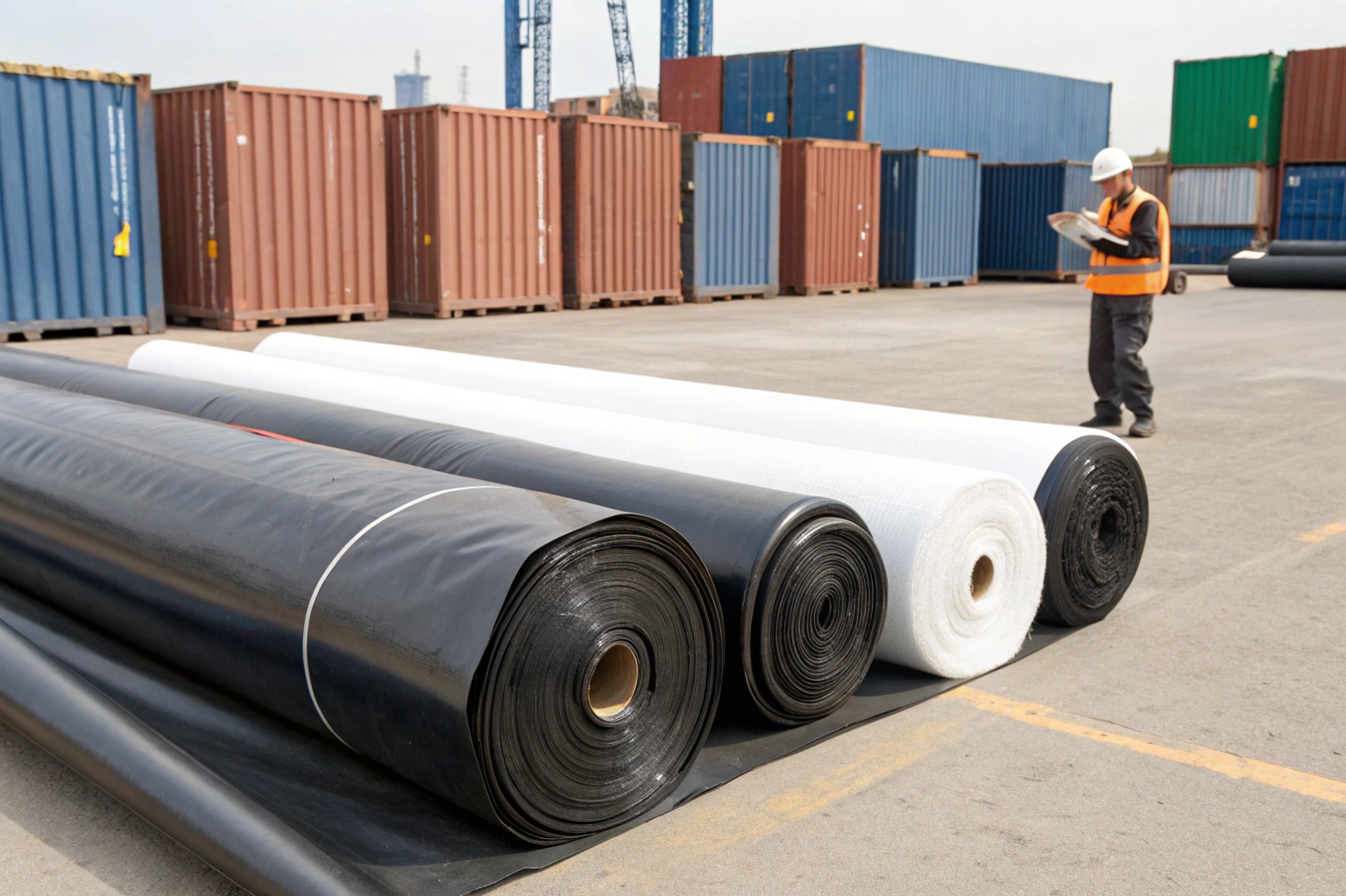
- Packing: We optimize roll lengths (e.g., 7m or 8m widths) to minimize the number of containers and, more importantly, minimize field welding. Fewer welds equal less risk.
- Beskerming: We use specialized heavy-duty packaging to prevent abrasion damage during weeks of truck transport on rough mining roads.
Technical Documentation for Compliance
We provide the comprehensive MQC (Manufacturing Quality Control) data required by environmental auditors. This includes:
- Resin density and melt flow certifications.
- Carbon black dispersion tests.
- OIT (Oxidative Induction Time) reports.
This paperwork is often just as important as the liner itself when the government inspector arrives.
Gevolgtrekking
Liner requirements for gold heap leach projects are driven by one fundamental goal: Risk Control.
Because of the severe environmental implications of cyanide, the margin for error is non-existent. A proper liner system is not a place to cut costs. The industry has converged on the Double Composite Liner System (HDPE + Geonet + HDPE/GCL) because it offers the necessary redundancy and monitoring capabilities.
As a supplier, my advice to mine owners and EPCs is straightforward: Treat your liner procurement with the same seriousness as your process plant design. Select virgin materials, insist on rigorous thickness (min 1.5mm-2.0mm), and view your liner supplier as a partner in your environmental compliance strategy. When the ground is sealed correctly, you protect not just the environment, but the long-term viability of your entire mining operation.