

I have sat on both sides of the negotiation table—defending technical specifications to project engineers and auditing production lines to ensure compliance.
In infrastructure projects, choosing a geocell supplier is not like buying office supplies. If a pen breaks, you throw it away. If a geocell fails, a highway embankment collapses, a slope slides, or a retaining wall gives way. The liability is immense.
This guide is written for engineers and procurement teams who need to distinguish between a generic supplier and a legitimate manufacturing partner. It outlines the specific criteria—from welding technology to audit trails—that determine whether a manufacturer is capable of supporting high-stakes infrastructure projects.
It is easy to create a flashy website with stock photos. It is much harder to maintain consistent weld strength across 500,000 square meters of production. Here is how you evaluate who can actually deliver stability and safety.
2. Manufacturing Capacity and Industry Experience
The first filter in your evaluation process is simple: Does this supplier have the sheer capacity and experience to handle the volatility of a major infrastructure project?
2.1 Production Facilities and Equipment
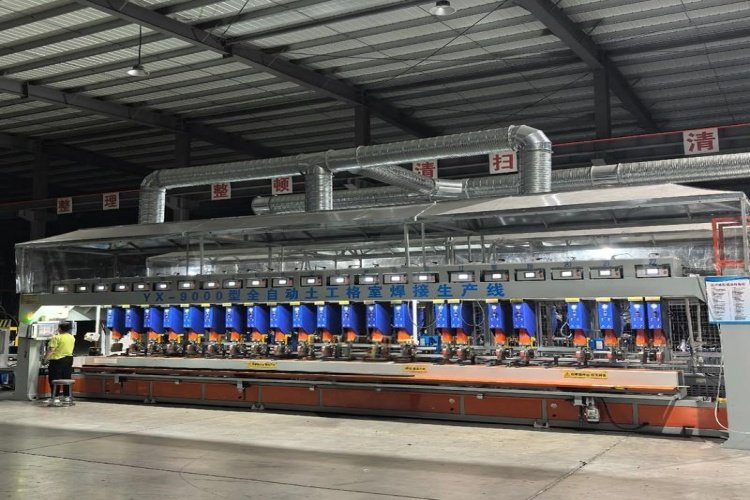
Geocell production relies on specific ultrasonic welding lines. A small workshop might have two lines functioning with older technology; a major export base will have ten or more automated lines. This matters for contingency. If a machine breaks down or needs calibration, a small facility delays your shipment by weeks, halting your site progress. A large-scale operation simply shifts production to another line effectively.
2.2 Annual Output and Large-Scale Supply Capability
Infrastructure projects often require sporadic, massive deliveries. Can the manufacturer ramp up production to deliver 20 containers in a single month to meet a paving schedule?
By Waterdigte Spesialis, we have optimized our facility layout to handle these surge demands. We maintain scalable production slots that allow us to service urgent project deadlines without compromising the quality of our regular flow.
2.3 Experience in Roads, Railways, Slopes, and Hydraulic Projects
Ask for case studies that match your specific application. A manufacturer who makes geocells primarily for garden landscaping (low stress) may not understand the rigorous demands of a 20-meter high highway slope or a load-bearing railway bed.
We have supplied materials for high-load applications globally. This experience means we understand "critical failure modes"—we know exactly what happens to the plastic when it is buried under 10 meters of rock, and we manufacture to prevent that failure.
3. Raw Materials and Geocell Product Specifications
The quality of the geocell is determined before the plastic even enters the extruder. It starts with the resin formulation.
3.1 HDPE Raw Material Quality and Source
The market is flooded with "cheap" geocells made from recycled materials (often called "re-grind") with unpredictable properties.
- Virgin HDPE: Required for long-term critical infrastructure (100+ year lifespan). It provides consistent Environmental Stress Crack Resistance (ESCR).
- Recycled/Mixed HDPE: Acceptable for temporary access roads but dangerous for permanent slopes due to brittleness and inconsistent UV stability.
3.2 Cell Height, Thickness, and Dimensional Accuracy
Precision matters. If a design calls for a 150mm depth to match a specific aggregate layer, receiving a 140mm product changes the confinement physics. A capable manufacturer has strict monitoring on the extrusion line to ensure sheet thickness (typically 1.1mm to 1.8mm) is uniform across the entire roll width, not just at the edges.
3.3 Weld Strength and Welding Technology
The "Achilles' Heel" of any geocell is the weld. This is where the system will fail.
You must evaluate the manufacturer’s welding technology. We utilize automated ultrasonic welding systems that monitor energy output and dwell time. This ensures that every connection point meets the specified Naatskilsterkte (bv. >1420N for 100mm depth). A manual or poorly calibrated operation will produce "cold welds" that look fine visually but snap under tension.
3.4 Surface Types: Smooth, Textured, and Perforated
A capable manufacturer offers full tooling options:
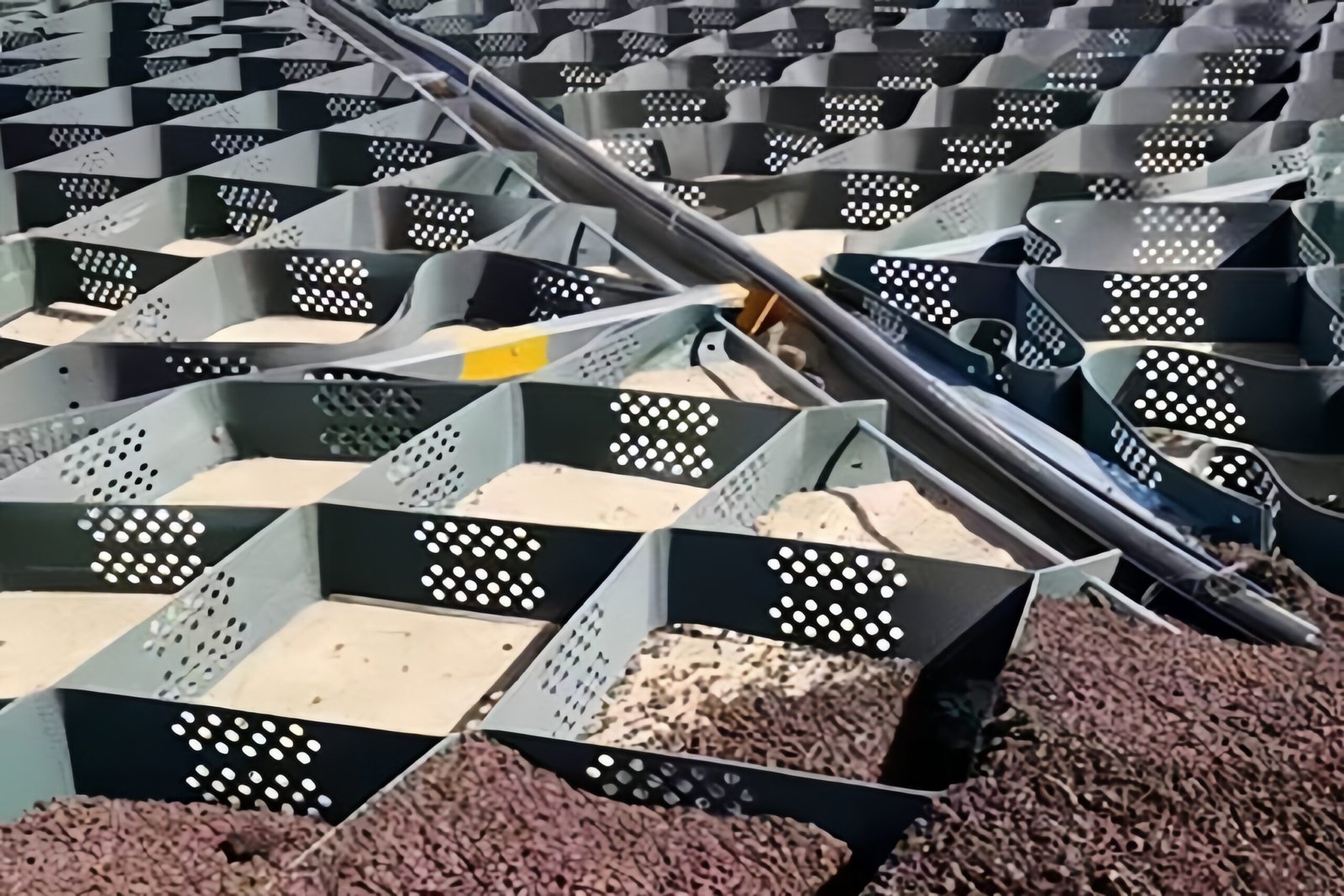
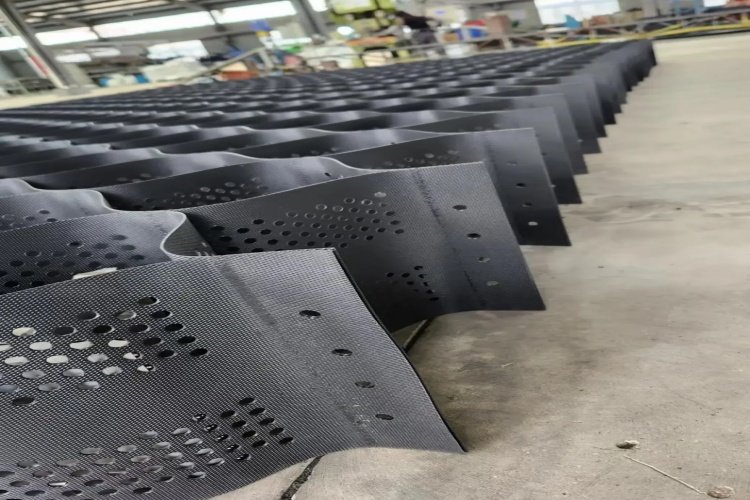
- Textured: Essential for increasing friction between the cell wall and the soil infill.
- Perforated: Essential for lateral drainage and root lock-up.
If a supplier tries to convince you that "smooth, non-perforated" is fine for a slope application (where drainage is key), they likely lack the tooling to produce the correct product specification.
4. Quality Control System and Testing Standards
This is where the difference between a "plastic strip" and an "engineered system" becomes clear. You need proof of performance, not just promises.
4.1 In-House Quality Control Procedures
Does the facility have an on-site laboratory? They should. Sending samples to external labs takes days. In-house testing allows us to check tensile strength and seam peel strength during production. If a roll fails our internal standard, we stop the machine immediately and quarantine the batch. This real-time loop is impossible without on-site QC.
4.2 Third-Party Testing and Laboratory Reports
While in-house testing is good for process control, you should demand Third-Party Reports (TRI, SGS, SAI, etc.) for validation.
- Red Flag: If the supplier offers a test report from 5 years ago.
- Green Flag: The supplier offers a recent report (within the last 12 months) covering ASTM D4437 (Seam Strength) and ASTM D1693 (ESCR).
4.3 Compliance with International Standards
Infrastructure projects operate on standards. Whether your project requires ASTM (American), EN (European), or GB (Chinese) standards, the manufacturer must understand the differences. For example, the testing speed for tensile strength differs between standards. We ensure our testing protocols align exactly with the tender documents provided by the client.
4.4 Product Traceability and Batch Control
By Waterdigte Spesialis, every pallet we ship carries a unique batch code or label. We can trace that code back to the specific operator, the machine parameters used, and the raw material silo used on that day. If a manufacturer cannot do this, you have zero recourse if a defect is found on site.
5. Certifications and Regulatory Compliance
Certifications are the baseline for entering the conversation in serious infrastructure tenders.
5.1 ISO Quality and Environmental Management Systems
ISO 9001 (Quality Management) and ISO 14001 (Environmental Management) are standard prerequisites. However, do not just look at the logo on the website. Ask to see the certificate and check the expiry date.
We have maintained our ISO certifications for years, which requires regular external audits of our management processes. This discipline translates directly to the consistency of the product you receive.
5.2 Project-Specific or Regional Certification Requirements
Different regions have specific barriers. CE Marking for Europe, TRI certification for North America, or specific transport authority approvals in Southeast Asia. A mature export partner will have a library of these certifications ready to support your tender submission package.
5.3 Documentation Support for Tenders and Approvals
The job isn't done when the product is made. The bureaucracy of infrastructure projects is heavy. We support our clients by providing Technical Data Sheets (TDS), Material Safety Data Sheets (MSDS), and Manufacturers Authorization Forms (MAF) promptly, helping you clear the "paperwork hurdles" of government procurement.
6. Engineering Support and Technical Services
You are buying a solution, not just a product. The rollout of the material is just as important as the material itself.
6.1 Pre-Sales Technical Consultation
We don't just quote specific part numbers; we look at the application. If a client asks for a geocell for a channel protection project, we check the flow velocity parameters. If the spec looks too weak for the application, we advise the client voor they buy.
6.2 Design Assistance and Product Selection
One of the biggest risks in infrastructure projects is under-design (choosing a cell depth too shallow for the load). Our technical team often assists engineers by reviewing site conditions and recommending the optimal cell geometry and tendon strength.
6.3 Installation Guidance and Technical Documentation
The best geocell in the world will fail if installed incorrectly (e.g., poor tensioning or incorrect anchor spacing). We provide detailed installation manuals and, when necessary, remote video guidance to ensure your contractors install the system correctly.
7. Customization Capability and Product Flexibility
Infrastructure projects rarely fit into a neat "standard" box. A generic manufacturer forces you to adapt to their settings; a partner adapts to yours.
7.1 Customized Cell Dimensions and Thickness
Standard weld distances (330mm, 445mm, 660mm) are common. But sometimes a project requires a specific strip depth (e.g., 75mm or 120mm) to match a paver block layer or a concrete pour capability. We have the tooling flexibility to adjust strip depth and weld spacing to meet precise engineering requirements.
7.2 Special Colors, Packaging, and Labeling
While black is standard for UV resistance, some projects require green or tan fascias for aesthetic blending in landscaping. Furthermore, we offer customized labeling on pallets to help site logistics teams identify different grades of material easily upon arrival.
8. Supply Reliability and Logistics Management
The product is useless if it is stuck in a port or damaged during transit.
8.1 Lead Time Control and Delivery Consistency
"Two weeks" must mean two weeks. Delays in geocell delivery prevent the earthworks team from placing fill, which can halt the entire project machinery. We prioritize transparent communication regarding production slots. If we say the container leaves on the 15th, it leaves on the 15th.
8.2 Export Packaging and International Shipping Experience
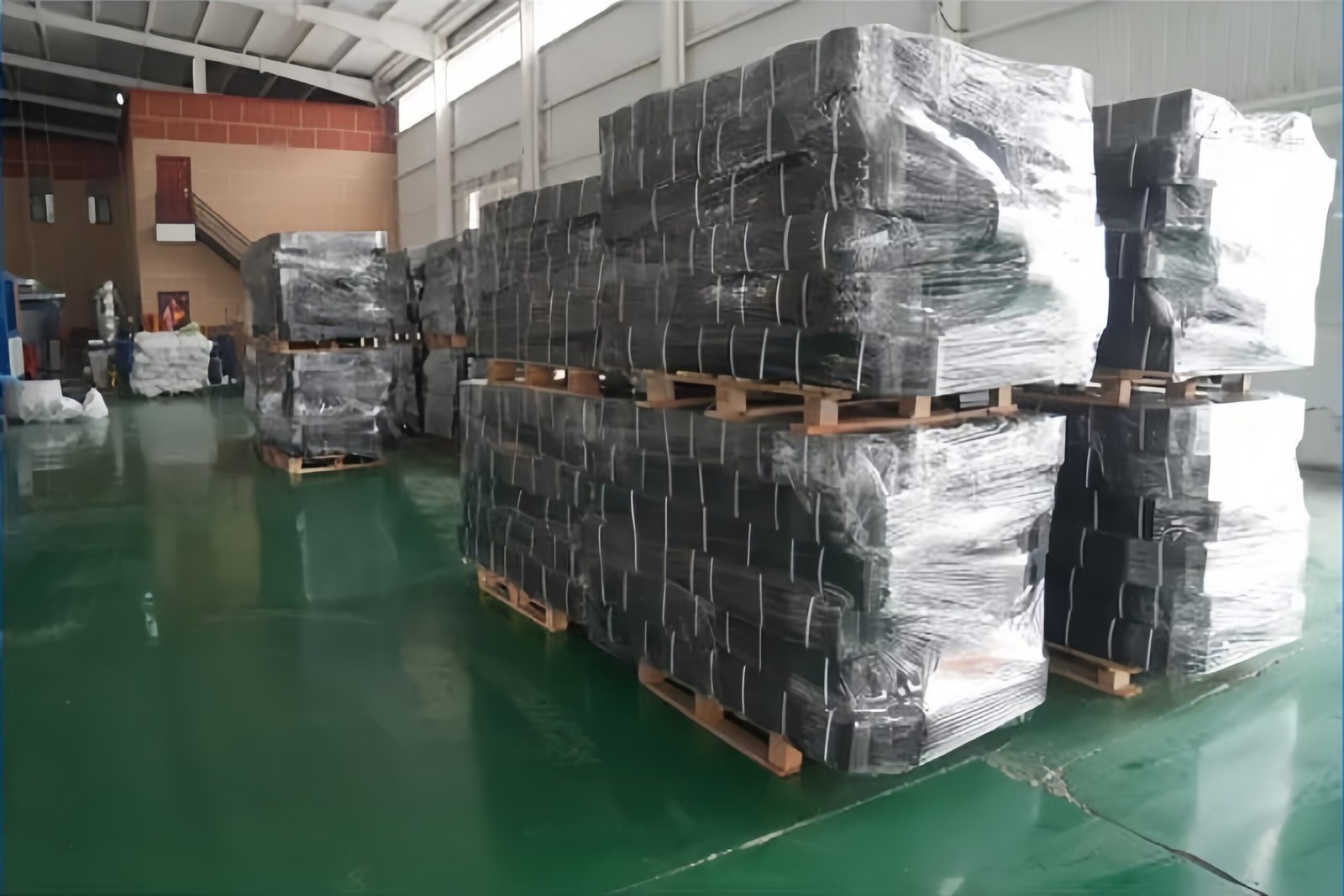
Geocells are bulky but lightweight. Efficient "nesting" of the folded strips is an art form. Poor packing means you pay to ship air. Proper packing maximizes the square meters per 40HQ container, lowering your landed unit cost. We use reinforced pallets and UV-resistant wrapping to ensure the product survives weeks at sea.
9. Cost Evaluation: Price vs. Long-Term Performance
Finally, we must address the elephant in the room: Price.
9.1 Understanding Initial Cost vs. Lifecycle Cost
There is always a cheaper option. But cheaper options usually achieve their price by using calcium carbonate fillers or recycled resins which degrade structural integrity.
In infrastructure, the cost of the geocell is often less than 2% of the total project cost. However, a failure of that 2% can ruin 100% of the project.
9.2 Risks of Low-Price, Low-Quality Geocells
If a quote is 20% below the market average, you must ask why. Usually, the weld consistency is poor, or the sheet thickness is lower than the spec limits (e.g., delivering 1.3mm when 1.5mm was ordered). The bitterness of poor quality remains long after the sweetness of low price is forgotten.
9.3 Achieving Cost-Effective and Durable Solutions
The goal is value. Value means passing the site inspection the first time. Value means no repair costs in year 3. We focus on providing a competitive price for a compliant product, ensuring you don't pay twice.
10. Key Questions to Ask When Evaluating Geocell Manufacturers
Copy and paste these questions in your next RFQ (Request for Quotation) to filter out unqualified suppliers:
Manufacturing & Quality:
- "Can you provide a specific Inspection & Test Plan (ITP) for my order?"
- "What is your standard Minimum Average Roll Value (MARV) for Seam Peel Strength for this specific cell depth?"
- "Do you perform destructive peel tests on every batch, and can I see a sample report?"
Technical Support:
- "Can you provide installation method statements for [Slope/Road] application?"
- "Do you have standard anchor spacing calculations available?"
Logistics:
- "How many square meters of this cell size fit in a 40HQ container using your nesting method?"
Conclusion: Making an Informed Manufacturer Selection
Selecting a geocell manufacturer is a risk management exercise. You are searching for stability—stability in the material properties, stability in the supply chain, and stability in the business relationship.
By Waterdigte Spesialis, we leverage our extensive industry experience, ISO-certified processes, and large-scale manufacturing capabilities to deliver not just plastic, but peace of mind. Whether you are building a retaining wall or a highway base, we ensure the material arriving on site matches the promises made in the tender.
When evaluating your partners, look beyond the bottom line. Look for the traceability, the certifications, and the technical understanding. That is the foundation of a successful project.