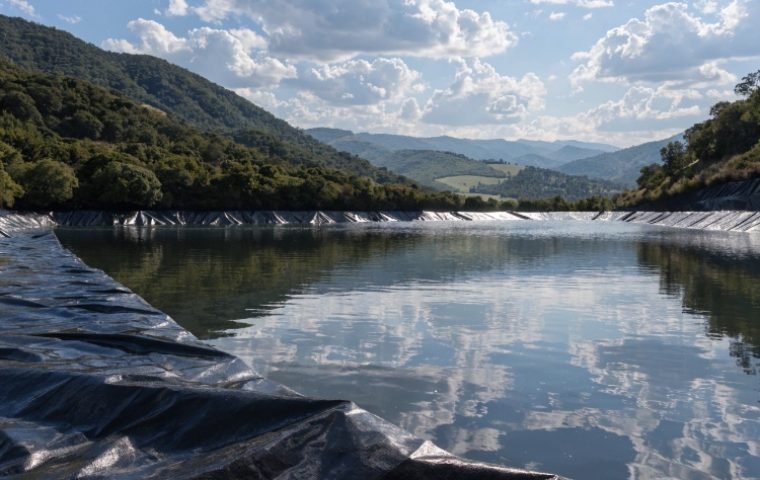


In modern agriculture, water security is the foundation of profitability. Whether you are growing high-value crops like avocados and almonds, or managing large-scale row crops, your irrigation reservoir is the heart of the operation.
To secure this water, the industry has shifted almost exclusively to geomembrane liners (typically HDPE or LLDPE). These synthetic barriers are designed to be impermeable, durable, and cost-effective. When installed correctly, they turn a simple hole in the ground into a secure hydraulic asset.
However, a liner is not invincible.
We frequently receive urgent calls from farm managers and engineers who are facing a crisis: their reservoir is losing water faster than they can pump it. When an agricultural reservoir liner fails, the cost is not just the lost water—it is the potential for structural collapse, skyrocketing energy bills, and crop stress.
Understanding the causes and consequences of reservoir liner failure is essential for long-term performance and risk management. In this article, I will walk you through the warning signs, the hidden financial damage, and how to prevent these failures before they occur.
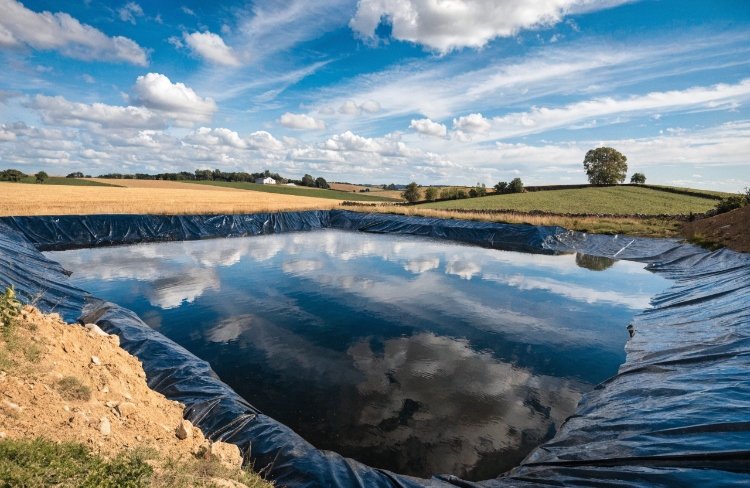
Early Warning Signs of Reservoir Liner Failure
Liner failure rarely happens overnight (unless caused by a catastrophic event like an earthquake or heavy machinery puncture). Usually, it is a slow, creeping problem. The earlier you detect it, the cheaper the repair.
Unexplained Water Level Drops
The most obvious sign is a discrepancy in your water balance. Every open reservoir loses water to evaporation.
However, if you notice the water level dropping faster than the local evaporation rate dictates, you likely have a breach.
- The Litmus Test: If your local evaporation pan data suggests a 5mm/day loss, but your reservoir is dropping by 15mm/day without any irrigation pumps running, that extra 10mm is going into the ground.
Wet Areas Around the Reservoir Embankment
Water takes the path of least resistance. If your liner is compromised, water will saturate the surrounding soil.
Look for:
- Unusually green or lush vegetation on the downstream slope of the embankment.
- "Soft spots" or muddy patches at the toe of the dam, even during dry weather.
- Active trickles of water appearing on the outer walls of above-ground reservoirs.
Sinkholes or Soil Settlement
This is a critical danger signal. When water leaks through a liner, it doesn't just sit there; it flows. As it moves through the subgrade, it can wash away fine soil particles—a process known as piping.
Over time, this creates voids underneath the liner. You might see the liner "bridging" (stretched tight over a hole) or visible depressions (sinkholes) forming on the reservoir banks. If you see this, the structural integrity of your dam is already compromised.
Sudden Increase in Pumping Demand
Sometimes the sign isn't visual; it's financial.
If your irrigation logs show that you are pumping 20% more groundwater this month to maintain the same reservoir level compared to last year (accounting for rainfall), that energy is being wasted on refilling a leaking bucket.
Common Causes of Agricultural Reservoir Liner Failure
Why do liners fail? In our experience supplying materials to projects worldwide, it is rarely a "mystery." It almost always comes down to one of these five factors.
Poor Subgrade Preparation
The number one cause of geomembrane liner damage is what lies beneath.
A geomembrane is strong, but it is thin (usually 1.0mm to 2.0mm). If the subgrade is not properly compacted, or if it contains sharp rocks, roots, or construction debris, the weight of the water (1 ton per cubic meter) will press the liner onto these sharp points.
Eventually, the liner punctures. We call this "point loading."
Puncture Damage During Installation
The installation phase is the most risky time for a liner.
- Heavy Machinery: Excavators moving on the sheet without a buffer layer.
- Tools: Workers dropping box cutters, welding equipment, or clamps.
- Traffic: improper footwear or dragging heavy cables across the surface.
Scratches created during installation may not leak immediately but will tear open once the liner is under tension from the water load.
Animal and Root Damage
In agricultural settings, nature fights back.
- Rodents: Burrowing animals (muskrats, ground squirrels) can chew through liners or dig nests behind them, causing collapse.
- Vegetation: If the reservoir is not maintained, nearby trees (especially aggressive species like bamboo or willow) can send roots penetrating through the subgrade and even through the liner itself looking for water.
UV Degradation from Low-Quality Materials
Not all black plastic is the same.
Agricultural reservoir leakage often occurs 3–5 years after installation because the owner bought a "cheap" liner.
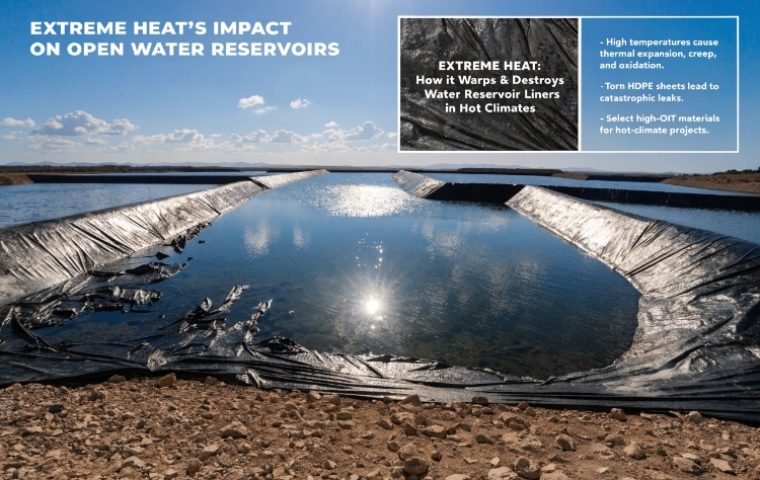
High-quality HDPE liners contain carbon black and antioxidants to resist UV radiation. Cheap, recycled-resin liners lack this protection. Under the intense sun, the polymer chains break down, causing "stress cracking." The liner becomes brittle like a potato chip and shatters.
Improper Welding of Geomembrane Seams
The seam is the only part of the system that is man-made on site.
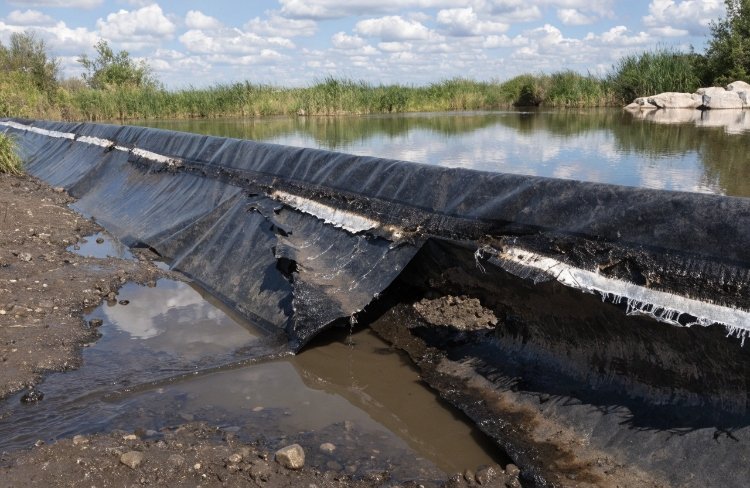
If the welding technician is inexperienced, or if the machine temperature/speed is set incorrectly for the ambient weather, you get "cold welds" (which peel apart) or "burn-throughs" (where the liner melts).
A liner is only as good as its weakest seam.
Operational and Financial Consequences
When a liner fails, the focus is usually on the cost of the patch repair. But for a professional farming operation, the repair cost is negligible compared to the consequential costs.
Reduced Irrigation Water Availability
The most immediate impact is operational. If you lose 20% of your stored water to seepage, that is 20% less water available for your crops during the peak dry season.
For high-value crops like berries or avocados, water stress translates directly to reduced yield, smaller fruit size, and lower market prices.
Higher Pumping and Water Supply Costs
Water in agriculture is energy.
Every gallon that leaks out of the bottom requires electricity or diesel to be replaced—either pumped from a deep well or transferred from a canal.
For large reservoirs, a moderate leak can waste thousands of dollars in electricity annually. It is a silent tax on your operation.
Structural Risks to Reservoir Embankments
This is the nightmare scenario.
When water saturates an earthen embankment, it reduces the soil's shear strength. The dam becomes heavy and unstable.
Internal erosion can lead to a sudden, catastrophic slope failure. We have seen cases where a small leak caused a reservoir wall to collapse, flooding downstream fields, destroying expensive pump stations, and incurring massive liability.
Environmental Compliance Risks
In modern agriculture, runoff management is strictly regulated.
If your reservoir is used for storing fertilizer-rich water or tailwater runoff, a leak is an environmental violation. Seepage allows nitrates and chemicals to contaminate local groundwater aquifers. This can lead to heavy fines from environmental protection agencies and remediation costs that far exceed the price of a new liner.
How to Detect and Address Liner Damage
If you suspect a leak, do not ignore it. It will get worse. Here is how professionals handle it.
Routine Visual Inspection
Walk the perimeter of your reservoir weekly.
- Check the anker sloot (where the liner is buried at the top) to ensure the liner hasn't pulled out due to thermal contraction.
- Look for bubbles or "whales" (places where gas or water is trapped under the liner).
- Inspect the water line for accidental damage from floating debris or pumps.
Leak Detection Methods
- Water Balance Test: The simplest method. Measure the drop in your pond vs. a control bucket (evaporation pan) over 24 hours.
- Electrical Leak Location: For large or critical reservoirs, we use a dipole electrical survey. Since the liner is an insulator, electricity flowing from the water to the ground indicates a hole. This can pinpoint a pinhole in a 5-hectare pond with GPS accuracy.
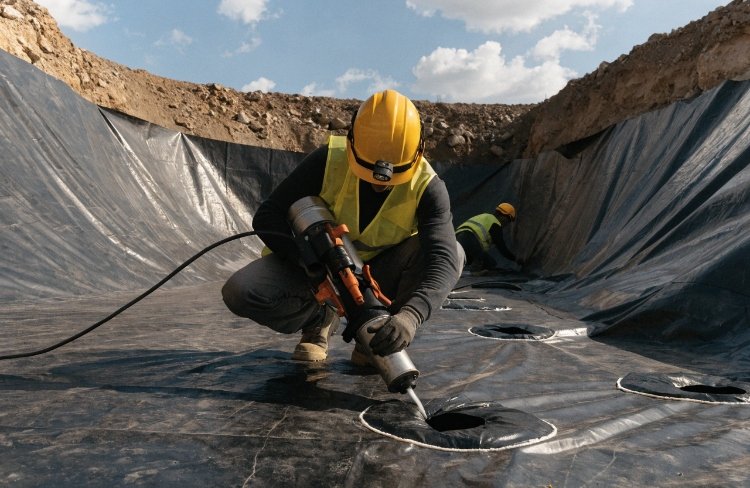
Geomembrane Patch Repair
Small punctures can be repaired easily.
- Clean the area: The liner must remain dry and clean.
- Patching: A piece of the same material is placed over the hole.
- Extrusion Welding: Unlike the original wedge weld, repairs are done with an extrusion welder, which lays a bead of molten plastic to bond the patch to the liner.
- Note: Tapes and glues generally do not work on HDPE. You must use heat fusion.
Professional Liner Assessment
If the liner is showing signs of "stress cracking" (shattering) all over, a patch won't save you. This indicates material failure (UV degradation). In this case, the only solution is often a full replacement or relining over the old material.
Preventive Measures: Avoiding Failure Before It Starts
The cheapest leak is the one that never happens. When planning a new agricultural reservoir or refurbishing an old one, follow these principles to ensure longevity.
1. Invest in Proper Subgrade Preparation
Do not rush the earthworks. Ensure the soil is compacted to 95% standard proctor.
Key Tip: Always install a Non-Woven Geotextile (cushion layer) between the soil and the geomembrane. This felt-like fabric acts as a puncture guard, protecting the liner from sharp objects and soil friction.
2. Choose High-Quality Geomembrane Materials
Do not buy liner based solely on the lowest price per square meter.
Cheap liners use recycled resins that are inconsistent and weak.
Specify Virgin Resin HDPE (High-Density Polyethylene) for exposed applications. Ensure the material meets international standards (like GRI-GM13), which guarantees proper carbon black content for UV resistance and long-term durability.
3. Professional Installation is Non-Negotiable
You can buy the best material in the world, but if the seams are weak, it will leak.
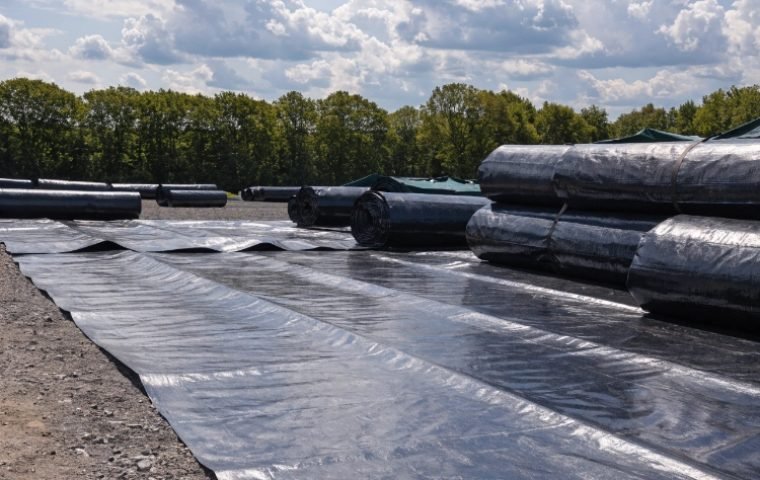
Hire certified installers who use automated dual-track wedge welders. Demand that they perform destructive testing (peel and shear tests) on trial welds every morning before they start working on your pond.
4. Animal Barriers
Install fencing around the reservoir to keep large animals out. Maintain vegetation around the perimeter to prevent root intrusion, but keep the immediate embankment clear of trees.
Risk, Limitations, and When Liners Are NOT the Solution
It is important to be honest: a geomembrane liner is not a magic solution for every site condition.
If your reservoir is built on Karst geology (limestone prone to sinkholes) or extremely unstable ground, a liner alone may not survive the ground collapse. In these cases, you need complex civil engineering solutions involving geogrids or concrete reinforcement beneath the liner.
Furthermore, liners have a lifespan. Even the best HDPE liner will eventually degrade after 20-30 years of intense UV exposure. They are not "install and forget" assets. They are maintenance-dependent systems.
Gevolgtrekking
Reservoir liner failure is a significant threat to agricultural productivity, but it is rarely an accident. It is almost always the result of poor material selection, sloppy installation, or ignored maintenance.
The cost of a liner is typically a small fraction of the total reservoir construction cost, yet it carries 100% of the responsibility for holding the water.
By understanding the warning signs—like unexplained water drops or wet embankments—and investing in quality prevention (geotextiles, virgin HDPE, and professional welding), you can secure your water supply.
In the business of agriculture, water is money. Don't let yours leak away.