

Uncontrolled leaks in oil or chemical storage areas can escalate rapidly. What seems like a minor spill can turn into a major environmental, financial, and legal crisis.
If oil or chemical storage systems leak without containment, it can lead to severe soil and groundwater contamination, regulatory fines, costly cleanup, operational shutdowns, and long-term liability. These consequences almost always cost far more than installing proper containment systems in advance.
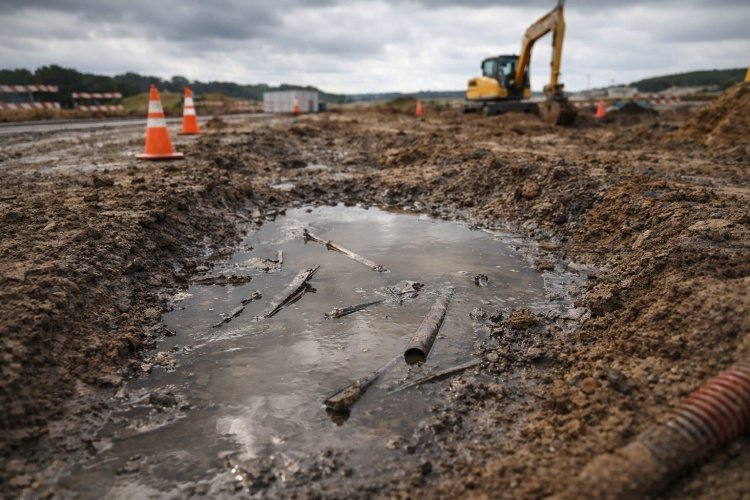
In industrial facilities such as tank farms, chemical storage areas, and processing zones, leaks are not a matter of “if” but “when.” Equipment ages, valves fail, and human errors occur. The real question is: what actually happens when a robust containment system is not in place?
What Immediate Environmental Damage Occurs After a Leak?
When a primary storage tank ruptures or a pipe fitting fails, gravity causes the liquid to find the lowest possible point. If there is no engineered secondary containment system—like an impermeable geomembrane liner—the hazardous fluid contacts raw soil or porous concrete immediately.
The immediate environmental damage is driven by how liquids penetrate the ground. Soil acts like a sponge. As oil, diesel, or industrial chemicals flow over the surface, capillary action begins dragging the toxins downward. Heavy crude oil might move slowly, smothering topsoil and killing all surface vegetation. Lighter fractions, like refined diesel or harsh chemical solvents, permeate the soil matrix at alarming speeds.
Once these fluids sink beneath the surface, the contamination spread becomes completely uncontrollable. Ground conditions dictate the flow. The liquids migrate laterally across underground soil layers and travel vertically toward the water table.
This is the exact point where a localized facility accident becomes a regional disaster. If hydrocarbons or processing chemicals reach an underground aquifer, the pollution goes from being a surface issue to a widespread water crisis. Groundwater flows move the toxins miles away from the original facility, polluting surrounding agricultural lands and local drinking water supplies.
In my export experience supplying containment liners to Southeast Asia and the Middle East, I have seen projects where heavy rains immediately followed an unlined spill. The rainwater acts as a carrier, washing the chemicals deep into the earth. Once hazardous fluids enter the underground water system, the environmental damage is virtually irreversible. The pollution zone becomes exponentially larger than the original footprint of the leak.
How Does a Leak Trigger Regulatory Violations and Legal Action?
Regulators worldwide do not simply treat uncontained spills as unfortunate accidents; they treat them as operational negligence. Operating a high-capacity storage facility without a functional secondary containment system is a direct violation of international and local environmental laws.
In jurisdictions enforcing the Environmental Protection Agency (EPA) standards, facilities must adhere to the Spill Prevention, Control, and Countermeasure (SPCC) rule. Similar strict regulations govern industrial parks in Europe, Asia, and South America. If an uncontained leak occurs, local environmental authorities are immediately notified.
An uncontained leak acts as a trigger for sweeping regulatory violations. First, the facility faces immediate, heavy monetary fines for allowing hazardous waste to enter the environment. These fines often compound daily until the spill is entirely neutralized.
Second, authorities almost always issue mandatory shutdown orders. The government will not allow a facility to continue operating, transferring liquids, or running production lines while hazardous materials are actively leaching into the ground. A single leak immediately translates to multiple compliance failures, stopping your entire business operation in its tracks.
Furthermore, an uncontained spill places the enterprise on a permanent regulatory watchlist. You will be subject to continuous, unannounced audits and stringent reporting obligations for years. Site managers and corporate directors can even face personal legal liability if negligence is proven. The legal battles distract from core business operations and drain corporate resources long after the physical spill is dry.
Why Are Cleanup and Remediation Costs So High?
Buyers frequently ask me why they should invest heavily in premium materials like high-density polyethylene (HDPE) liners. I always remind them that the cost of environmental remediation is easily 10 to 100 times higher than the cost of prevention.
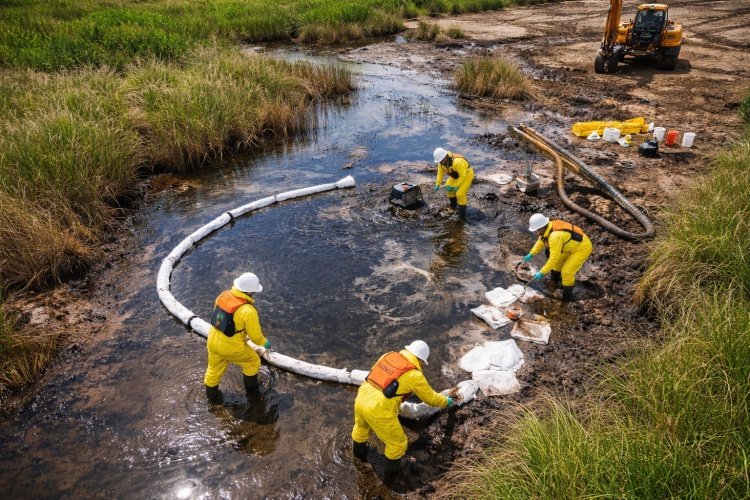
When a spill happens inside a properly lined containment bund, cleanup is straightforward. You bring in vacuum trucks, pump the pooled liquid off the impermeable liner surface, wash the plastic down, and resume operations. The liquid never touches the dirt.
When a spill happens without containment, you are no longer just cleaning up oil; you are cleaning up thousands of tons of contaminated earth. You must hire specialized third-party environmental response companies. Heavy excavators must physically dig up all the saturated soil. Because this soil is now legally classified as hazardous waste, it cannot be dumped normally. It must be loaded into specialized, permitted trucks and driven to specific hazardous waste treatment facilities, which charge enormous dumping fees by the ton.
If the chemicals have reached the groundwater, the expenses multiply rapidly. Groundwater remediation involves drilling extraction wells, pumping the contaminated water to the surface, running it through complex filtration systems, and re-injecting it back into the aquifer.
This is not a fast process. While pumping oil off a geomembrane takes hours, soil excavation and groundwater treatment take months or even years. Throughout this extended timeline, the operational downtime continues to bleed daily revenue. When you factor in third-party contractors, heavy equipment rentals, waste disposal fees, and lost production, the cleanup costs completely consume project profitability.
What Operational and Infrastructure Damage Can Occur?
Beyond the environmental and legal fallout, uncontained leaks cause massive physical damage to the facility’s own infrastructure. This is an operational reality that many project designers fail to anticipate.
Chemicals, particularly strong acids, caustic sodas, and industrial solvents, are aggressive materials. If they spill onto unlined ground or bare concrete, they aggressively attack the structural integrity of the plant. Standard concrete is porous. When corrosive chemicals seep into a concrete foundation, they eat away the cement paste and reach the embedded steel rebar. The rebar rusts, expands, and causes the concrete to crack and spall.
An uncontained fluid also softens the subgrade supporting heavy equipment. A large steel storage tank exerts massive downward pressure on the soil. If the ground beneath or immediately adjacent to the tank becomes saturated with spilled oil or water, the soil loses its bearing capacity. This leads to differential settlement—one side of the massive tank sinks deeper into the mud than the other side.
Uneven settlement places immense mechanical stress on the steel tank shell and the rigid pipelines connected to it. Welds can snap, and pipes can shear off, causing secondary, catastrophic ruptures.
Furthermore, hazardous liquids easily seep into underground utility trenches, dissolving the protective jackets around high-voltage electrical cables and communication lines. What starts as a simple surface leak rapidly becomes an asset destruction event, forcing companies to rebuild foundations, replace piping, and rewire electrical grids.
Can Leaks Lead to Fire, Explosion, or Safety Incidents?
Industrial facilities handle highly volatile fluids, including crude oil, diesel, aviation fuel, and chemical solvents. Without secondary containment, a spill creates an immediate, severe safety hazard for all on-site personnel.
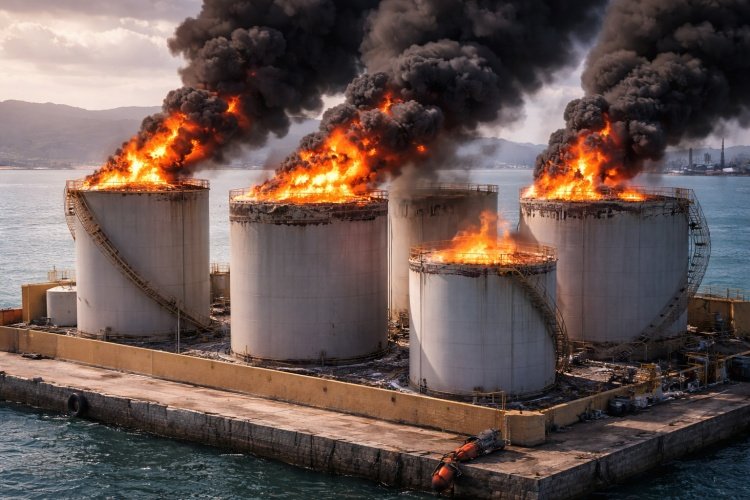
When a volatile liquid escapes a tank and is not contained, it spreads horizontally over a wide area. As the liquid spreads, its surface area increases drastically. A larger surface area causes these volatile organic compounds (VOCs) to evaporate much faster, releasing highly flammable vapors into the air.
These vapors do not just float away; they are often heavier than air and gather in low-lying areas, trenches, and unventilated pockets on the site. This creates a massive vapor plume. Once the gas concentration reaches its lower explosive limit (LEL), all it takes is a single ignition source—a spark from a truck exhaust, a dropped steel wrench, or static electricity—to trigger a catastrophic explosion.
A proper containment system dramatically reduces this risk by limiting the spread. If a geomembrane-lined bund confines the spill into a deep, narrow pool, the exposed surface area is minimized. Less surface area means less vaporization, keeping atmospheric gas concentrations below explosive thresholds. Without this boundary, uncontrolled leaks can quickly turn standard storage areas into high-risk hazard zones, endangering workers' lives and exposing the company to massive liability claims.
The Limitations of Relying on Natural Soil or Bare Concrete
In the interest of practical engineering reality, we must discuss why "budget-friendly" alternative containment methods are extremely risky. Many older site designs simply pile up dirt around a tank farm or pour a flat concrete slab and call it "containment." As an active supplier to these industries, I strongly advise against relying on these outdated methods.
The Limitations of Bare Soil and Clay:
Natural earthen berms are highly vulnerable to weather. If you rely on compacted clay to hold back chemicals, you are betting against the climate. In arid or hot environments, exposed clay dries out and suffers from severe desiccation cracking. Deep fissures open up in the soil. When an oil spill hits that dried-out berm, the oil bypasses the clay instantly by flowing straight down the cracks into the subgrade. Relying on dirt is a false economy.
The Trade-offs of Rigid Concrete:
Many managers assume a heavily reinforced concrete wall and floor is sufficient to stop leaks. This is a dangerous assumption. While concrete offers excellent structural support, it is inherently rigid and porous. Facility ground naturally settles, and temperature fluctuations case thermal expansion. This inevitable movement causes concrete to crack.
Once concrete cracks—even microscopic hairline fractures—aggressive chemicals and low-viscosity oils will seep straight through. Furthermore, standard concrete lacks the chemical resistance needed for acids and solvents.
Why Geomembranes Are Mandatory:
Because of these severe limitations, modern engineering requires a synthetic, impermeable barrier. High-density polyethylene (HDPE) geomembranes flex with ground settlement without breaking. They are chemically inert to hydrocarbons and fully block liquid migration. Placing a concrete pad without an underlying geomembrane liner means you are simply delaying the pollution, not preventing it. If containment is necessary, doing it halfway with dirt or bare concrete is not recommended for any high-risk bulk storage.
What Are the Long-Term Financial and Reputation Impacts?
The damage from an uncontained spill does not end when the environmental team finally leaves the site. The long-term impacts burden a business for decades. B2B operators must look at the macro-level consequences.
First, there is the issue of years-later liability. Chemical plumes move slowly underground. A spill that happened today might seep across property lines and contaminate a neighboring farm or municipality's water supply five years from now. When that happens, the company is sued all over again.
Second, an uncontained leak devastates corporate reputation. We operate in an era where Environmental, Social, and Governance (ESG) criteria directly affect a company's ability to secure financing. Banks will reject loan applications, and global investors will pull funding from operators that demonstrate poor environmental stewardship.
Third, insurance premiums become unsustainable. If your facility demonstrates poor risk management by lacking secondary containment, insurance underwriters will either drastically hike your operational premiums or refuse to cover the site entirely.
Finally, buyer trust evaporates. Your downstream clients depend on a steady supply chain. If an uncontained spill causes your processing plant to be shut down by regulators for six months, your buyers will permanently shift their contracts to more reliable competitors. An uncontained leak is not just a single accident; it is a long-term burden on the company’s bottom line.
| Parameter Evaluated | Without Containment | With Geomembrane Containment |
|---|---|---|
| Spill Migration | Rapid penetration into soil and groundwater | Fully restricted to the liner surface |
| Cleanup Scope | Massive soil excavation and water filtration | Simple surface pumping and washing |
| Regulatory Action | Immediate fines, audits, and facility shutdown | Routine incident report, site remains operational |
| Infrastructure Impact | Concrete corrosion and uneven foundation settling | Subgrade and foundations remain completely dry |
| Safety Risk | High vaporization and massive explosion risk | Localized pooling, minimal vaporization hazard |
Conclusion
A leak without containment is not just a technical issue—it is a chain reaction of environmental damage, regulatory penalties, financial loss, and severe operational disruption. When hazardous liquids breach primary tanks, the soil and groundwater are instantly compromised, triggering a costly, multi-year cleanup process.
For industrial operators, the real cost of a leak is not the spilled chemical itself—but everything that inevitably follows. True operational safety requires engineered, reliable barrier systems. If you need to upgrade your facility's safety infrastructure or require high-performance HDPE liners to meet international compliance standards, contact Waterproof Specialist. We provide the robust, field-proven containment materials necessary to protect your assets and your environment.