

Sending a vague email like "I need a price for landfill liner" to a supplier is the most common reason for a slow and inaccurate quotation process. A lack of clear information forces us, as suppliers, to make assumptions, leading to incorrect pricing, technical mismatches, and frustrating delays for you. A successful project starts with a clear and detailed inquiry.
This comprehensive guide serves as your roadmap to preparing an effective Request for Quotation (RFQ) for your landfill liner project. By providing the right information upfront, you empower your supplier to give you a fast, accurate, and technically appropriate quote that meets your project's specific needs. Let's walk through the essential information, step by step.
Why Accurate Information Is Critical for Landfill Liner Quotation
In our experience, incomplete data is the primary source of friction in the procurement process. It leads to a chain reaction of problems: endless back-and-forth emails to clarify basic details, price quotes that are either too high (to cover unknown risks) or too low (based on incorrect assumptions), and recommendations for materials that are technically unsuitable for your site. A detailed RFQ, on the other hand, demonstrates professionalism and allows us to immediately begin working on a precise and competitive solution for you. It is the fastest way to get from inquiry to a reliable project plan.
Landfill Type and Project Overview
First, provide the big picture. The fundamental nature of your project dictates the baseline for all material specifications.
- Waste Type: Is this a Municipal Solid Waste (MSW) landfill or a Hazardous Waste landfill? This is the most critical distinction. Hazardous waste facilities require thicker, more robust liner systems (e.g., geomembrane thickness ≥ 2.0mm) compared to MSW facilities (typically ≥ 1.5mm).
- Project Scope: Are you building a new landfill cell, an expansion of an existing facility, or a final cover system for a closed cell? A base liner system has different requirements than a capping system.
- Landfill Design: Is it a flexible landfill (common for MSW) or a rigid landfill (often for specific, highly concentrated hazardous wastes)? This informs the overall system design.
- Design Life: What is the intended service life of the landfill cell? 30 years? 50 years? This influences long-term durability requirements for the materials.
Required Liner System Configuration
Next, describe the "stack" of materials that makes up your engineered barrier. If you have a cross-sectional drawing from your design engineer, including it is the best way to communicate this.
- Single Liner System: A simple system, often for less critical applications.
- Composite Liner System: The most common configuration for modern landfills. This typically consists of a geomembrane placed directly on top of a Geosynthetic Clay Liner (GCL) or a compacted clay liner (CCL).
- Double-Liner System: Used for high-risk applications like hazardous waste landfills. This involves two separate composite liners separated by a leak detection and collection layer.
Clearly stating the relationship between the geomembrane, GCL/clay, drainage, and protection layers is essential.
Geomembrane Material and Specifications
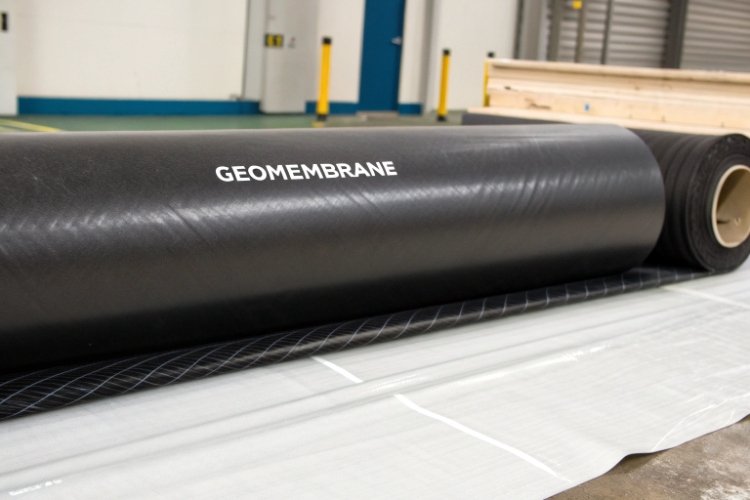
The geomembrane is the primary hydraulic barrier. Its specifications are non-negotiable and must be precise.
- Material Type: Typically HDPE (High-Density Polyethylene) for its excellent chemical resistance and durability. LLDPE (Linear Low-Density Polyethylene) may be specified for its greater flexibility in applications with expected high differential settlement.
- Thickness: State the required nominal thickness in millimeters (mm) or mils. For example, 1.5 mm (60 mil) for an MSW base liner or 2.0 mm (80 mil) for a hazardous waste liner.
- Surface Type: Specify smooth or textured (single-sided or double-sided). Textured surfaces are critical for slope stability, as they significantly increase the interface friction with adjacent soil or geosynthetics. Smooth liners are typically used only on the landfill floor (slopes < 10%).
- Color: The standard color is black due to the UV-stabilizing properties of carbon black. However, a white surface layer can be specified to reduce liner temperature during installation, which minimizes wrinkles and makes damage easier to spot.
- Material Standards: State the required manufacturing and testing standard, most commonly GRI-GM13 for HDPE geomembranes. Key performance metrics to include if you have them are:
- Resin Density (e.g., ≥ 0.940 g/cm³)
- Tensile Strength and Elongation
- Environmental Stress Crack Resistance (ESCR)
- Oxidative Induction Time (OIT) for long-term durability
GCL and Clay Barrier Requirements (If Applicable)
If your composite liner uses a GCL or a compacted clay liner (CCL) as the secondary barrier, provide the following:
- For GCLs:
- Reinforcement: Reinforced (for slopes) or unreinforced.
- Bentonite Mass: Specify the mass of bentonite per unit area (e.g., ≥ 4500 g/m²).
- For Compacted Clay Liners (CCLs):
- Thickness: Required compacted thickness (e.g., ≥ 600 mm).
- Permeability: The target hydraulic conductivity (e.g., k ≤ 1 x 10⁻⁷ cm/s).
- Compaction: The required compaction density (e.g., ≥ 93% of maximum dry density).
Project Geometry and Quantity Information
This is where you provide the numbers that allow us to calculate the exact amount of material needed.
- Areas: Provide the total area (in square meters or square feet) for the base/cell floor and the slopes separately.
- Dimensions: If possible, provide the length and width of the cell.
- Slope Details: Specify the slope ratio (e.g., 1V:3H or 1V:2.5H) and the height of the slopes.
- Anchor Trench: Detail the dimensions of the anchor trench at the top of the slope where the liner will be secured.
- Total Quantity: Calculate the total required quantity for each material. Crucially, always include a wastage allowance (typically 5-10%) to account for seams, overlaps, and cutting.
Drainage and Protection Layer Requirements
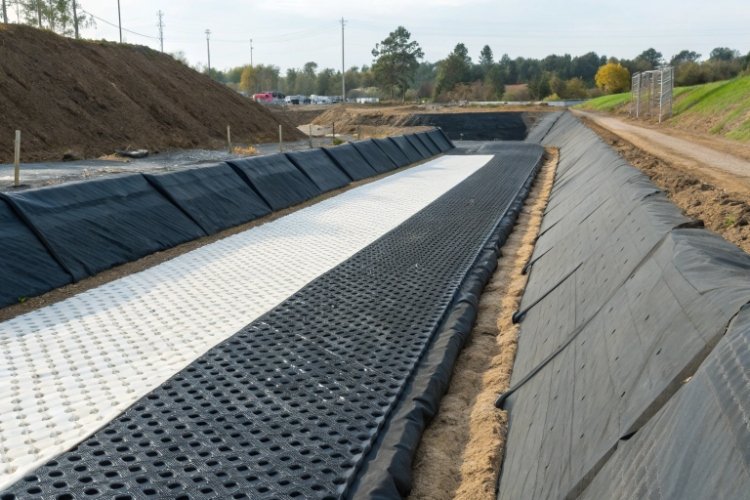
The liner system includes more than just the impermeable barriers. Specify the requirements for the other geosynthetic components.
- Protection Geotextile: This thick, non-woven geotextile is placed above and/or below the geomembrane to protect it from puncture. Specify the required mass per unit area (e.g., ≥ 400 g/m²).
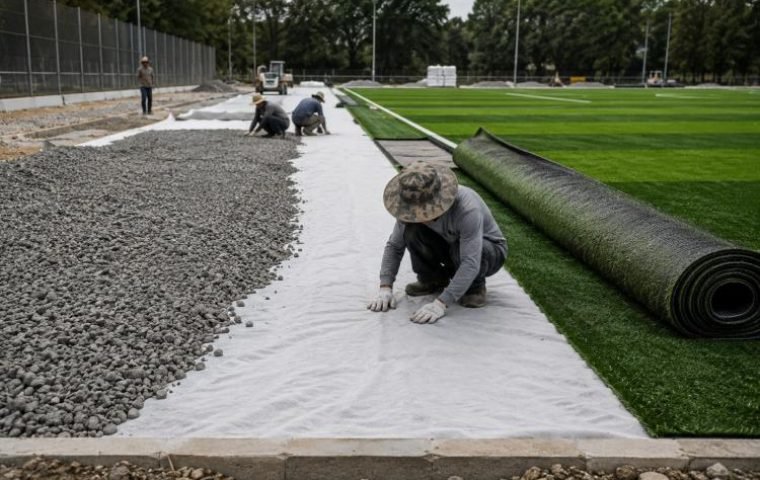
- Filtration Geotextile: Used to separate soil from drainage layers. Specify the mass per unit area (e.g., ≥ 200 g/m²).
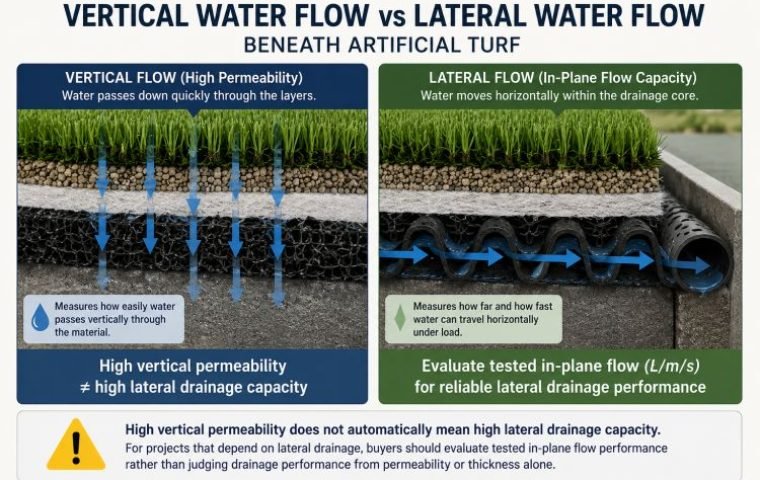
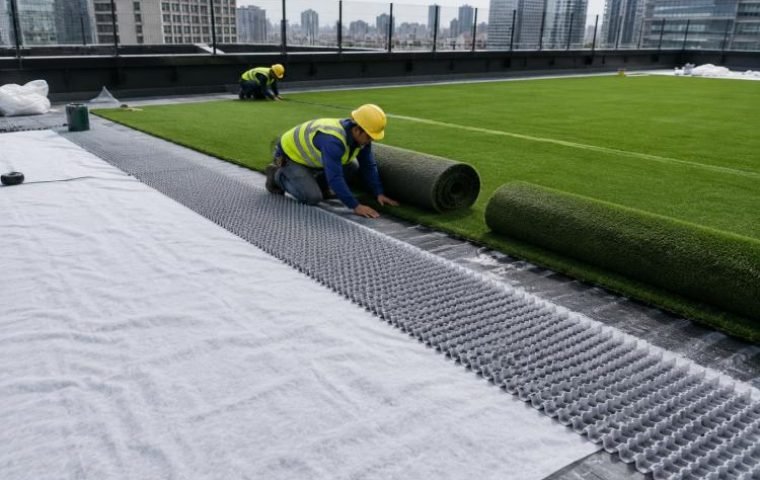
- Drainage Layer: This is for leachate collection and leak detection. Is it a natural material (e.g., 300 mm of gravel) or a geosynthetic drainage layer like a geonet or geocomposite? If geosynthetic, specify the product type and required flow rate.
Installation and Construction Conditions
The on-the-ground reality of your project site can influence material choices and costs.
- Subgrade Condition: Is the subgrade smooth and well-prepared, or is it rocky and uneven? A rougher subgrade may require a thicker protective geotextile.
- Climate: What is the range of ambient temperatures during the planned construction period? This affects welding parameters and the amount of slack needed for thermal expansion/contraction.
- Construction Schedule: What is your target start date and completion timeline? This impacts our production planning and delivery schedule.
Quality Standards, Testing, and Documentation Requirements
Tell us what proof of quality you need. This is essential for compliance and project sign-off.
- Certifications: Do you require an ISO 9001 certificate from the manufacturer?
- Factory Testing: We always provide Manufacturer's Quality Assurance (MQA) reports with every shipment. Let us know if you need these reports to follow a specific format.
- Third-Party Inspection: Will a third-party agency be involved in inspection or testing, either at the factory or on-site?
- Project-Specific QA/QC: Provide your project's Quality Assurance / Quality Control plan if it has special requirements beyond standard practice.
Delivery Terms and Logistics Information
Getting the material to your site is a major part of the quotation.
- Destination: Specify the final destination: the destination port (e.g., Port of Long Beach, USA) or the project site address.
- Incoterms®: Specify the desired delivery term. Common terms are FOB (Free On Board) where we deliver to the departure port in our country, or CIF (Cost, Insurance, and Freight) where we arrange and pay for shipping to your destination port. DDP (Delivered Duty Paid) to the final site is also possible.
- Delivery Timeline: When do you need the material on-site?
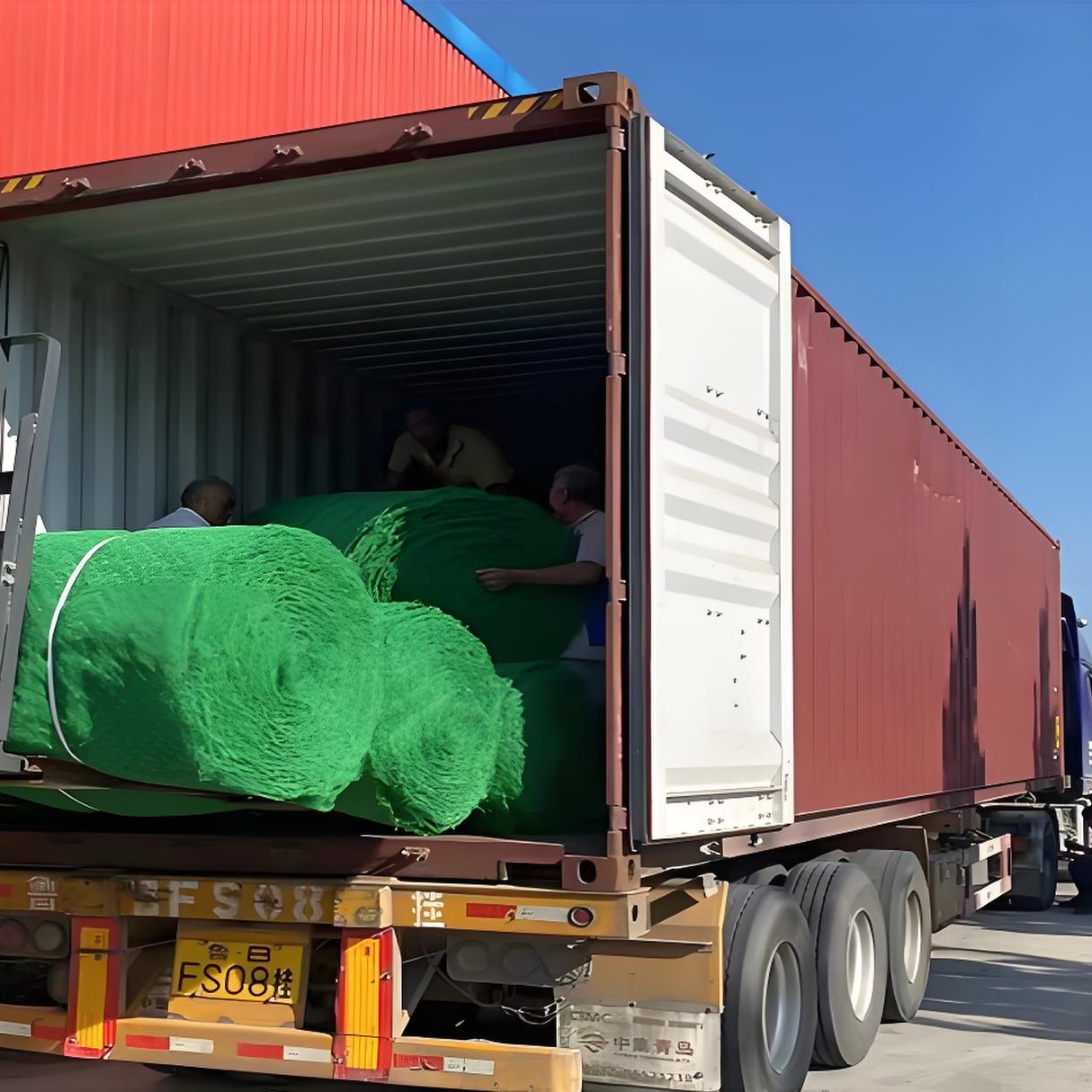
- Packaging: Standard packaging is in rolls. Let us know if you have specific requirements for roll length or packaging to suit your site's handling equipment.
Special Requirements and Project Constraints
This is the place for any unique project factors.
- Enhanced Chemical Resistance: Is the landfill expected to receive waste with unusual or highly aggressive chemical compositions?
- High-Temperature Exposure: Will the liner be exposed to high temperatures, such as in a waste-to-energy ash monofill?
- Seismic Considerations: Is the project located in a seismically active zone?
- Regulatory Conditions: Are there any specific conditions or requirements from a local or national environmental protection agency that go beyond standard practice?
Summary Checklist for Requesting an Accurate Landfill Liner Quotation
To make it easy, here is a consolidated checklist. Try to provide as much of this information as possible in your RFQ.
1. Project Information
- [ ] Project Name and Location
- [ ] Landfill Type (MSW, Hazardous, Industrial)
- [ ] Scope (New Cell, Expansion, Final Cover)
- [ ] Design Life (e.g., 30, 50 years)
2. Technical Specifications
- [ ] Liner System Configuration Drawing/Description (e.g., Double Composite)
- [ ] Geomembrane:
- [ ] Material (HDPE/LLDPE)
- [ ] Thickness (mm/mil) for each layer
- [ ] Surface (Smooth/Textured)
- [ ] Color (Black/White)
- [ ] Standard (e.g., GRI-GM13)
- [ ] GCL/Clay:
- [ ] GCL Type & Bentonite Mass OR Compacted Clay Thickness & Permeability
- [ ] Other Geosynthetics:
- [ ] Protection Geotextile Weight (g/m²)
- [ ] Filtration Geotextile Weight (g/m²)
- [ ] Drainage Geonet/Geocomposite Type or Gravel Spec
3. Quantities and Geometry
- [ ] Base/Floor Area (m²)
- [ ] Slope Area (m²)
- [ ] Slope Ratio (e.g., 1V:3H)
- [ ] Total Quantity for Each Material (including 5-10% wastage)
4. Commercial and Logistical Information
- [ ] Required Delivery Date
- [ ] Destination Port or Final Site Address
- [ ] Preferred Incoterm® (e.g., FOB, CIF)
- [ ] Required Documentation (MQA, Third-Party Tests, etc.)
- [ ] Any Special Requirements (Chemical, Temperature, etc.)
Conclusion
Providing this level of detail in your initial request may seem like extra work, but it is the single most effective thing you can do to streamline your procurement process. It allows a skilled supplier to act as your partner, providing not just a price, but a technically sound and cost-effective solution tailored to your project. It eliminates guesswork, builds trust, and lays the groundwork for a safe, compliant, and successful landfill project.