You've just unrolled a massive panel of geomembrane. The wind picks up, and suddenly that expensive liner turns into a giant, uncontrollable kite, threatening to undo hours of work and damage the material.
To prevent wind uplift, immediately secure exposed geomembranes using temporary ballast like sandbags at calculated intervals or a thin layer of soil cover. The correct method and amount depend on wind speed, liner type, and site topography. Never leave a liner unsecured, even for a moment.
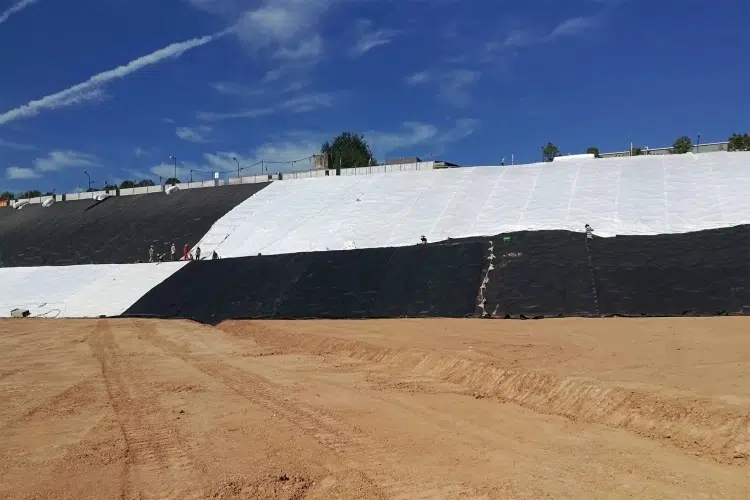
I've seen projects suffer massive setbacks because a sudden gust of wind caught an unsecured liner. The damage can range from tears and wrinkles that compromise welds to entire panels being blown into a tangled mess. This is one of the most preventable accidents in geosynthetics installation. Understanding how to properly ballast your liner during and after installation is not just a best practice; it's a fundamental requirement for a successful project.
What factors determine the risk of wind uplift on exposed geomembrane liners?
You know wind is a risk, but you see one crew working without issue while another struggles. You realize there must be more to it than just the wind speed itself.
The risk is determined by a combination of factors: the liner's stiffness and thickness, the steepness of the slope, the anchor point spacing, and how well the liner conforms to the ground beneath it. A stiff, thick liner on a steep slope is at the highest risk.
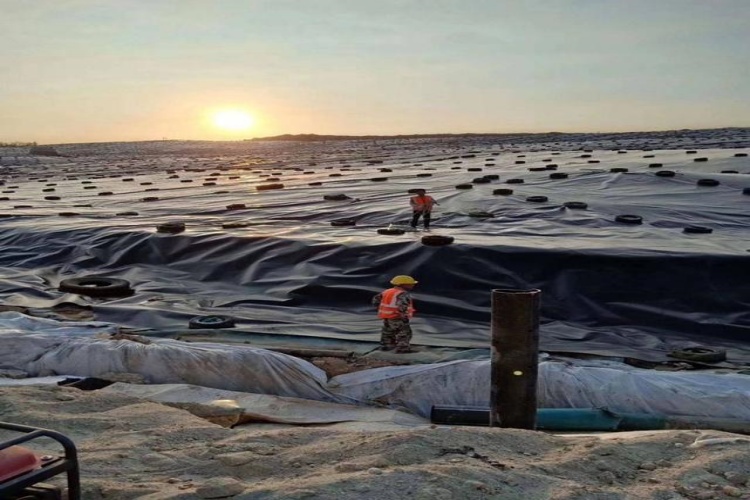
It's a common mistake to think only about wind speed. In reality, the liner's properties are just as important. A rigid liner like HDPE doesn't drape as closely to the subgrade, leaving small gaps where wind can get underneath and create lift. A more flexible liner like LLDPE or PVC will conform better, reducing this risk. Thicker liners are heavier, which helps, but they are also stiffer. The slope is a major amplifier; wind hitting a steep slope creates significant upward pressure. If the liner isn't in direct contact with the soil underneath, the wind's force is applied directly to lifting the liner instead of being transferred into tension within the material. This is why subgrade preparation is so critical—a smooth, uniform surface allows the liner to lay flat, giving the wind nothing to grab onto.
What ballast options—such as sandbags, gravel, or water-filled tubes—are commonly used to control uplift?
A storm is forecast, and you need to secure your installed liner panels overnight. You have sand, gravel, and empty bags on site, but you need a reliable method that won't damage the liner.
Sandbags are the most common and effective method for temporary ballast during installation. They are heavy, soft, and easy to place or remove without damaging the liner. For longer-term exposure, a uniform layer of gravel or soil is used.
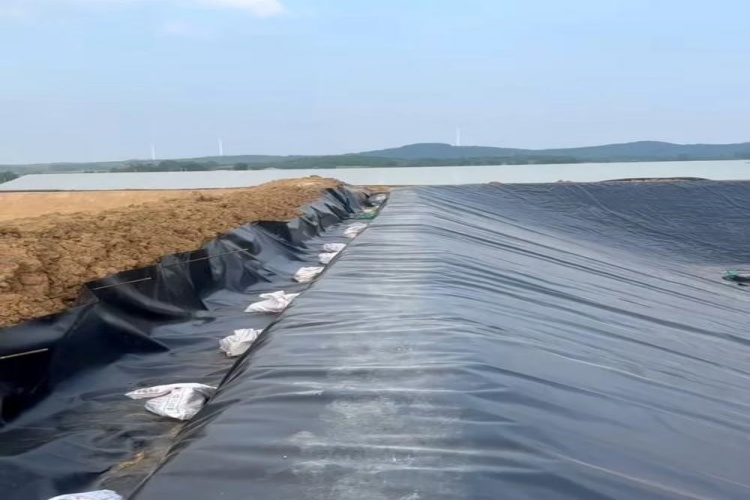
From a practical standpoint, sandbags are the contractor's best friend. They provide concentrated weight exactly where you need it and their soft, woven material won't puncture the liner. A simple rule of thumb I give to installation teams is to adjust the spacing based on expected wind conditions. For more permanent exposed applications, a continuous layer of rounded gravel is often specified. The weight must be calculated to resist the maximum design wind speed for the area. Precast concrete blocks are another option, often used at the crest of slopes or around structures to provide very secure anchoring in critical zones. The key is to choose a ballast that provides enough weight without introducing sharp points that could cause long-term abrasion or puncture damage.
Here's a simplified field guide for temporary sandbag placement:
| Expected Wind Speed | Recommended Sandbag Spacing (Center-to-Center) |
|---|---|
| Low (< 20 m/s) | ≤ 2.0 meters (approx. 6.5 ft) |
| Moderate (20-30 m/s) | ≤ 1.0 meter (approx. 3.3 ft) |
| High (> 30 m/s) | ≤ 0.5 meters (approx. 1.6 ft) or continuous row |
Which temporary cover methods provide effective short-term protection against wind loads?
You need to protect a large area of installed geomembrane for a few days before the final cover soil is placed. You need a solution that is quick to deploy and easy to remove.
For short-term protection, sandbags are the preferred method as they are controlled and non-damaging. A thin, loose layer of sand or fine soil (15-30 cm) is also effective, but it risks contaminating weld areas and causing liner damage during removal.
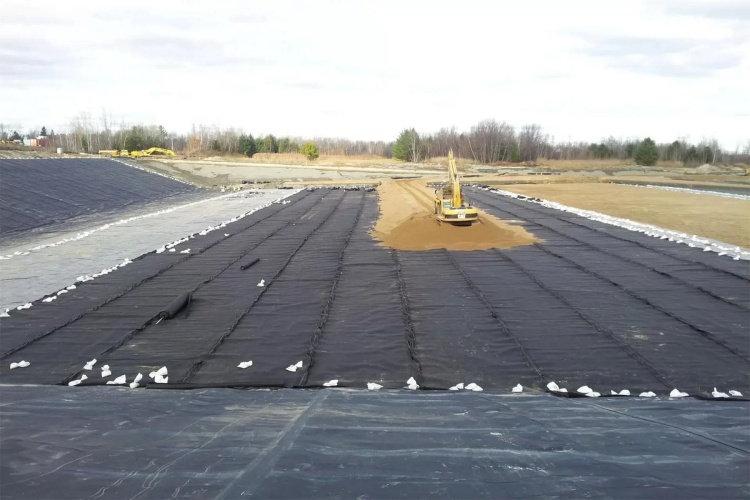
When crews ask me for the best temporary method, I almost always recommend sandbags. While placing a thin "sacrificial" layer of soil is fast and cheap, it comes with risks. Fine sand particles can get blown into seam areas you are about to weld, compromising the weld quality. Later, when you remove that soil layer with machinery, the risk of scraping or tearing the liner is very high. Sandbags avoid both of these problems. You can place them precisely, they keep weld areas clean, and you can remove them by hand with zero risk to the liner. The upfront labor cost of filling and placing bags is a small price to pay to avoid the much higher cost of repairing a damaged liner or re-welding contaminated seams.
How can I select an appropriate wind-uplift control method based on site conditions and liner design?
You're a project manager writing an installation plan. You must provide clear, actionable steps for your crew to handle windy conditions safely and effectively, from the moment a roll is opened.
The best method is a dynamic, step-by-step process. As each liner panel is unrolled, immediately place temporary sandbag ballast along its edges. Never deploy more liner than can be immediately secured. For welding, use extra sandbags and consider portable windbreaks.
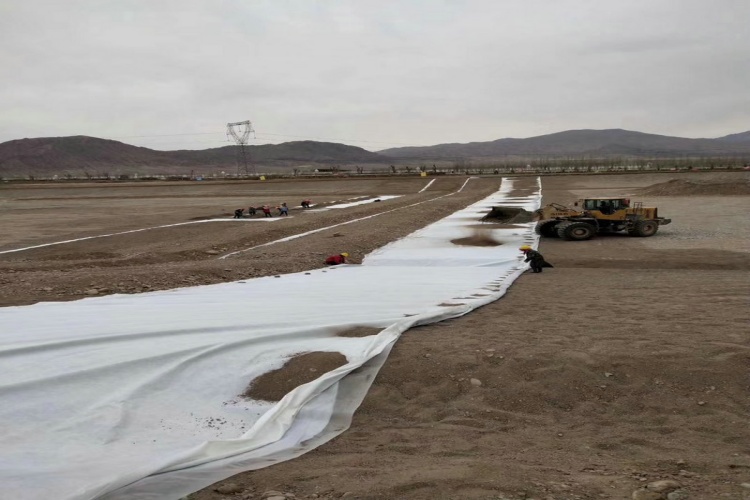
The most critical phase for wind uplift is during deployment and welding. A liner is never more vulnerable than when it's freshly unrolled and not yet welded to its neighbor. A strict installation procedure is essential.
Here is the process I insist on:
- Deploy and Ballast: Unroll a single panel. Before you do anything else, a team must follow immediately behind, placing sandbags along the entire perimeter, especially the leading edge.
- Position and Weld: Position the panel for welding. Add more sandbags on both sides of the proposed seam to keep the material flat and prevent wind from disturbing the welding machine. In very windy conditions (>20 m/s), all welding should stop.
- Inspect: After welding, perform your seam tests. The ballast keeps the area stable for accurate testing.
- Repeat: Only after the seam is welded and approved should you begin to deploy the next panel, repeating the "deploy and ballast" process.
Never remove all the temporary ballast at once. Work in sections, ensuring the majority of the liner area remains secured until the final soil cover is ready to be placed.
Conclusion
Controlling wind uplift is about procedure, not chance. Always use temporary ballast like sandbags immediately after deploying a liner panel, adjusting the weight and spacing based on site-specific risks like wind and slope.