Water is the biggest threat to your construction project. It builds up pressure, weakens soil, and can cause catastrophic failures. A waterlogged site can stop work for weeks, or worse, cause a brand-new retaining wall to collapse.
Geotextiles function as drains by collecting and discharging water in two ways: letting it pass directly through the fabric and channeling it sideways within the fabric itself. This dual-action system effectively relieves water pressure and protects structures from damage.

As a geosynthetics supplier, I often clarify for my clients that the drainage function is different from filtration. Filtration stops soil, but drainage moves water. An effective drainage geotextile must do both, but its primary job is to provide a clear, reliable path for water to escape. Let’s break down exactly how these fabrics are engineered to get water away from your project.
How do geotextiles facilitate water movement and discharge in drainage systems?
You have a soggy site, and you know you need to get the water out. But simply putting down a fabric isn't enough. If the water can't get away fast enough, pressure will still build up and cause problems.
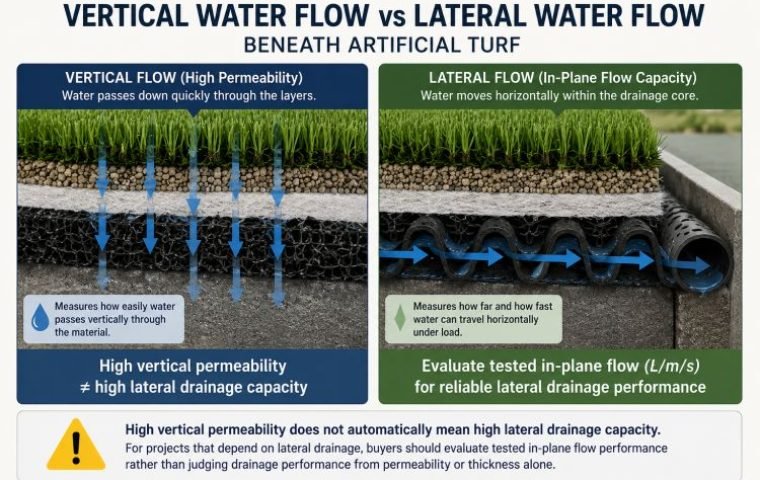
Geotextiles are engineered with specific flow rates to collect and discharge water through two distinct paths: perpendicular flow (through the fabric) and in-plane flow (within the fabric). This ensures water is removed quickly and efficiently.

More Than Just a Sieve
A geotextile's ability to manage water is defined by two key properties. As someone who reads technical data sheets daily, I always tell engineers to check both of these values to ensure the product meets their drainage needs.
-
1. Through-Plane Flow (Perpendicular Flow)
This is the most straightforward function. It describes how quickly water can pass directly through the fabric from one side to the other. The key measurement here is Permittivity (tested per ASTM D4491). Think of it as the fabric's flow speed. The most important rule in drainage design is that the geotextile’s permittivity must be significantly higher than the soil's permeability. This ensures the fabric never becomes a bottleneck, allowing water to enter the drainage system without resistance. -
2. In-Plane Flow (Lateral Flow)
This is a special property of thicker, nonwoven geotextiles. It describes the fabric's ability to act like a thin, flat drainpipe, moving water within its own structure. This is measured by Transmissivity. For example, when placed against a basement wall, the geotextile collects water over its entire surface and channels it downwards to a collection pipe at the foot of the wall, preventing pressure from ever building up against the structure.
What is the difference between horizontal and vertical drainage using geotextiles?
Water problems attack from all sides. It can seep in sideways from a hillside or rise up from a high water table. Using the wrong drainage orientation means you might solve one problem while leaving your project vulnerable to another.
Vertical drainage uses geotextiles on upright structures like retaining walls to intercept groundwater and channel it down. Horizontal drainage lays the geotextile flat under roads or fields to collect rainwater and prevent water from wicking up from below.
Directing Water Flow Where It Needs to Go
The direction of the problem determines the orientation of the solution. I've supplied geotextiles for both types of projects, and while the fabric might be the same, the goal is different.
| Drainage Type | Application & Goal | How It Works |
|---|---|---|
| Vertical Drainage | Applications: Behind retaining walls, bridge abutments, basement walls. Goal: Relieve horizontal water pressure. |
The geotextile (often as part of a geocomposite drain) is placed against the structure. It intercepts groundwater moving sideways, allowing it to flow down freely via in-plane flow to a collection pipe. This prevents hydrostatic pressure from pushing on the wall. |
| Horizontal Drainage | Applications: Under roads, sports fields, airport runways, building foundations. Goal: Collect rainfall and stop capillary rise. |
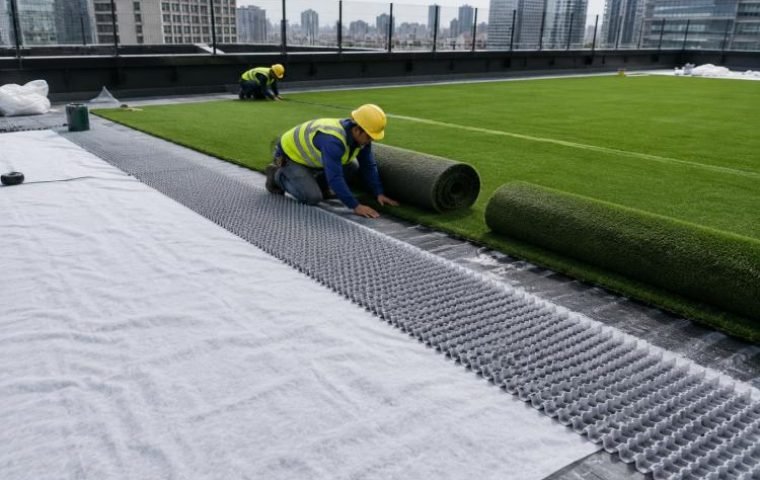
The geotextile is laid flat over a large area. It uses through-plane flow (permittivity) to quickly let surface water into a drainage layer below. It also acts as a capillary break, stopping groundwater from wicking upwards and weakening the foundation soil. |
How are geotextiles combined with gravel, sand, or pipes to improve subsurface drainage?
Gravel and perforated pipes are excellent for moving large volumes of water, but they have a fatal flaw: they get clogged with soil. A clogged drain is an expensive failure that's buried underground and difficult to fix.
Geotextiles are used to wrap drainage aggregates (gravel) and pipes, acting as a permanent filter. The fabric lets water in but stops soil particles, preventing the system from clogging and ensuring it works effectively for decades, not just a few years.
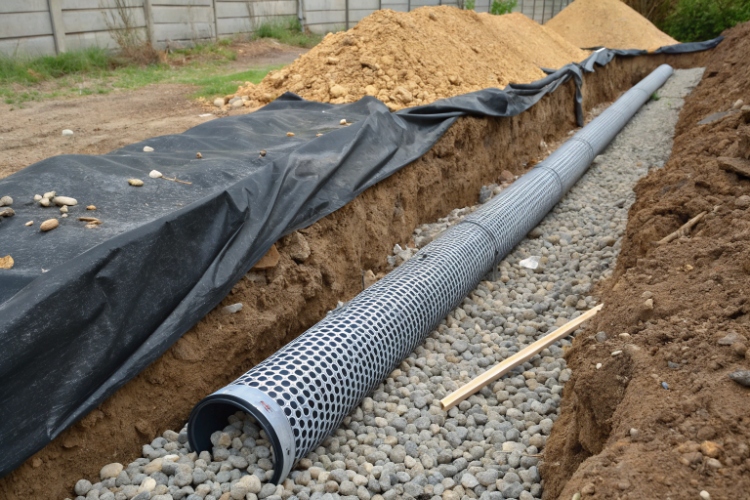
A Perfect Partnership: Filtration + Flow
The combination of a geotextile and a drainage aggregate creates a nearly perfect system. The geotextile handles the fine work of filtration, while the gravel or pipe does the heavy lifting of water transport. I've seen projects that had to be completely re-dug after just five years because this simple step was skipped.
-
Encapsulating French Drains
The most common application is a
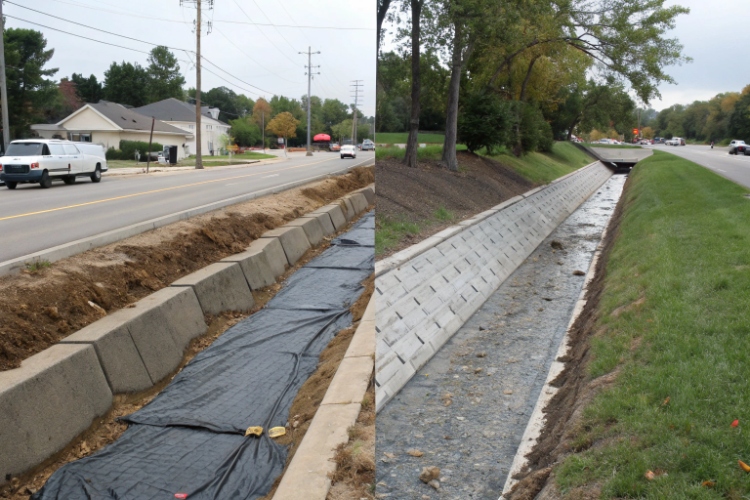
French drain. A trench is lined with geotextile, then filled with gravel and a perforated pipe. The geotextile is then folded over the top to completely encapsulate the drainage medium. This creates a protected, high-flow channel for water that will not get contaminated by the surrounding soil. -
Creating Blanket Drains
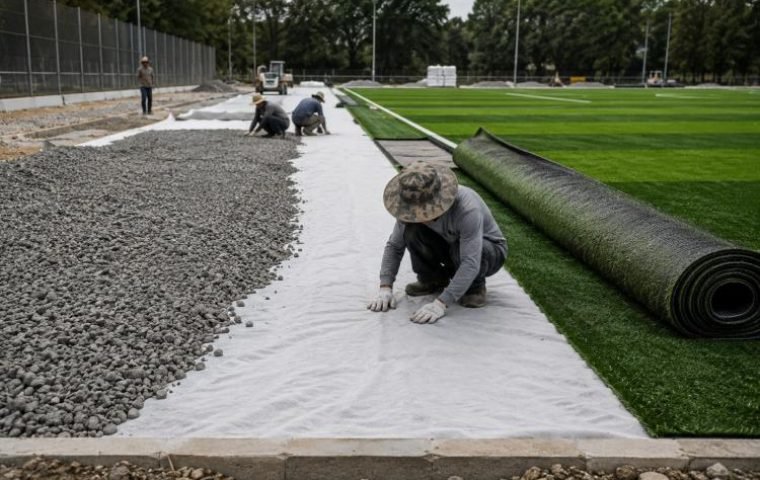
For large flat areas like sports fields, a "blanket drain" is created. A layer of geotextile is placed on the prepared soil, followed by a layer of clean drainage gravel, and then often another layer of geotextile on top. This sandwich structure collects water over a huge area and channels it to outlet pipes, keeping the surface stable and dry. -
Using Geocomposite Drains
Modern systems often use geocomposites, which are the ultimate all-in-one solution. They consist of a plastic drainage core (like a stiff net) bonded with geotextile on both sides. This single product replaces a thick layer of gravel, saving huge amounts on material, transport, and excavation costs.
How can I choose the right geotextile type to ensure long-term drainage efficiency?
Your supplier offers "6 oz nonwoven" and "10 oz woven," but the technical data is confusing. Picking the wrong fabric can lead to the system clogging up or the fabric tearing under pressure, causing a total drainage failure.
For most drainage applications, a needle-punched nonwoven geotextile is the correct choice. Its thick, three-dimensional structure provides excellent water flow both through and within the fabric. The specific weight (e.g., 6, 8, or 10 oz/yd²) is chosen based on durability and flow requirements.

Decoding the Data Sheet
Choosing the right geotextile means matching its properties to your project. Don't focus on just one number; you need to look at the combination of properties that define a good drainage fabric.
-
Nonwoven is the Standard for Drainage
A nonwoven geotextile is made of fibers matted together. This creates a thick, spongy fabric with excellent pathways for water. They are also flexible and can stretch, allowing them to conform to uneven ground without tearing. In contrast, woven geotextiles are strong but are like a flat sheet. They are great for reinforcement and separation but generally have lower flow rates and are not the first choice for drainage applications. -
Key Specifications for Drainage
When you look at a data sheet, check these three values:- Permittivity (ASTM D4491): Measures the flow through the fabric. Make sure this is much higher than your soil's permeability.
- Transmissivity: Measures the flow within the fabric. This is critical for thick nonwovens used in vertical applications.
- Apparent Opening Size (AOS): This is for filtration. It must be small enough to hold back your soil particles so the system doesn't clog.
Conclusion
Geotextile drainage is an active system that uses engineered fabrics to manage water. It combines flow through and flow within the fabric to protect structures, and choosing the right nonwoven geotextile with the proper specifications is essential for long-term success.