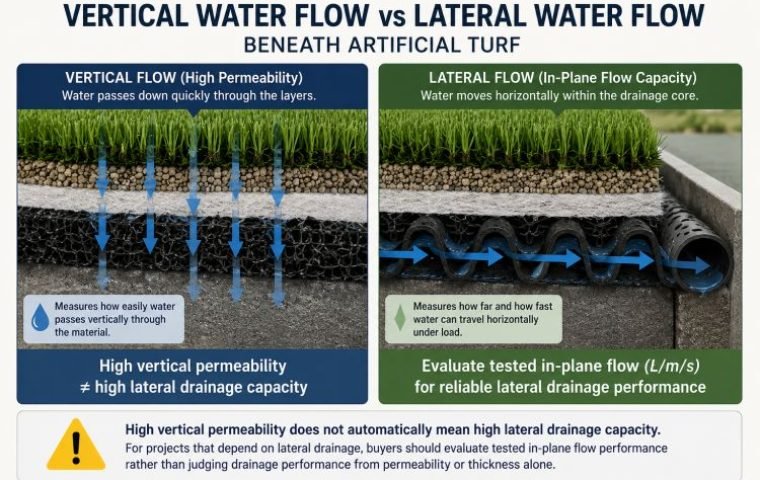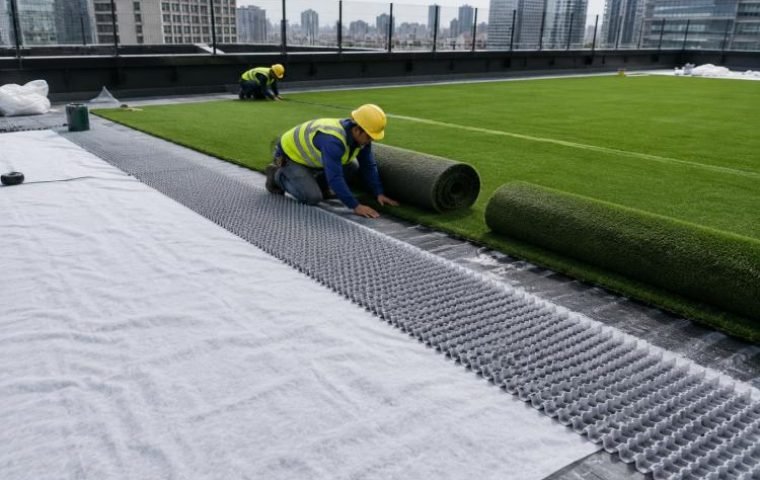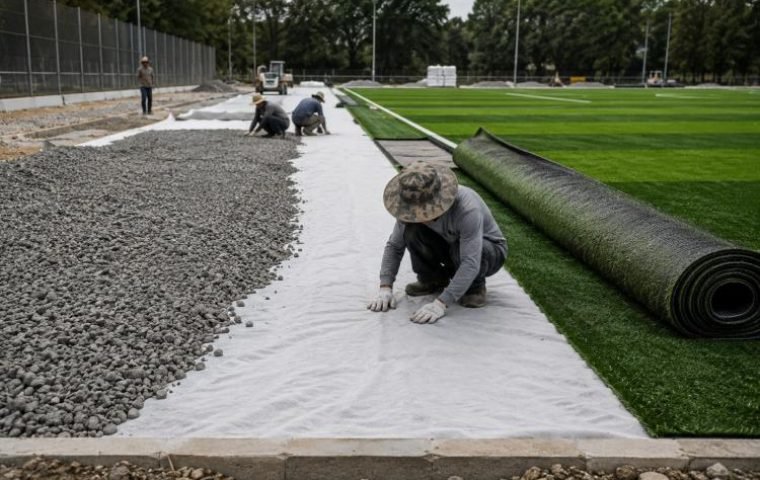


A single sharp rock can tear your liner, causing leaks and costly environmental damage. Understanding how geomembranes resist punctures helps you select a material that truly protects your investment.
Geomembranes resist puncture through a combination of their polymer's inherent strength, thickness, and flexibility. However, real-world performance depends heavily on external factors like protective geotextiles and proper subgrade preparation, making it a complete system approach.
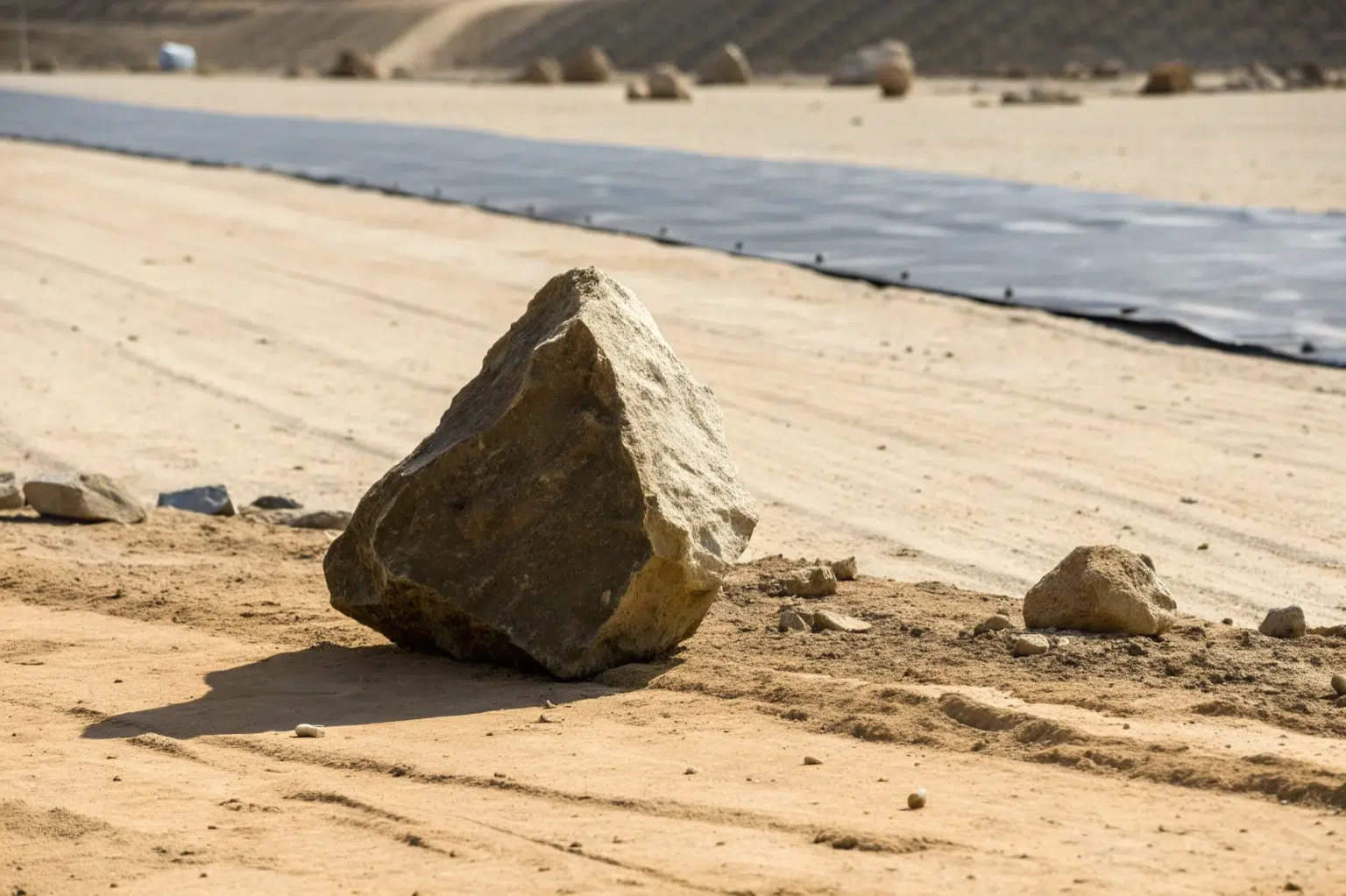
I've seen many project specifications that focus heavily on a single number for puncture resistance from a datasheet. But I learned a hard lesson early in my career from a client who installed a thick, high-spec liner that failed within a year. The problem wasn't the geomembrane; it was the sharp, unprepared ground it was laid on. Puncture resistance is not just about the liner itself. It's about designing a containment system where every component works together to prevent failure. Let's break down what really matters.
What Truly Determines a Geomembrane's Puncture Resistance in the Field?
Relying only on a datasheet spec for puncture resistance is risky. Field conditions are much harsher than lab tests and can lead to unexpected failures and costly repairs.
Puncture resistance depends on the material's innate strength and thickness, but also critically on subgrade preparation, the use of protective geotextile layers, and the type of load it will face. A holistic view is essential for real-world durability.
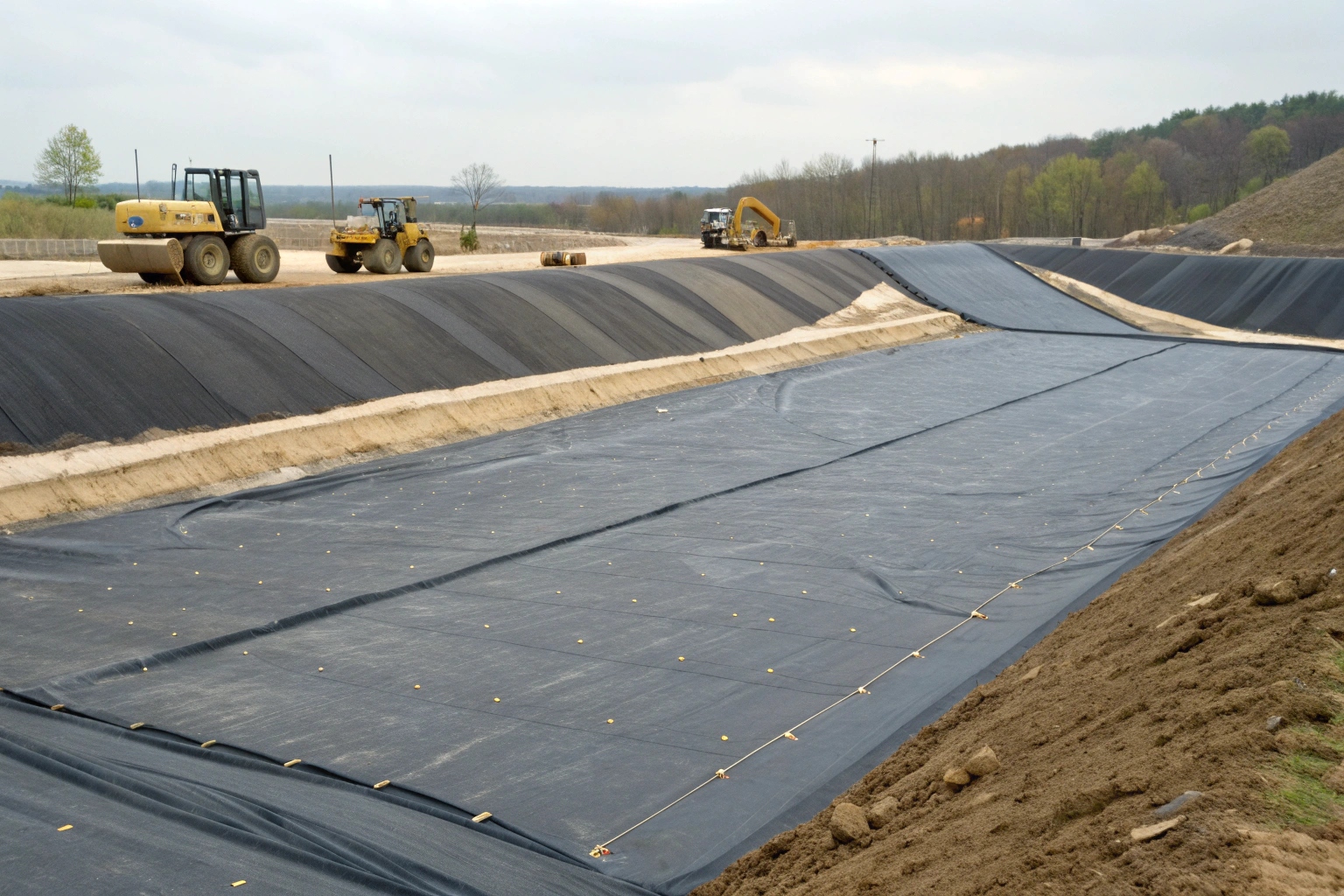
A System-Based Approach to Puncture Protection
From my experience exporting materials for thousands of projects, successful puncture resistance comes from looking at the entire system, not just the liner. It's a combination of inherent properties and external protection.
Inherent Material Properties:
The foundation of puncture resistance is the polymer itself. We start with high-quality virgin resin, not recycled materials, to ensure molecular integrity. The density of the polymer plays a big role; higher-density materials are typically harder and more resistant to a direct piercing force. The right additives, like carbon black and antioxidants, also help maintain the material's toughness over its service life, preventing it from becoming brittle and prone to cracking under stress.
External Protective Measures:
This is where many projects succeed or fail.
- Subgrade Preparation: The ground beneath the liner must be smooth, uniform, and free of sharp rocks, roots, or debris. No geomembrane, no matter how thick, can withstand constant pressure from a sharp point underneath it.
- Protective Geotextiles: Laying a thick, nonwoven geotextile cushion above and/or below the geomembrane is the single most effective way to improve puncture resistance. The geotextile acts as a buffer, distributing the force from a sharp object over a wider area and preventing it from reaching the liner.
HDPE vs. LLDPE vs. PVC: Which Material Offers the Best Puncture Resistance?
Choosing between HDPE, LLDPE, or PVC is confusing. Each has different strengths, and picking the wrong one for your site conditions can lead to premature failure.
HDPE offers high stiffness and good resistance, especially when thick. LLDPE is more flexible, allowing it to deform around objects and distribute stress better. PVC is also very flexible but typically has lower puncture strength than polyethylene liners in demanding applications.
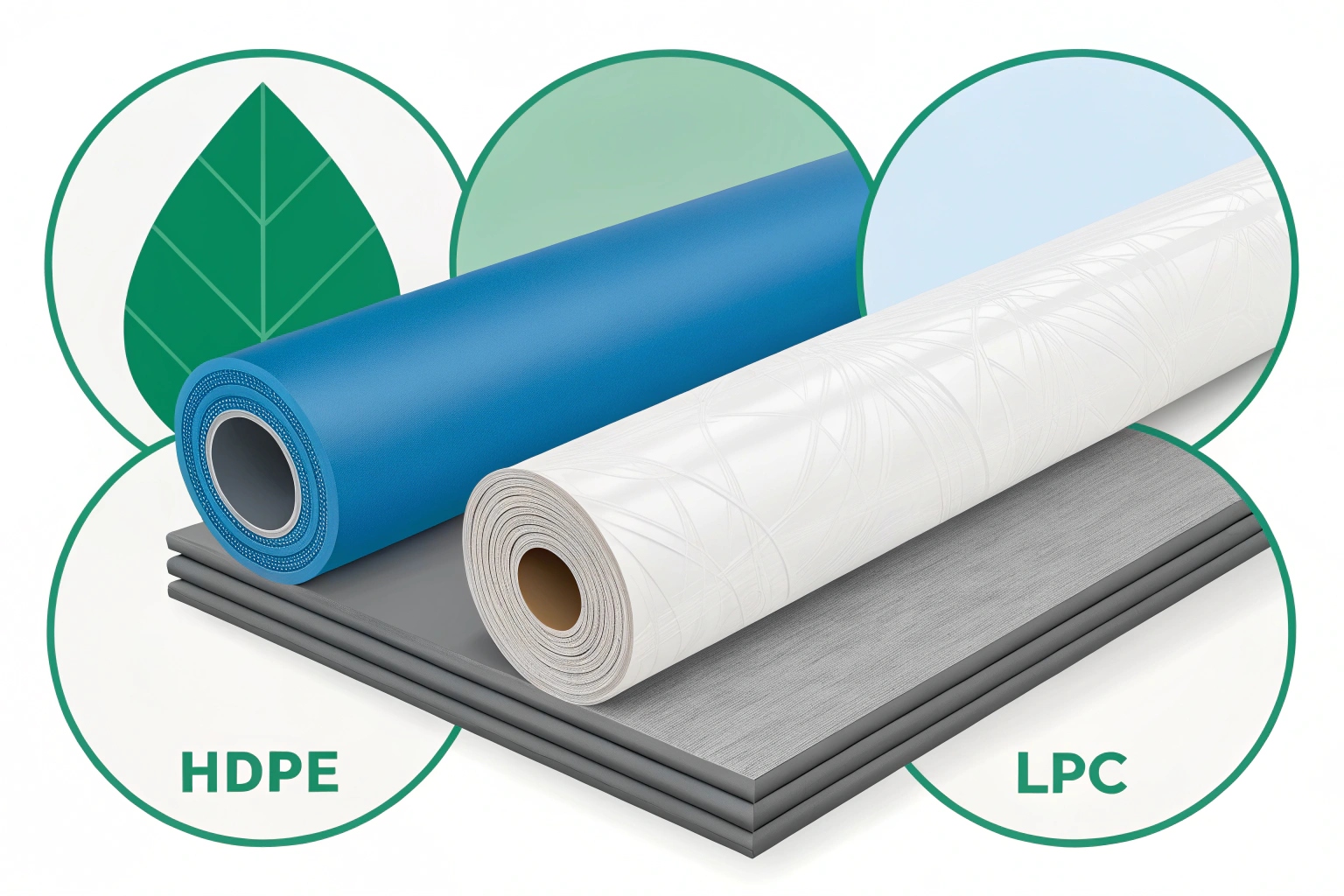
Matching the Material to the Challenge
The best material depends on the trade-off between stiffness and flexibility. I often explain this to clients as the difference between a shield and a net.
High-Density Polyethylene (HDPE): The Shield
HDPE resists puncture through brute force. It's a very stiff and hard material, so a sharp object needs a lot of force to push through it. This is why it’s a standard for landfills and mining, where we can specify very thick sheets (e.g., 2.0mm or 80 mil) to provide a robust physical barrier. Its stiffness is its strength.
Linear Low-Density Polyethylene (LLDPE): The Net
LLDPE takes a different approach. It is much more flexible and has higher elongation. When a sharp object pushes against it, LLDPE can stretch and deform around the point. This flexibility distributes the stress over a larger area, reducing the chance of a puncture. This makes it ideal for applications with uneven subgrades or where settlement is expected.
Polyvinyl Chloride (PVC): The Conformable Layer
PVC is extremely flexible, even more so than LLDPE. This allows it to conform perfectly to complex shapes. However, its puncture strength is generally lower than HDPE or LLDPE, so we typically see it used in less critical applications like irrigation ponds or decorative water features where puncture risks are lower.
| Material | Key Characteristic | Puncture Resistance Mechanism | Best For |
|---|---|---|---|
| HDPE | Stiff and Hard | Brute force; resists penetration | Flat, stable subgrades; high loads |
| LLDPE | Flexible and High Elongation | Stress distribution; deforms around objects | Uneven subgrades; potential settlement |
| PVC | Very Flexible | Conforms to surfaces | Low-risk applications; complex shapes |
Why Won't Simply Choosing a Thicker Geomembrane Guarantee Puncture Protection?
Many people assume "thicker is always better" for puncture resistance. This oversimplification can lead to overspending or, worse, a false sense of security and project failure.
While thickness helps, a thick but brittle liner can still fail. Flexibility, material quality, and the use of reinforcement are often more critical. Some reinforced geomembranes achieve superior puncture strength at a fraction of the thickness of standard HDPE.
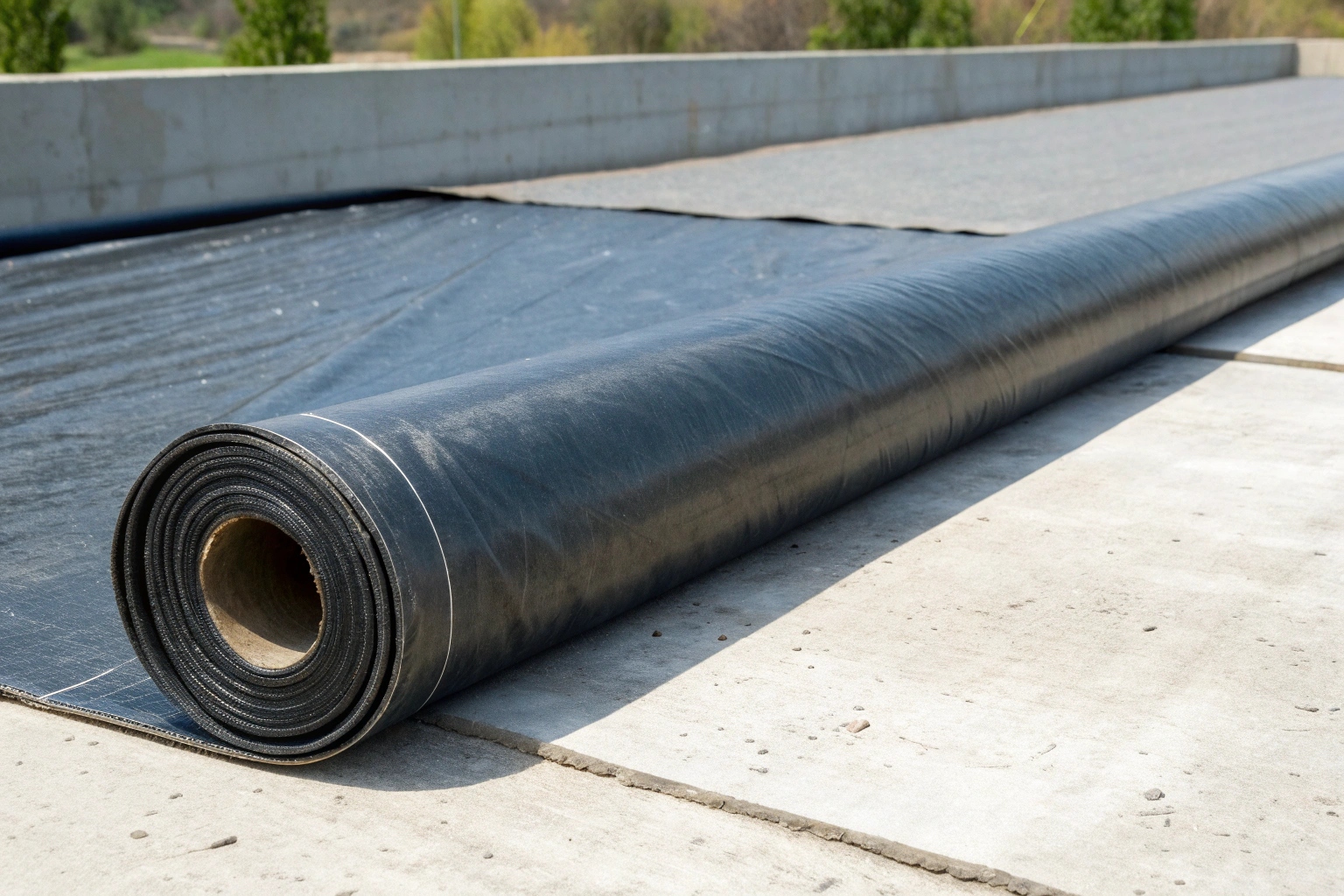
Looking Beyond Thickness
Thinking that thickness is the only factor is a common mistake. I’ve seen 1.0mm (40 mil) liners outperform 2.0mm (80 mil) liners because of other design factors.
Flexibility's Role:
As we saw with LLDPE, flexibility allows a liner to absorb energy by deforming. A very thick but rigid material might simply shatter or crack under a sharp impact, whereas a thinner, more pliable material can stretch and survive.
Reinforced Composites:
Some of the strongest geomembranes we supply are actually composite materials. They contain an internal high-strength woven fabric (known as a scrim) sandwiched between two outer layers. This internal grid acts like rebar in concrete. It distributes puncture forces across the entire fabric structure and provides exceptional tear resistance. This means a relatively thin reinforced liner can offer puncture resistance equal to or greater than a much thicker, unreinforced HDPE sheet.
Material Quality:
Thickness is meaningless if the material quality is poor. A thick liner made from cheap, recycled resin can have inconsistencies, voids, or brittle spots. A thinner liner made from 100% virgin polymer will have a uniform, tough structure that provides more reliable performance. Always prioritize quality over sheer thickness.
How Can You Verify a Geomembrane's Puncture Resistance?
You have a material spec sheet, but you don't know what the numbers mean. Without understanding the tests, you could be comparing apples to oranges and making a poor choice.
The industry standard is ASTM D4833, the "Index Puncture Test." It measures the force required for a probe to break through the material under lab conditions. While it is a good comparison tool, it does not fully replicate complex field conditions.

From the Lab to the Field
When clients ask me about puncture values on our datasheets, I always explain what they represent and what their limitations are.
ASTM D4833:
The test is straightforward. A small sample of the geomembrane is clamped down, and a steel probe with a specific shape is pushed through it at a constant speed. The machine measures the maximum force needed to puncture the material. This force is reported in Newtons (N) or pounds-force (lbf). A higher number indicates higher puncture resistance. This test is essential for quality control and for comparing different products on a level playing field.
The Limits of Laboratory Testing:
ASTM D4833 is an index test. It provides a standardized value but doesn't simulate real-world scenarios.
- It doesn't account for long-term pressure from a single point.
- It doesn't test resistance to abrasion or friction.
- It is performed at room temperature, but a liner's properties can change in extreme heat or cold.
The most important "test" is what happens on-site. The best-performing projects are those where the crew takes great care in preparing the subgrade and deploying the protective geotextile. That field quality control provides more valuable puncture protection than any lab number can promise.
Conclusion
Puncture resistance is a system, not a single number. It combines material choice, thickness, and reinforcement with proper subgrade preparation and protective layers. Don't rely on one factor alone.